
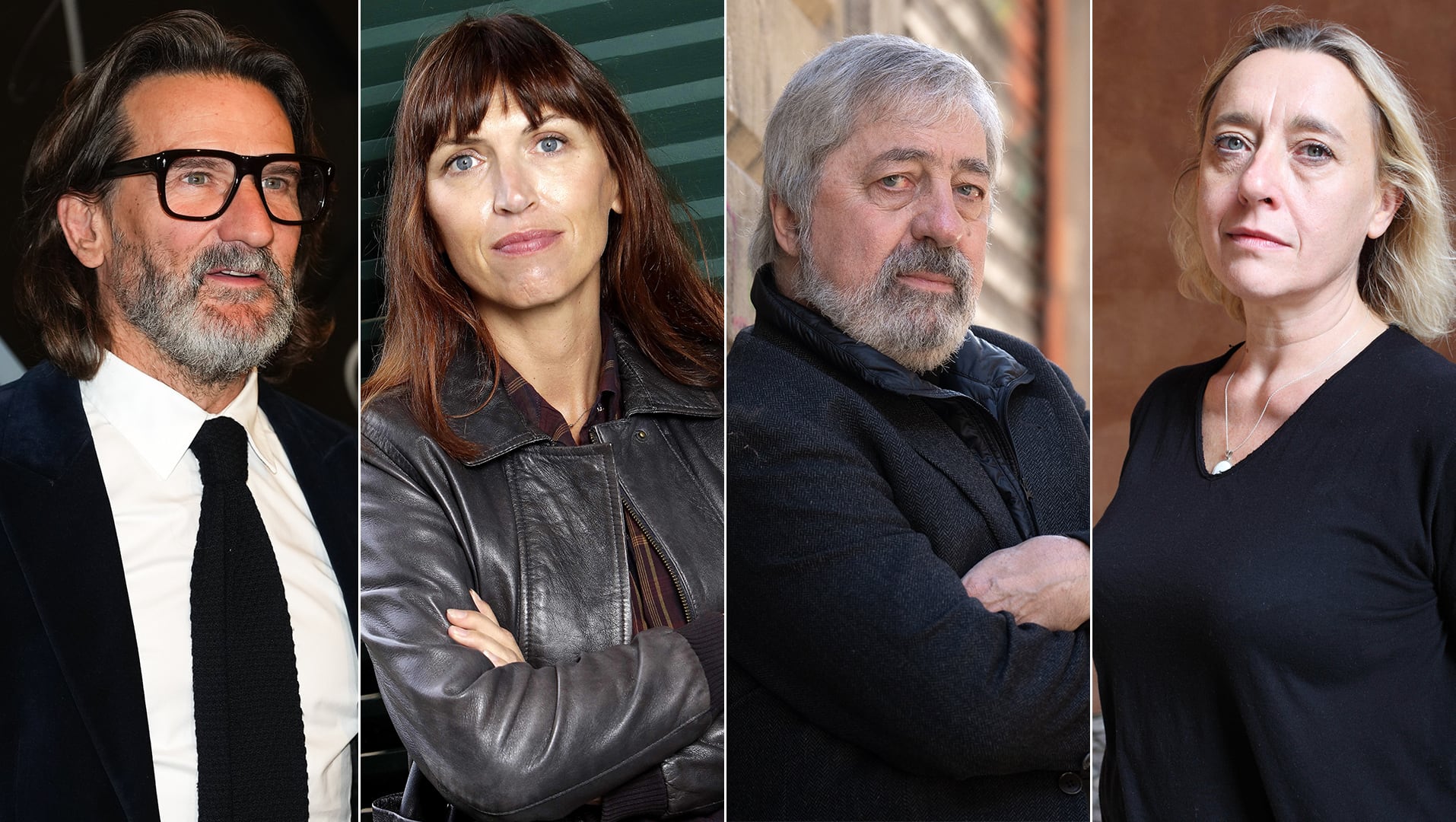
A silent seismic movement had been subjecting the French publishing world to small shocks for years. The vibrations came from the media empire of Vivendi, owned by tycoon Vincent Bolloré, who has deployed an outpost in the world of the country’s media. But the accusations of printing an ideological shift to the right in old newspapers now extends to the publishing world, where Hachette – owned by the same company – already took that path with the Fayard publishing house a few years ago and now threatens to do so in Grasset, whose general director and historical editor, Olivier Nora, has been fired after 26 years. At dawn on Thursday, 130 authors from the publishing house, including heavyweights such as Bernard Henri-Levy, Virginie Despentes, Sorj Chalandon, Frédéric Beigbeder and Vanessa Springora, announced that they were leaving the house. A historic movement that plunges the publishing world into an unprecedented ideological storm. “We will not sign our next contract with them,” they said.
Never had such an important part of the catalog of a French publisher been abandoned en masse for a political issue. Or management, as you see it. Authors like Bernard-Henri Lévy, who had a book practically finished and was due to publish it in October, will give up doing so with Grasset. The signatories emphasize in their statement: “Once again, Vincent Bolloré says (…): ‘I am at home and I do what I want’, despising those who publish, those who accompany, edit, correct, manufacture, disseminate and distribute our books. And also despising those who read us.” The authors point out in the document that they reject “being hostages to an ideological war to impose authoritarianism throughout culture and the media.”
The Vivendi group – owner of 11.79% of shares in Prisa, publisher of EL PAÍS – made the decision to fire Nora last Wednesday. He will be replaced by Jean-Christophe Thiery, President and CEO of Louis Hachette Group. Nora preferred not to respond to this newspaper about her departure, the reasons for which have not yet been clarified.
The version indicated by several consulted authors was written by The New Obs and it would be a request made by Arnaud Lagardère, president of Hachette Livre, on April 11, for Olivier Nora to accept in his catalog a work signed by Nicolas Diat, editor at Fayard of the writer and polemicist Philippe de Villiers or Jordan Bardella (president of the National Regrouping). The subject of the dispute is titled Rome, object of lovea travel story that was supposed to be published in Fayard in March 2023, but that ultimately never appeared, and ended up on Nora’s table. He would have refused to publish the work in Grasset, which would have precipitated his downfall. The publisher’s spokesperson has declined this newspaper’s request to offer its version.
The decision, in any case, is part of a long process of media transformation that Vivendi has been adding to its conglomerate in recent years with the acquisition of the Lagardère group, such as Sunday newspaper. Accused of promoting a far-right ideology in France (the Sunday Editorial was on strike for more than a month), Bolloré stated in an appearance in the Senate in 2022 that his group’s interest “is not ideological”, but “purely economic”, and he defined himself as “Christian Democrat”.
One of the accelerators of this political/cultural soap opera was the hiring of the writer Boualem Sansal by Grasset. The author, Goncourt Prize winner and imprisoned in Algeria for a year for his political ideas, left Gallimard, his historic publishing house, a month ago for unclear reasons that pointed to ideological discrepancies. The traumatic breakup – after his release, the writer was living in Antoine Gallimard’s private home for several months – led to his unexpected signing for Grasset. In fact, as he explained The Worldcame to print his new book, now for the new publisher, from Gallimard’s house without having informed him of his departure.
Sansal, however, had already become one of the new lighthouses of the extreme right for his ideas against the supposed Islamization of France and had paraded on the sets and covers of some media such as the Sunday Newspaper o Current Valuesowned by Vivendi. Its incorporation into the Grasset catalog generated the first friction with Nora and raised the eyebrows of some authors.
The story is not new. The business group has already transformed the historic Fayard into a publishing house that promotes leaders and figures of the right or extreme right such as Jordan Bardella or Éric Zemmour, Nicolas Sarkozy, Philippe de Villiers or the far-right and reactionary cardinal, Robert Sarah. On that occasion, Sophie de Closets was the editor fired to begin the change. “It is the sign of a very disturbing political and ideological assault in France. What is happening now is that they are historical publishers of more than 100 years with a magnificent and extremely diverse heritage catalogue, publishers that welcome authors of different sensibilities, literary, political and social. Fayard has become a house of a single color, we will see what happens with Grasset, and obviously in the medium and long term it will be an impoverishment. We have never seen historical publishers tilt in this way,” he points out. phone.
A new exodus of authors is also announced in Fayard after about 40 left after the dismissal of Closets in 2022. Now 25 academics – historians, but also sociologists, anthropologists or philosophers -, all of them authors from the house, seek to recover their rights, as are also proposed by the 130 signatories of the statement against the dismissal of Nora in Grasset. Technically, however, it is extremely complicated.
At the first meeting of the group of Grasset authors, as explained by the newspaper The Worldthe first steps were taken for a “class action”, a judicial procedure in which everyone would sue jointly to recover their rights. “We do not want our ideas, our work, to be their property. Today we have something in common: we refuse to be hostages to an ideological war that seeks to impose authoritarianism throughout culture and the media. We are fully in solidarity with the teams, the authors who cannot yet speak out,” they say in the statement.