
I don’t know if anyone described the Lima bourgeoisie better than Alfredo Bryce Echenique, who has died at the age of 87, but certainly no one did it with a humorous repertoire like his, ironic and humorous, sarcastic and incisive, with sarcasm and derision. Nor did anyone insist on telling so many times and with such casualness how the gears of the world are discovered when we leave childhood, how discouragement, heartbreak, loneliness or failure come to us. He did it in storybooks and chronicles, but above all in a few enduring novels and some extravagant ones. Antimemorias that deserve to be placed on the shelf of recommended readings.
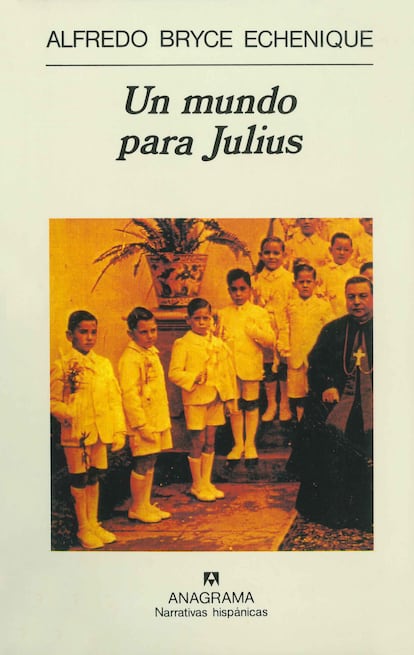
A world for Julius (1970)
A brilliant debut that offered, from the childish perspective of the protagonist, an image of the light existence of patrician families in the writer’s native Lima, with their servants, their rituals and their indifference to the misfortunes of the world. The success of the novel lay in the conversational, ironic and apparently uncritical style with which the frivolities of a social class reclined in its privileges were described. In this picture, Julius grows, learns and contemplates a reality that is more unequal and conflictive than that of the padded environment of the oligarchy from which he comes. The change of life he faces, typical of every educational novel, will be a constant, as an unfulfilled wish, throughout the work of the Peruvian writer.
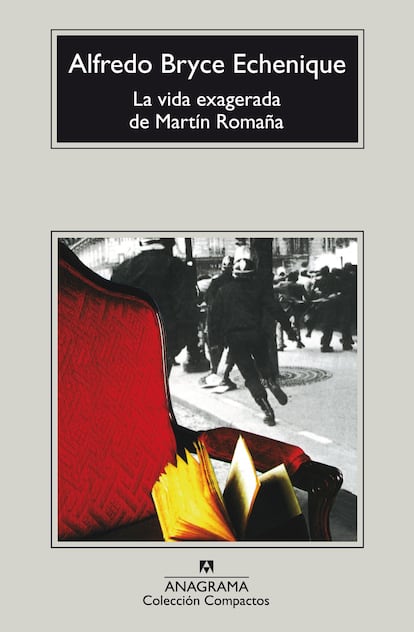
The exaggerated life of Martín Romaña (1981)
“My name is Martín Romaña and this is the story of my positive crisis,” the narrator summarizes in the first line. Bryce Echenique, who lived in Paris since 1964, used his own experiences as raw material for this ingenious and highly enjoyable novel about the adventures of a Latin American in the French capital. With the irony of his first novel elevated to the cube, his transcript, Martín, tells how he lived through the riots of May 1968, how he bordered on destitution with dignity, how he endured his marriage with Inés, a far-left militant in whose political circle they had demanded that he write a novel. engaged about something he knows nothing about: the fishing unions of Peru. Naturally, his will triumphs over imposition and he ends up composing the novel exaggerated that we read, which constitutes the first part of the diptych Navigation notebook on a Voltaire armchair.
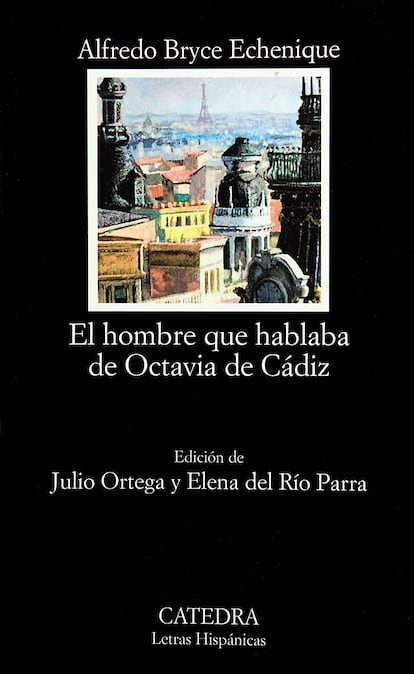
The man who spoke about Octavia of Cádiz (1985)
In this second part of Navigation notebookwith the same jocularity and narrative self-confidence, Martín, who is a professor of Spanish-American literature in Nanterre, where he teaches his classes by recording them on a tape recorder, discovers love again thanks to one of his students, Octavia. The narrator, that is, Martín, seals an alliance between love and humor so that when the first faints, the second comes to his aid. The hilarious situations open space to a tender and even melancholic sentimentality that spills out through comings and goings through Europe in a cosmopolitanism with some parody of the European baptism of many Latin American writers. Bryce Echenique makes a cameo as the author of Happiness ha hawhich in fact had been his second book of short stories in 1974.
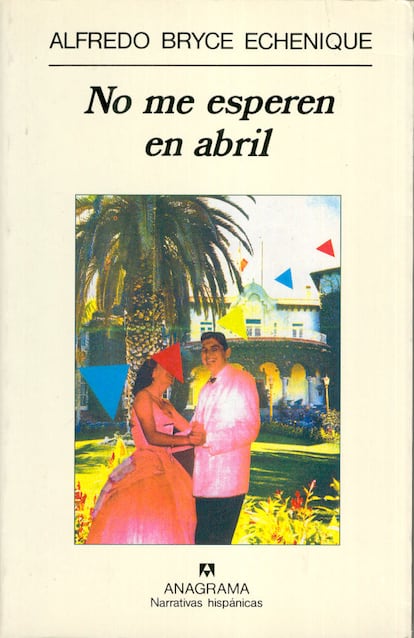
Don’t wait for me in April (1995)
Another novel of learning kneaded with autobiographical flour and with a protagonist, Manongo Sterne, born into a family of the aristocracy of Lima. Like Julius, he will also face a change in his life, but in his case due to an embarrassing episode at Colegio Santa María that forces him to look for other relationships outside. The sentimental humor with which the events of Manongo’s life are narrated from 1953 to the mid-nineties declares its literary source in the surname (Laurence Sterne) and serves as a guide to the story of love and heartbreak with Tere Mancini over the decades. Half a century of encounters and disagreements, with the recent history of Peru as a framework, told with a wealth of narrative effects, many of them extracted from popular culture and the wisdom of the oral storyteller.
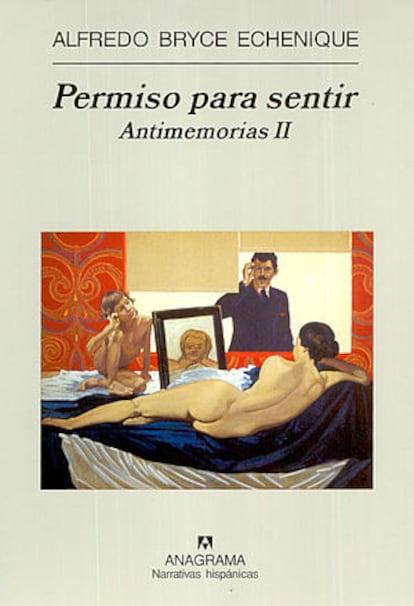
Antimemories I. Permission to live (1993). II. Permission to feel (2005). III. Permission to withdraw (2019)
The three books of memoirs, titled Antimemorias in imitation of those of André Malraux, they are veined by a melancholy that does not expel the different modulations of a friendly laugh that goes from gentle irony to biting pinch. Written against the successive chronology, according to the “order of chance”, as he declares, they expose without veils the writer who asks himself what kind of person he has been and answers – he says – “with some lasting discoveries, which… reveal a particular relationship with life.” With an insubordinate proclivity for telling, he turns such discoveries into stories, interspersed with truth and imagination, in a tumultuous and verbose exhibition of his talent.