
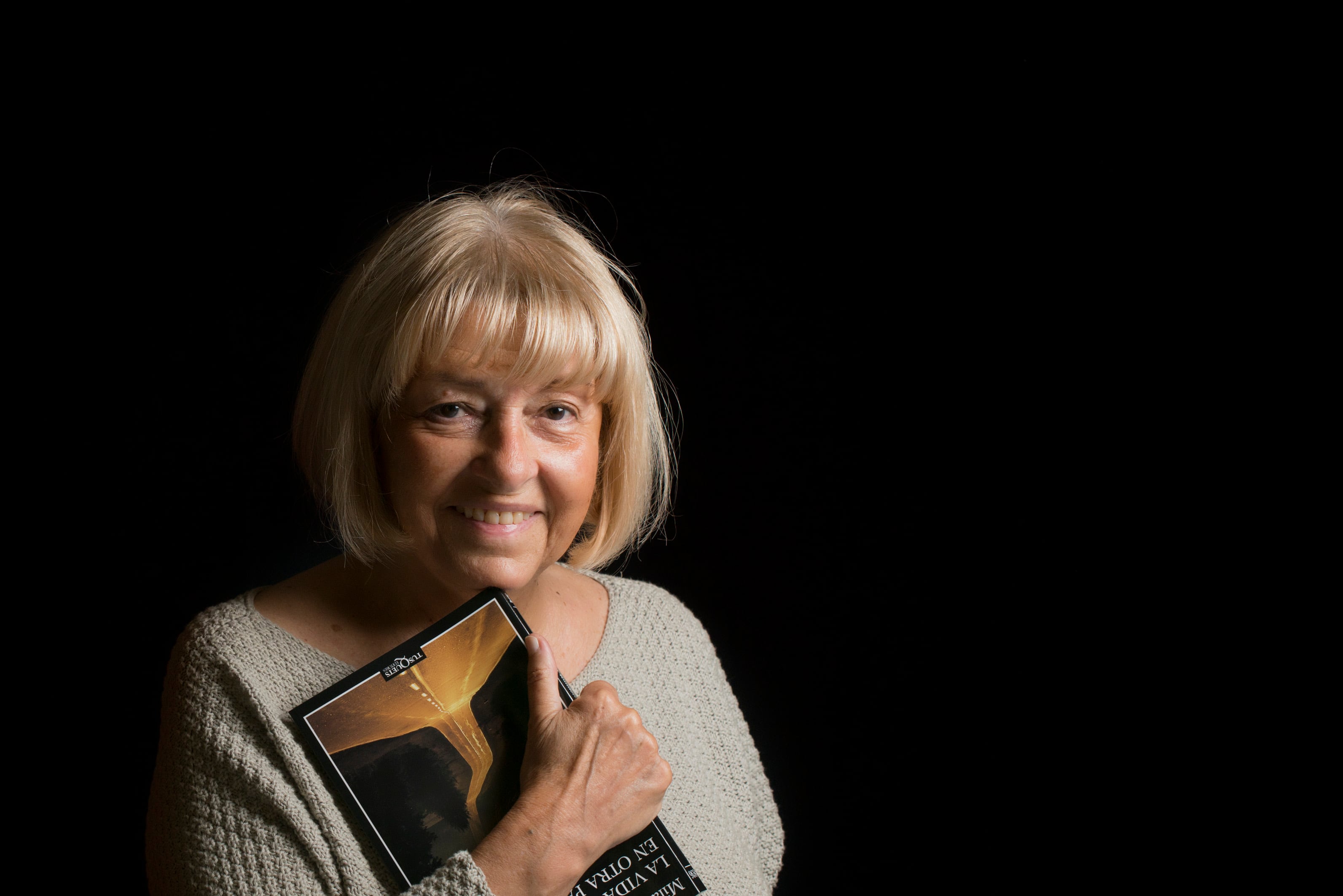
One of the most relevant editors, Beatriz de Moura, has died at the age of 87. “We regret to inform you that Beatriz de Moura has left us today,” said the Tusquets publishing house, which described the editor as “a brilliant and unprejudiced woman, cosmopolitan and brave, a precursor of so many things and the soul of the publishing house.”
De Moura (Rio de Janeiro, Brazil, 1939) founded the Tusquets publishing house and headed it for 40 years.
Brazilian by birth, the daughter of a diplomat, raised in several languages and countries (Bolivia, Ecuador, Algiers, Italy, Chile) Beatriz de Moura arrived in Barcelona with her parents in 1956. She studied translation in Geneva, but returned to that city where she crossed paths with the architect Óscar Tusquets, her first husband and brother of Esther Tusquets, who ran the Lumen publishing house, where De Moura learned—and was captivated—with the trade she would mark his life. In 1969 the couple set up Tusquets.
The launch party of that label, in which De Moura decided to start publishing short texts by already established authors, is a legendary milestone of the divine left Barcelona whose air of openness to the world contributed a new informal, sophisticated and free style, with sixties-style casualness, to the anti-Franco cause. The nights in Bocaccio and the trips that that group that frequented that box He was traveling through the United States, the getaways to the Costa Brava and the connection with the Latin American writers (Gabriel García Márquez, Mario Vargas Llosa, Sergio Pitol) who ended up in Barcelona are part of the imaginary that crystallized in that publishing adventure.
In the apartment where the couple lived, the first titles were put together, interspersed with gatherings, discoveries and exchanges, with meetings with other European editors at international fairs, with the lessons they were receiving from the previous generation, that of Carlos Barral and Jaime Salinas.
The couples of the diffuse and informal group opened up and separated, the friendship endured and Beatriz de Moura found in Antonio López Lamadrid, at the end of the seventies, the personal and professional pillar that the publishing house needed to become the great independent label that, together with Anagrama and Lumen, changed the publishing landscape in Spanish. “That life was serious / one begins to understand it later,” wrote Jaime Gil de Biedma, and the same could be said of that editorial that emerged in the heat of thedivine left: Beatriz de Moura’s efforts were serious, very serious.
His undeniable attractiveness, his charisma, his tenacity and dedication, his free spirit, his rejection of family ties, and his character not given to surrendering to conventions permeated the books that for more than four decades he brought, through Tusquets, to readers in Spanish. Marguerite Duras, Milan Kundera, Jorge Semprún, Annie Ernaux, Simenon, Samuel Beckett, Arthur Miller, are some of the authors who published together with Antonio López Lamadrid and who were joined by the Spaniards Almudena Grandes, Eduardo Mendicutti, Fernando Aramburu and Cristina Fernández Cubas.
From the small books of the Marginales collection to the novels of Andanzas; the collection of science books Metatemas, directed by Jorge Wagensberg; poetry books; the erotic literature of La Sonrisa Vertical that was in the hands of Berlanga; and the books of biographies and memoirs of Tiempo de Memoria and the Comillas Prize. That part of the story places Beatriz de Moura with her indomitable beauty dancing in the center of Bocaccio’s court or shouting goal! when the Brazilian team scored in a World Cup.
(Breaking news. There will be an extension soon)