
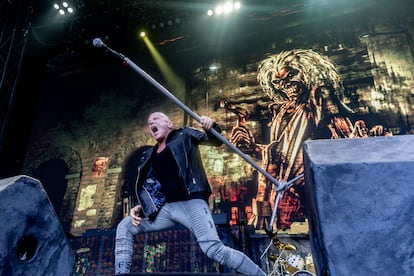
This weekend a situation that is difficult to understand is going to occur: the three most important Spanish heavy metal/hard rock festivals coincide. Each one in one part of Spain: Resurrection Fest takes place in Viveiro (Lugo, from July 1 to 4), Rock Imperium in Cartagena (Murcia, July 3 to 5) and Barcelona Rock Fest in Santa Coloma de Gramanet (Barcelona, July 3 to 5). They are events that sell at least 80,000 tickets between their three or four days of concerts. Resurrection Fest reported that for the four days of the 2025 edition they dispatched 140,000 tickets. And that in the midst of controversy over the participation of the pro-Israeli fund KKR in the festival. They expect similar data for 2026. During the editions of the triumvirate, the greats of heavy and metal have performed: Iron Maiden, Judas Priest, Kiss, Rammstein, Slipknot, Scorpions, Megadeth, Deep Purple, Blind Guardian and Yngwie Malmsteen. Several generations of tough bands sharing the bill.
The excellent attendance data certify the good health of the metal despite remaining completely out of the top positions of the playlists on digital platforms. But live the audience responds to the call of the guitars. The turning point came in 2015, with an edition of Resurrection Fest that brought together 54,000 people. In 2018, Iron Maiden almost filled the Madrid Metropolitano with 40,000 people. Juan Antonio Muñoz (Cartagena, 40 years old) was the promoter of that concert: “It can be considered the first large stadium in Europe in its history. Maiden had played in a smaller stadium in Sweden (about 35,000) and in large festivals, so the Metropolitano was a great challenge. They themselves did not see it very clearly: they were afraid of not filling up. But it was a success. There we saw an audience that offered us a lot of hope for the future: alongside the mature fans, forty or fifty years old, many young people joined in and a feminine trend in this group.” Based on this experience, Muñoz founded Rock Imperium in Cartagena in 2022.
But among so much good news, an unresolved issue arises that may jeopardize the viability of any of these three massive events. Last year they already shared the same dates (last weekend of June) and this 2026 the three have moved to the first of July in an act that has more to do with competition than with coincidence. Logic dictates that if they did not coexist on dates they would not fight for the same audience. The director of Rock Imperium, Juan Antonio Muñoz, does not hide: “We cannot sit down and talk because the three of us get along terribly. But the truth is that coinciding puts our festivals in danger. And it is difficult to solve.”
From here a series of hidden disputes arise that a source, who prefers to omit his name, defines as “the game of thrones of heavy music.” Some ended up in court, such as a conflict between Rock Fest and Resurrection over a Kiss concert. Muñoz points out that in 2023 he tried to move Rock Imperium to avoid overlapping, “but the other promoters counter-programmed me with a double bill of Motley Crüe and Def Leppard in Rivas (Madrid) and Rammstein in the Metropolitano.” Spain is so economically seductive for bands that this year Iron Maiden performs in Resurrection and Rock Imperium. The festivals probably didn’t want it, but the creators of The Trooper They overcame the Spanish civil war and will present their 50th anniversary tour in both cities, Run For Your Lives.
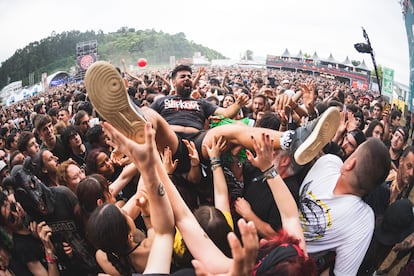
Iván Méndez (39 years old) has been director of Resurrection Fest since it was founded 21 years ago. His work has merit: at the age of 18 he took charge of the event in a modest first edition held in his town, Viveiro, with 15,000 inhabitants, and performed with his group, Twenty Fighters. At that time it consisted of a concentration of bands basically of hardcore for a few hundred fans. Today it is a mega festival where classic heavy and punk groups perform, but also young bands of these styles. Méndez appeals to experience to stay in the conflictive first weekend of July: “The reason for not moving is because we are the oldest of the three festivals and we always celebrate it on those dates, and also because the artists themselves already have us located and when they design their European tours they count on us that week.”
The director of Resurrection says that they tried to sit down and talk with the other two dates, “but it didn’t work.” “We no longer talk to each other,” he points out, “but for our part we don’t take each other to death. Maybe they do among themselves, because they are closer and they make more similar posters.” (Those responsible for Barcelona Rock Fest did not want to speak for this report). Would the director of Resurrection be willing to sit down with them? “On our part there was never a problem,” says Méndez, “but we have tried and things don’t flow, and if they don’t flow we don’t have to force it.” And he reports that, unlike the impossibility of reaching agreements with the Cartagena and Barcelona festivals, they do collaborate with others in Belgium or France. Méndez also exposes a distinctive aspect: “The characteristics are different: one thing is a festival that takes place in a city and another is us, where the camping area has a lot of weight. In addition, the Resurrection poster opens a big gap for modern metal bands. I think the concerts we offer are different.”
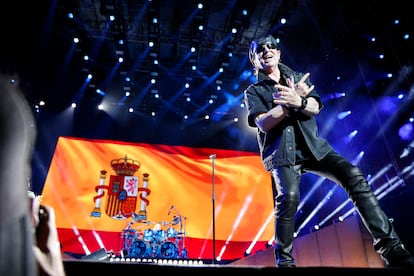
The groups benefit from this rivalry, as they see the possibility of fattening their cache to sell themselves to the highest bidder. Journalist David Esquitino, who works at Mariskal Rock and directs the program Metal Corsairsknows well the intertwinings of the three festivals. “Instead of helping and collaborating with each other, as other festivals in Europe do, in Spain they are more about competing. It’s a shame, because in the end the fans lose out, as they have to choose between three very large festivals, because they would possibly go to all three or two if they didn’t coincide on dates.”
Outside of heavy music, there is a striking case of two festivals that are absolutely eclectic in terms of musical style. Mad Cool, in Madrid, and Bilbao BBK Live have been sharing weekends for years. This 2026 they will cross paths again, from July 8 to 11. Those responsible for both are former partners who did not exactly remain friends when they decided to go their separate ways.
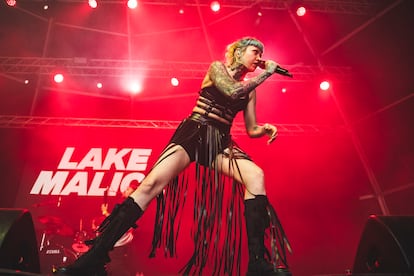
The rivalry between Resurrection Fest, Rock Imperium and Barcelona Rock Fest is reminiscent of the Cainite context in which Spanish heavy music has almost always lived. The clashes between the leaders of the movement hindered its power to transcend and led the movement to suffocation. It happened from the beginning, in the mid-eighties, with three journalists who worked mainly on the radio and who rarely got along: Vicente marshal Romero, Mariano García and Juan Pablo Ordúñez The Pirate. There were stages in which if you were with one you were the enemy of the other.
In the recent documentary Chancellor. The Temple of Rock, Regarding the history of the Madrid heavy club, the Cráneo group regrets that they never played at that nightclub because they were supported by El Pirata and the club’s programmer was Mariano García. What can we say about the rivalry between Obús and Barón Rojo, the two leading bands of the genre, with vetoes included. Or the confrontations within Barón Rojo, the banner of hard rock in Spain, made up of two fiercely opposing sides: the De Castro brothers, Armando and Carlos, on the one hand, and Sherpa and Hermes Calabria on the other. Even today, 40 years after their time of glory, daggers continue to be thrown.
The battle within heavy music is fought in Spain this weekend. Iron Maiden’s warlike lyrics provide the soundtrack.