
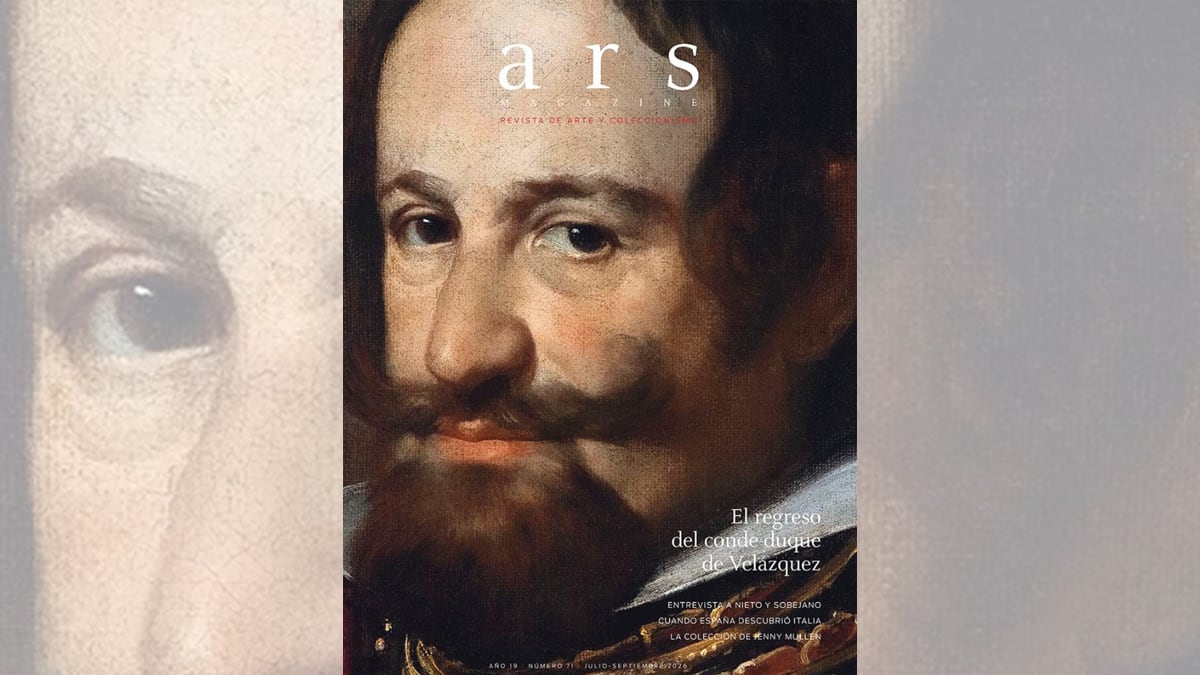
The director of the Detroit Institute of Arts, Salvador Salort-Pons, has published an article reporting the discovery of the first portrait that Diego Velázquez made of the Count, Duke of Olivares, when the painter arrived at Court in 1626. The discovery has been revealed in Ars Magazinewhere Salort-Pons has highlighted that the painter’s commission also included portraying Francesco Barberini, nepote of Pope Urban VIII, to commemorate the pontiff’s visit to Madrid, with the idea that they would exchange the works. Although that of the Count-Duke has already been found, that of Barberini remains to be found.
The oil is The Count Duke of Olivares in armora piece that belongs to a private collection and, as Salort-Pons explained, Velázquez “presents him as the leader of the army.” The expert has explained that the work found turns towards a “military iconography” of the portraits of Olivares, unlike those dated 1624 and 1625, where the painter presented him as a statesman in his office.
“Between 1623 and 1626, Velázquez developed three different images of the Count, Duke of Olivares that reflected the power of the valid man at Court and his closeness to the king,” he develops in the article. “These portraits—like those he made of Philip IV during those years—were intended to present the new monarchy and its administration in a significantly different light from that of the previous reign, reflecting a spirit of reform and austerity.”
The publication reviews the techniques that Velázquez used in the work. While the head is lightly painted, the armor and band “are executed with fluid brushwork and thicker impasto.” The style is comparable to that of the Portrait of Philip IV, from 1626-1628. “For example, for the gold details on the armor, use long strokes from left to right, starting with a dense application of pigment that thins naturally.” Furthermore, he adds, the composition between both works is similar, where both appear on “brownish backgrounds”, and with similar dimensions that present “the model in a three-quarter bust with armor and a red band.”