
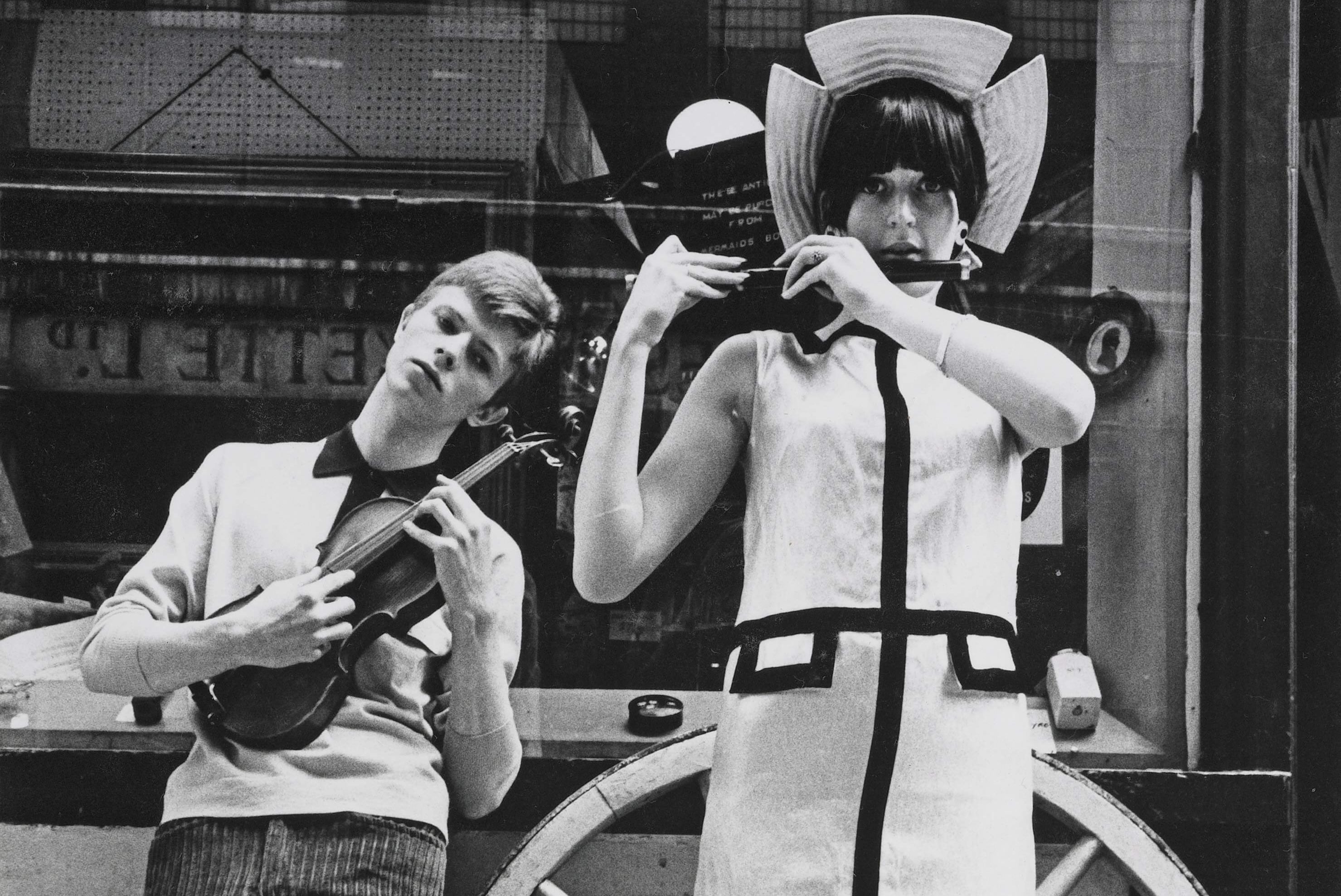
The first night I visited London, during a trip across the equator, we ended up at night in Soho. Accustomed to stupid tourists, they scammed us at ease. I assumed it as an educational experience; Over time, I even got used to settling there, in a hotel on Wardour Street, strategically located between splendid bookstores and record stores. It also had the historical alibi of its proximity to Denmark Street, the former heart of the British music industry, now dedicated to the cult of the electric guitar.
Many years later, I mentioned the street to David Bowie and his eyes lit up. He explained that he used to go to La Giaconda Café, at number 9, where he met Marc Bolan, Elton John and other aspirants to enter the business. They were more or less naive modwho faced the reality of veteran sharks awaiting the arrival of fresh meat. But there were legitimate excuses: he connected with musicians looking for work and there he brought together one of his first groups, The Lower Third. Obsessed with not missing the slightest opportunity, he even set up shop on the street with a motorhome. He told that moment in his song London boyswhere he portrayed himself at the age of 17, taking speed to keep up with the pace of the tempting city.
He was amused to know that I had precisely titled London Boys a compilation that included their material and other period recordings made for the Pye label. Furthermore, I explained to him that he appeared on the cover, in all his splendor moddrawn by Víctor Aparicio. Excitedly, he asked me for a copy of the LP and I promised to send it to him (I never did, alas).
In fact, one of his first television specials, The 1980 Floor Show was recorded at the very legendary Marquee Club, at 90 Wardour Street. It was a thoughtful attempt to recover the aesthetics of the sixties, with Marianne Faithful, the Troggs and the pure whim of the group Carmen, Californians who practiced a kind of flamenco rock. That same year, Bowie published Pin-Upsa heartfelt tribute to the bands he had enjoyed at the Marquee, on whose cover he appeared with the it girl from that time, Twiggy. The nostalgic exploitation of the sixties was inaugurated: it coincided with a nebulously similar album, These foolish thingswhich a sulking Bryan Ferry insisted on remembering was recorded before Pin-Ups.
David’s argument was that a musical revolution was catalyzed in that place, when kids in love with various varieties of African-American sound decided to create their own expression. Since in the United Kingdom everything is a matter of style, they also generated a lookIt is no coincidence that in Soho itself there is Carnaby Street, a textile mecca, which still functions as a faded tourist attraction. Many pilgrims—they are usually called bowieites— They go to neighboring Heddon Street, now pedestrianized and barely recognizable as the place where Bowie had his portrait taken guitar in hand for the cover of The Rise and Fall of Ziggy Stardust and the Spiders from Mars: “The Gibson Les Paul is uncomfortable: it weighs too much.”
He didn’t feel homesick for those places: “Since I hate airplanes, I have to travel by boat. So I may not visit again.” It was prophetic: he died there, in New York.