
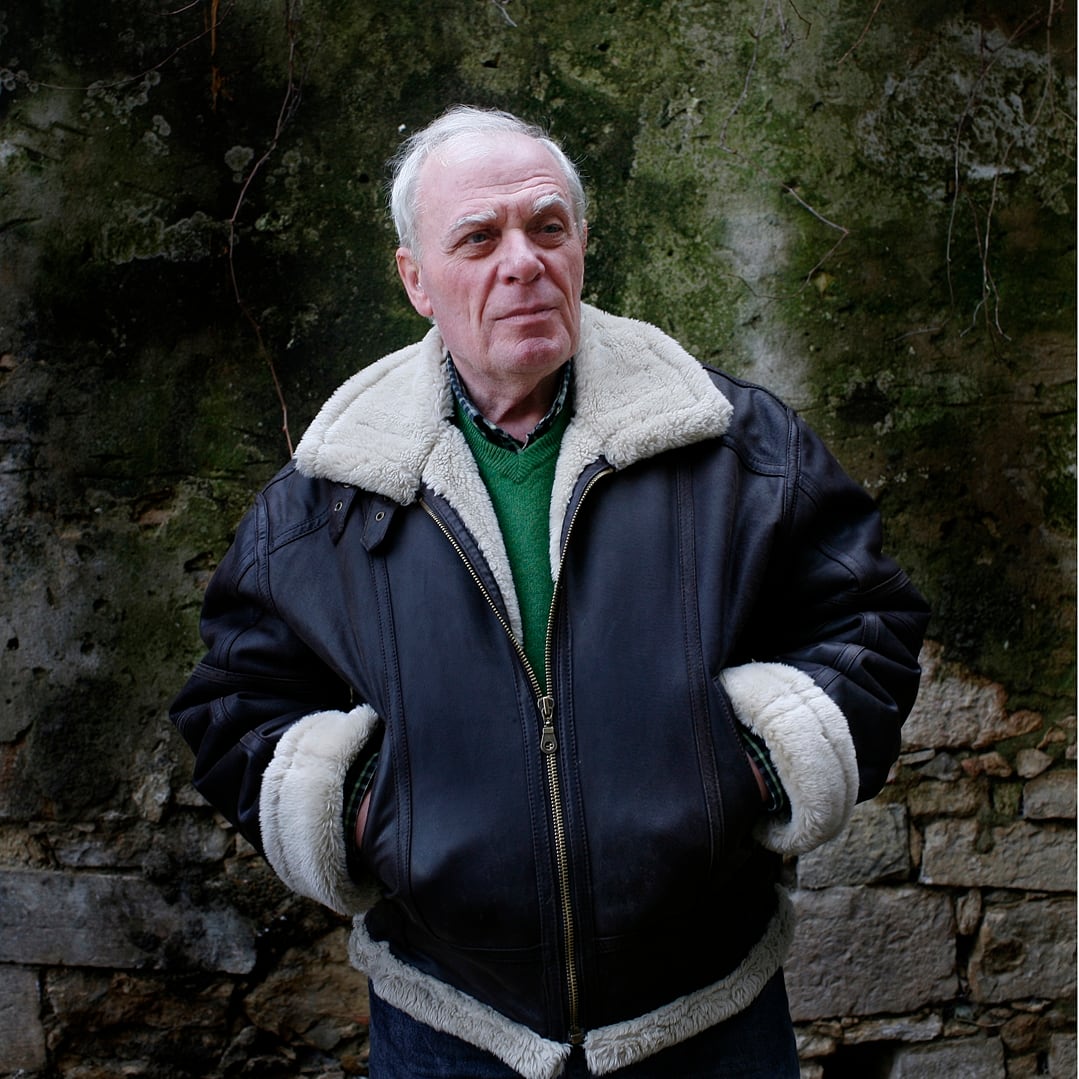
António Lobo Antunes repeated for years a phrase that many have interpreted as a provocation or a gesture of vanity: “No one writes like me.” As time has passed, however, that statement has come to seem less like a boutade than a simple observation. His work, built over more than four decades, has profoundly transformed contemporary Portuguese narrative. There is, without a doubt, a Lobo Antunes style: a writing that fractures the traditional narrative, multiplies voices and turns time into a circular space where memory, consciousness and experience coexist without hierarchies. His novels go beyond the limits of the genre and create a unique literary territory.
Paradoxically, this writer who enjoys extraordinary recognition abroad has always been an uncomfortable figure in his own country. Lobo Antunes never hid his opinions on Portuguese literature or on Portugal itself, and his frankness – often harsh and even hostile – has made him a presence that is difficult to digest for the cultural milieu. For years, Portuguese critics (and especially academic critics) have had serious difficulties separating the work from the character, and his public figure (“since Camões there has been nothing interesting in Portuguese literature… until me”) has definitively conditioned the reception of his books.
The fundamental themes it addresses make up an unmistakable territory. Firstly, Portugal and its colonial war, transformed into an open wound and constant delirium. In its pages, the war appears as a ghostly space of dehumanization and traumatic memory that marks the individual and collective destiny of the Portuguese. In parallel, Lobo Antunes has turned illness – physical or mental – into a metaphor for time, human fragility and the persistence of memory. Added to these themes is a constant attention to injustice and forgotten lives: the defeated, the marginalized, those who inhabit the margins of history. But I want to believe that the deepest key to his work is its poetic dimension. Although presented as novels, many of his books can be read as immense prose poems of hundreds of pages. His writing is constructed through images, ellipses, repetitions and lyrical associations that drag the reader into a verbal current of enormous emotional intensity.
Since 2011 I have had the privilege of translating his work into Spanish. Translating Lobo Antunes is entering that same torrent of language, listening to the voices that intersect in its pages and trying to reproduce his music in another language. I confess here that no other author has taken me so many times, while translating it, to a state of strange, almost dreamlike emotion, on the verge of tears. Because in the literature of António Lobo Antunes there is something that goes beyond the refined technique or the unmistakable style: a human intensity, with its virtues and its miseries, that crosses the page and reaches the reader in a direct, visceral way. Perhaps that is why the phrase that for years was interpreted as arrogance has ended up acquiring the weight of evidence. Nobody has written like António Lobo Antunes.