
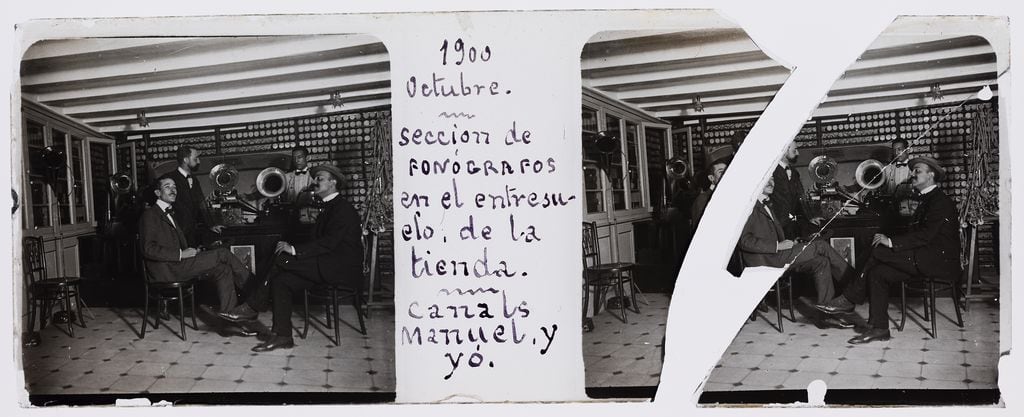
In the celebrated phrase of novelist LP Hartley, “the past is a foreign country, they do things differently there.” I remembered it while devouring a voluminous book, The song after the song (La Droguería Music), by Chemi López. Take the subtitle The acoustic era 1878-1926 and it is a detailed study of flamenco recordings; It also works as a fascinating overview of the takeoff of the Spanish recording industry. It is worth clarifying the term “record company”: it all began with the cylinders of the inventor Thomas Alva Edison, later surpassed by the plates (with one or two engraved sides) of Emile Berliner.
The thing is that, as I progressed in that story, I noticed that those founding fathers were not much different from the great record labels that I knew in the brave times, before the helms of the companies passed to those aseptic managers who, shielded by their MBA, today cut the slack. Nor do they believe that such pioneers were beings of light. They were adventurers, in many cases battered in the colonies (Cuba, Philippines), merchants in optics, toys, medicines or, that other great novelty, photography. There was no shortage of politicians, soldiers, street vendors…
Characters who, in part, come back to life thanks to the fact that Chemi López recovers their photos in a full-page colored version (the my fellow man, my brother). If we are to believe in psychogeography, it also helps that many worked in the Madrid streets of Barquillo and Preciados, marked by the sale of sound equipment or records. The extraordinary thing is to see how advanced they were. The launch of the Girl of the Combs pivoted on the image. The ARs, responsible for Artists and Repertoire, already existed. Pseudonyms were used: record label Juan Dessy Martos, artistically Mr. Reyna, also served as judge. They made plays marketing How to give Christmas lottery tickets with the purchase of a record. They advanced the concept of a musical magazine with the Valencian Phonographic Bulletin (1900). The concept of contractual exclusivity had not been implemented and artists were happily flying between different record labels.
Those precursors were involved in battles over the supports, a tricky issue given that five-, seven- and 10-inch discs coexisted, not to mention the different speeds (the happy RPM). Equally bloody were the disputes over the concept of authors, even before the founding of the current SGAE, in 1899. And radio had not yet appeared, competing with live music but a greedy invention for its fundraising potential.
there was not talent shows, but festivals were used to launch artists, if we apply that definition to the mythical Granada Competition (1922-1923), where the different concepts of Federico García Lorca and Manuel de Falla regarding what were pure creators and “corrupt artists” collided: the “eruditism” of the traditionalists clashed with the practices of “modern times.”
The conclusion: it reaffirms that what goes around comes around. One looks forward to the next installments of The song after the song that Chemi López announces in his prologue. The dedication of someone who – just one example – is able to delve into the municipal registers to determine the identity of those advanced is admirable. Honor to the pioneers.