It is difficult to think of a novel, or a movie, without the basic cell of architecture: the house. In the theater it is unusual for dramas and comedies not to take place in homes. Although, since the scenarios are limited, it happens because its main causes—money, fear and (it’s Christmas) love—escape to other places.
It is also difficult to find a novel in which the city—of arrival, of flight, of passage—does not occupy pages. It happens like this for a simple reason: they are the scenarios of life. The places that fill us with joy and misery are usually the same. That is why we learn a lot about architecture and design by observing how we behave in them. And it is for that, to put your head into the lives of others and learn, be surprised, admire or witness the vicissitudes of others, for which novels open a door.
The language is wise. A homeless person is described today as a “homeless.” Even for those who do not have a home, the ATM or the bank where they try to sleep represent the idea of shelter. Of rest. The Indian architect Charles Correa told EL PAÍS: “In Mumbai I defended installing benches so that people could sleep.” It is curious that the roof, as a symbol of protection, is also used as a limit mark in the expression “glass ceiling.” Those two opposites—virtue and defect—that coexist in almost any concept are also present in homes. We all know how much our own home can be a refuge or a prison, a castle or a showcase.
That domestic duality is present in countless novels, of course. Only this year, at Andrea Bajani’s Premio Strega, The anniversary (Anagram) a “watertight house” is described in the first person, that is, isolated from the outside world. Its possible causes: shyness and fear—with related etymologies. And its consequences: “Every limitation of freedom brings with it an incitement to look for stratagems to sneak through the loopholes.” Not by chance, the novel talks about the oxygen of the city: “I began to walk through the city in a kind of rehabilitation therapy for myself and reality,” Bajani writes in the first person.
The relationship with the house is notarized in the “requirements to be able to live together” that the writer Gonzalo Torrente Ballester wrote down to his wife, Josefina Malvido Lorenzo, mother of his first four children, among them Marisa, the mother of Marcos Giralt Torrente, who is the one who narrates his story and dissects – as only love can lead to trying to know – the personalities of his uncles and grandparents. Torrente’s house had to be silent. Josefina had to impose it on the children “in whatever way.” She had to keep him “out of domestic minutiae, give him control in exchange for not being bothered.” But, in addition, the house had to be inhabited by a Josefina “always beautiful, sweet and seductive, involved in her intellectual work to discuss it when he required it.” All of this was communicated in writing. Like instructions for use to which you can return. That memory novel is called, with great skill, The illusionists (Anagram). And he also relates, in the first person, that it was Marcos Giralt’s mother who bought the house in which he writes.

Of houses, soulless mansions, he also speaks Proust, family novel, by Laure Murat (Anagrama), which depicts “the absent gaze of worldly people who do not want to be bothered”, the “aristocratic pleasure of displeasing”, which Baudelaire described. And the conclusion that “not even the virtues of a person or a group can exist without their vices.”

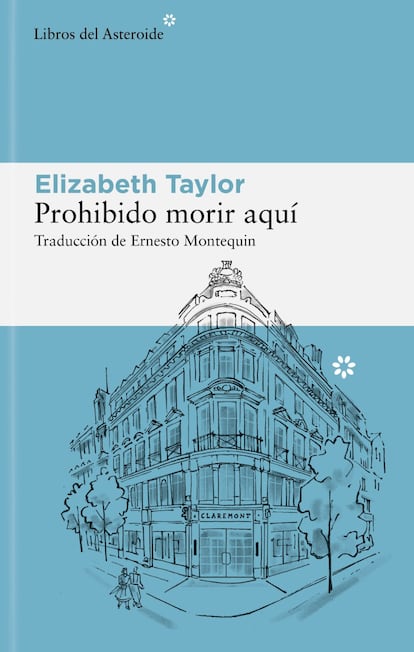
The same applies to hotels. On the walls of the Claremont, Elizabeth Taylor managed to portray an entire London era. the novel Forbidden to die here (Asteroid Books) happens between four walls. But it is not claustrophobic. What happens is little and everything. The intelligence of its author in choosing the details will allow them to move to her and… live with them.
Anita Brookner also places, in Hotel du Laca world between overwork and listless laziness. People who grow up ignoring the world “They have protected her so much that she is not able to understand that someone could be vulnerable. Maybe that is why she is so tough.” And… that inner demon: “Aren’t you tired of being polite to people who aren’t polite?”

There are more houses. It’s clear. The one drawn by Michel Rabagliatti in Rose on the island (Astiberri) looks for a classic: returning to the place where he left happily to demonstrate another classic: that happiness is not places but moments. Those painted by Ana Penyas in In wake (Salamandra) show that any scenario, rich or poor, can keep you awake. Also that the reasons for insomnia can be dramatic or strange. That is why staying awake is more a portrait of a society than of a domestic interior.
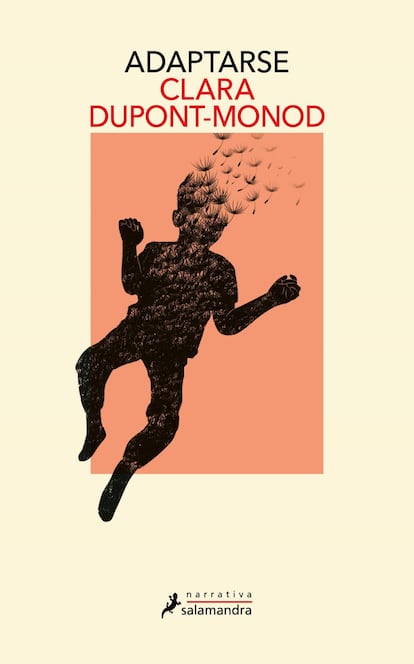
“A different child is a very difficult test. Most couples end up separating,” writes Clara Dupont-Monod in Adapt (Salamander). The French author writes about being like the place itself: “it would seem that the mountain had given it a kind of hardness. People are the result of the place in which they are born.” He does it, you may have deduced, with both fatalism and political incorrectness: “Women are very skilled in the face of destiny. They have the good sense to never challenge it. They adapt.” But also – we have noted the coexistence of opposites – with beautiful lucidity: “Children are always the forgotten ones in the stories. They are led like sheep, they are separated more than they are protected. But children are the only ones who take the stones as toys. They give us names, they color us, they give us eyes and a mouth. They pile us up, they sharpen their aim with us. They line us up to mark the limits of the goals. The adults use us. The children “they resign us.” They speak, you may have guessed, the stones. And they tell the story of a boy who was never going to learn anything, but who was going to teach others a lot. I wish you a year in which we are able to see it.