
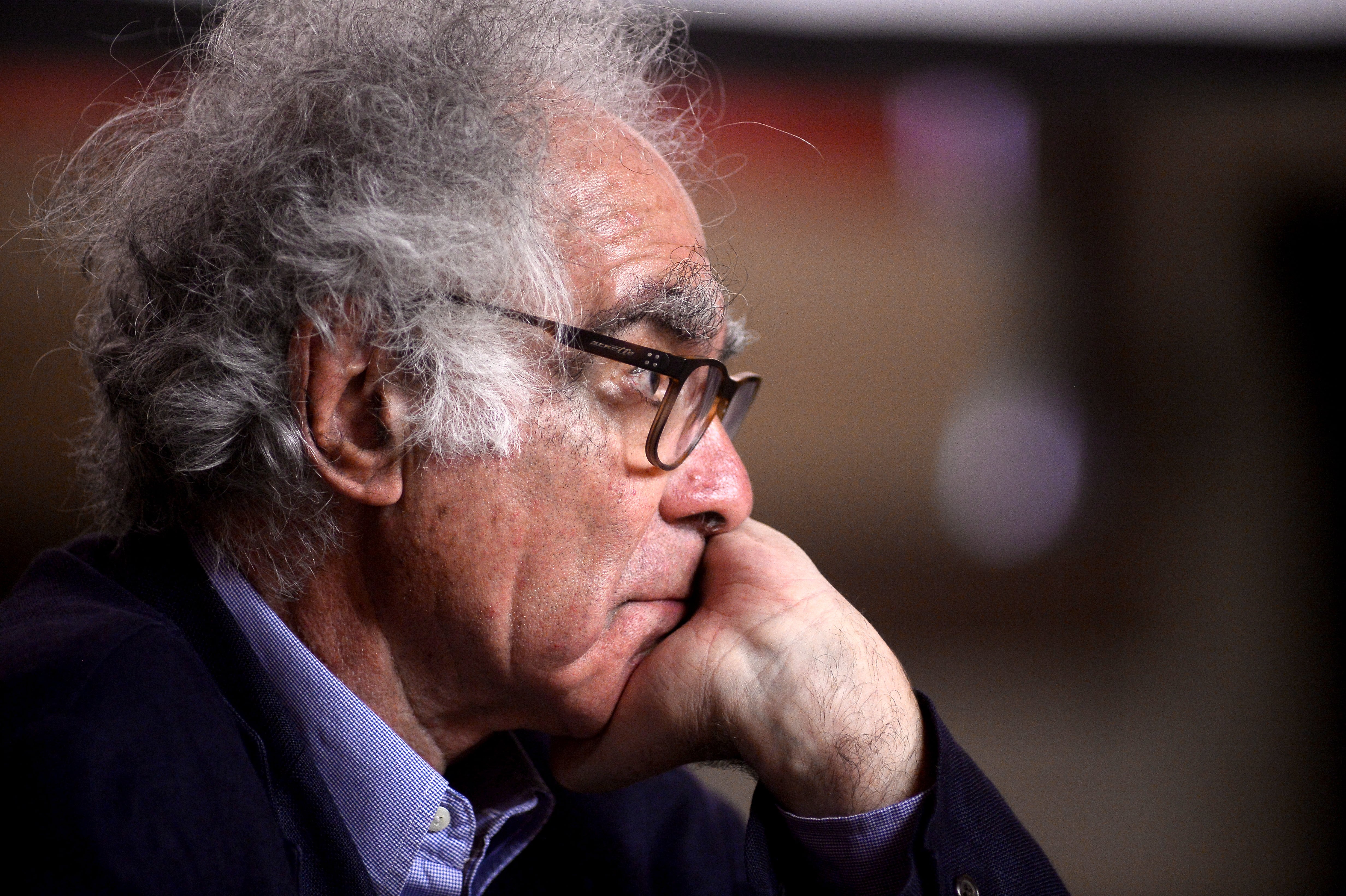
Carlo Ginzburg (1939-2026) has died and many are overcome with sadness. His death marks the disappearance of one of the most influential historians of recent times. His name was soon associated with The cheese and the worms (1976): Cheese and worms It is the book that has most transformed our way of understanding the profession of historian. It turned its protagonist, Menocchio, an unusual and obscure miller from the 16th century, into a famous figure in historiography. It has been so successful that its readers in multiple languages come from numerous disciplines. However, to reduce Ginzburg to that volume would be to diminish him.
For decades he was one of the most original and respected European intellectuals. Son of Leone Ginzburg, murdered by the Nazis in 1944, and the writer Natalia Ginzburg (Levi), he grew up in an environment in which literature, moral reflection and civil commitment were part of daily life. I am referring to Turin and the Einaudi Publishing House. That inheritance never stopped accompanying him.
His best-known contribution is the so-called microhistory, a form of research that proposes reducing the scale of observation in order to raise universal questions based on specific cases. The singular was for him a way to enter the humanity of the past. Menocchio, the inquisitorial processes or the cases of witchcraft were laboratories from which Ginzburg posed broader questions: the relationships between popular culture and scholarly culture, the circulation of ideas, the mechanisms of power or forms of dissidence.
He contributed decisively to this perspective with the formulation of what he called the “indiciary paradigm.” The historian works as a detective, a doctor, a judge. It neither incriminates nor condemns nor heals, but it reconstructs an absent reality based on traces, symptoms, indications. This reflection influenced far beyond his discipline and reached fields as diverse as literary criticism, anthropology or art history.
Whoever reads it today will notice that Ginzburg was much more than an innovator. Above all, he was an exceptional reader. Literature occupied a central place in his way of understanding historical knowledge. Dostoyevsky, Kafka, Proust, Stendhal and Stevenson appear in his essays not as simple erudite references or decorations, but as interlocutors. He learned that understanding human beings requires attention to contradictions and individual experiences. Literature and his mother taught him well.
Perhaps that is why his books always combined erudition and narrative ability. Ginzburg knew that history needs plot and drama, careful prose and story. Now, he was firmly opposed to confusing history and fiction. In the face of relativism, he defended truth as the horizon of research. Knowledge of the past is always provisional and debatable, but not arbitrary or imaginary.
Nor was he an academic locked into his specialty. He intervened in debates on fascism, anti-Semitism, the Holocaust and contemporary threats against democracy. In his later years he insisted on a particularly revealing idea: dignified belonging to a community is not based on shared pride, but rather on the ability to critically assume that which embarrasses us. Memory makes sense when it forces us to face what we would prefer to forget. The story deals precisely with that.
Those of us who have analyzed and disseminated his books know that his legacy does not consist only of a historiographic school or label. Ginzburg taught us a way of reading texts, images and voids. The documents are always biased, incomplete messages, with ellipses, with contradictions, with amendments. The historian works the wonder of relating these sources and finding meaning where there seemed to be none. The documents must be read as clues that the past leaves dispersed: with curiosity, with method and with moral responsibility. He was a generous man, of great bonhomie and enviable sensitivity. His last book published in Spain is A story without end (Ampersand, 2025). Precisely. This is not over. Ginzburg will continue to be our interlocutor.