
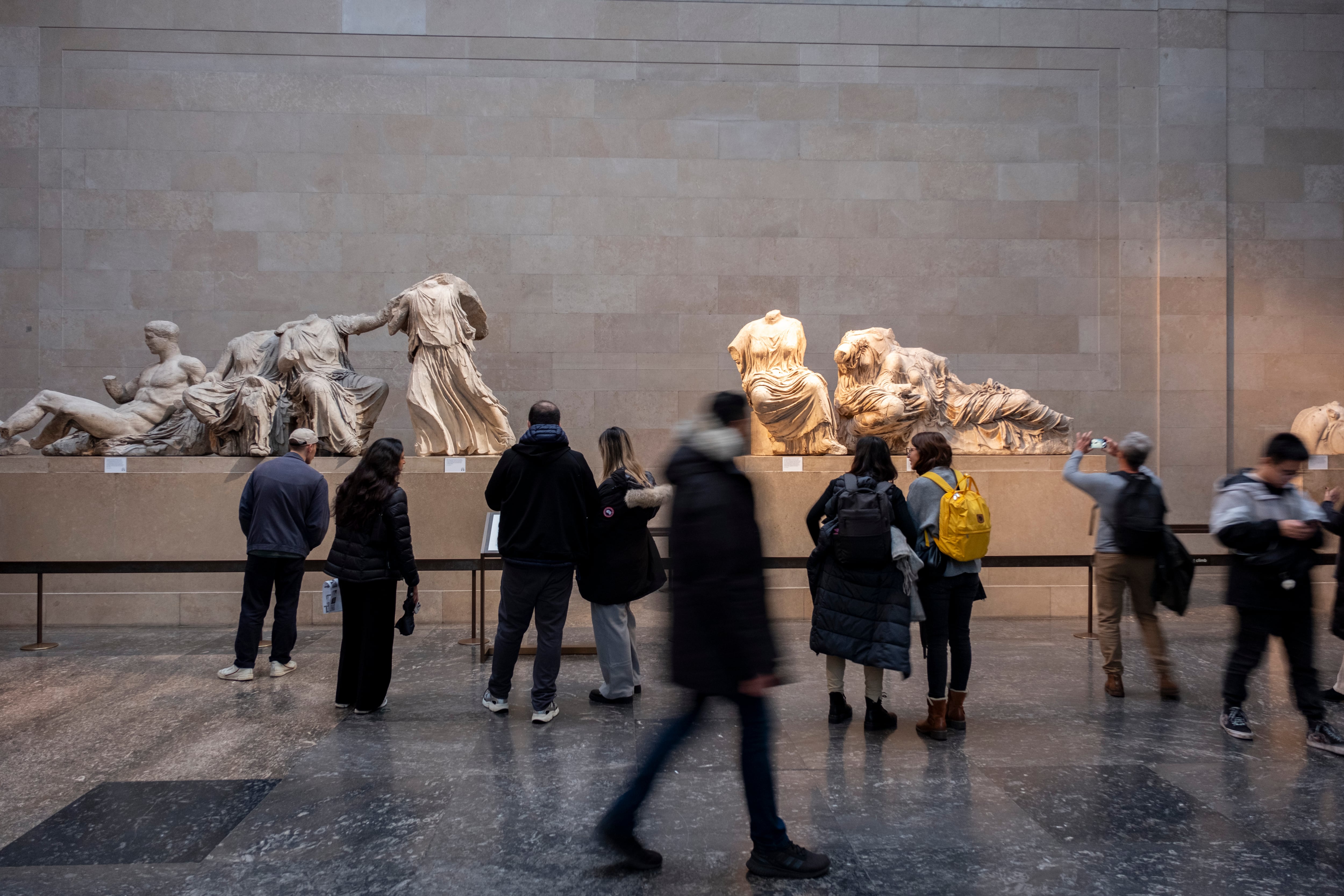
In a city where the minimum metro ticket costs 3.50 euros and any establishment charges at least four euros for a coffee, the Parthenon marbles can still be seen for free, in the British Museum; Velázquez’s Venus in the Mirror National Gallery; or the Ophelia of the pre-Raphaelite John Everett Millains in the Tate Britain It is an incentive to continue giving London a chance.
The Labor Government of Keir Starmer, struggling with increasingly tight accounts in all ministries, is now considering returning to charging tourists for admission to national museums, an initiative that has begun to generate considerable controversy in the world of the arts.
Culture Minister Lisa Nandy has admitted that her department is “exploring the potential opportunities of charging international visitors admission to museums”. The idea came from an independent report carried out a few months ago by Arts Council England, the public entity led by Baroness Margaret Hodge, which is dedicated to financing and sponsoring artistic initiatives in England through the budget and income generated by the National Lottery.
The Starmer Government resurrected in its electoral program the idea already cherished at the time by the New Labor of the then Prime Minister, Tony Blair, of imposing on citizens the obligation of some type of national identity document. The world has changed since then, and the fact that each person carries a smartphone opens the possibility of the document being digital, easy to control and apparently less coercive for a country jealous of individual freedoms.
Starmer had the project in mind as a way to facilitate the control of irregular immigration, but the Arts Council England report has caught the opportunity to revive the proposal to charge museums again. “It would be an invaluable opportunity to review the policy of free entry for international visitors to our national galleries and museums. The individual identification system would provide us with an effective mechanism to maintain free entry for all UK citizens and minors, while we can develop a payment model for foreign tourists,” the text says.
Although these are recommendations, the fact that the minister has publicly expressed her acceptance of all of them has unleashed alarm and debate in some cultural institutions.
Free access to national museums, unlike what happens in many other countries, such as France or Spain, was implemented in 2001 and was a success from the first moment. According to the latest official figures published, corresponding to the 2023-24 season, 43% of all visitors to English venues were foreigners. A total of 17 million people, in absolute figures.
Although London’s museums remain a considerable magnet for the millions of people who flock to the metropolis, the numbers have never regained their pre-pandemic vigor. If in the 2018-19 season almost 50 million visitors were reached, in the 2023-24 season the figure was reduced to 40.8 million.
The most visited institution remains the Natural History Museum, followed by the British Museum, the Tate Modern and the National Gallery.
Among the recommendations of the Arts Council England is also the possibility of extraordinary income through the tourist tax on all hotels, an idea that London City Council has already announced. There are many who argue that this type of collection from tourists would be less aggressive than directly charging museum admission. “We believe that the hotel tax is much better to ensure that the system of free access to museums continues,” defended Tristam Hunt, the director of Victoria & Albert. The precondition of a personal digital documentation system makes any changes difficult, according to Hunt. Because, in fact, the Starmer Government has backed down again on this project, which remains stalled.
In any case, the Ministry of Culture has not advanced, at this point in the debate, what the average ticket price for tourists could be. A new revision of the proposal has been scheduled to be published by the end of this year.