

—Haven’t you ever been to Albacete?
The guide Francisco Tébar rubs his hands. Everything will be new for the visitor, including the treatment, the tourist is a friend. Go ahead, say the people of Albacete, it’s always a yes, without giving yourself importance, the doors are open, everything is easy. A worker at the Cuchillería museum improvises a guided tour. A salesperson from a store located in the modernist Lodares passage, the star resource, they would say in a Tourism faculty, comes out to say hello when he hears Tébar’s loud explanation: it is a commercial and residential gallery. A worker from the Provincial Council allows us to photograph the imperial-type staircase of the provincial palace of Albacete (1880) despite it being an area without public access. The receptionist of the inn, a La Mancha villa located on the outskirts, lights the fireplace to create a home at dusk. A waiter offers, without anyone asking, a bottle of water for the trip. It was the first time in Albacete, the guide was right, but more will come and others will come.
Inside the hostel

An inn of this time
Two customers walk through one of the characteristic hallways of the parador, with terracotta floors, wooden beams and windows that overlook the patio. The hotel is open twelve months and has a staff of 48 workers. Javier Álvarez, the director, says that clients consider Albacete a place of passage, but when they get to know it they repeat or extend their stay.
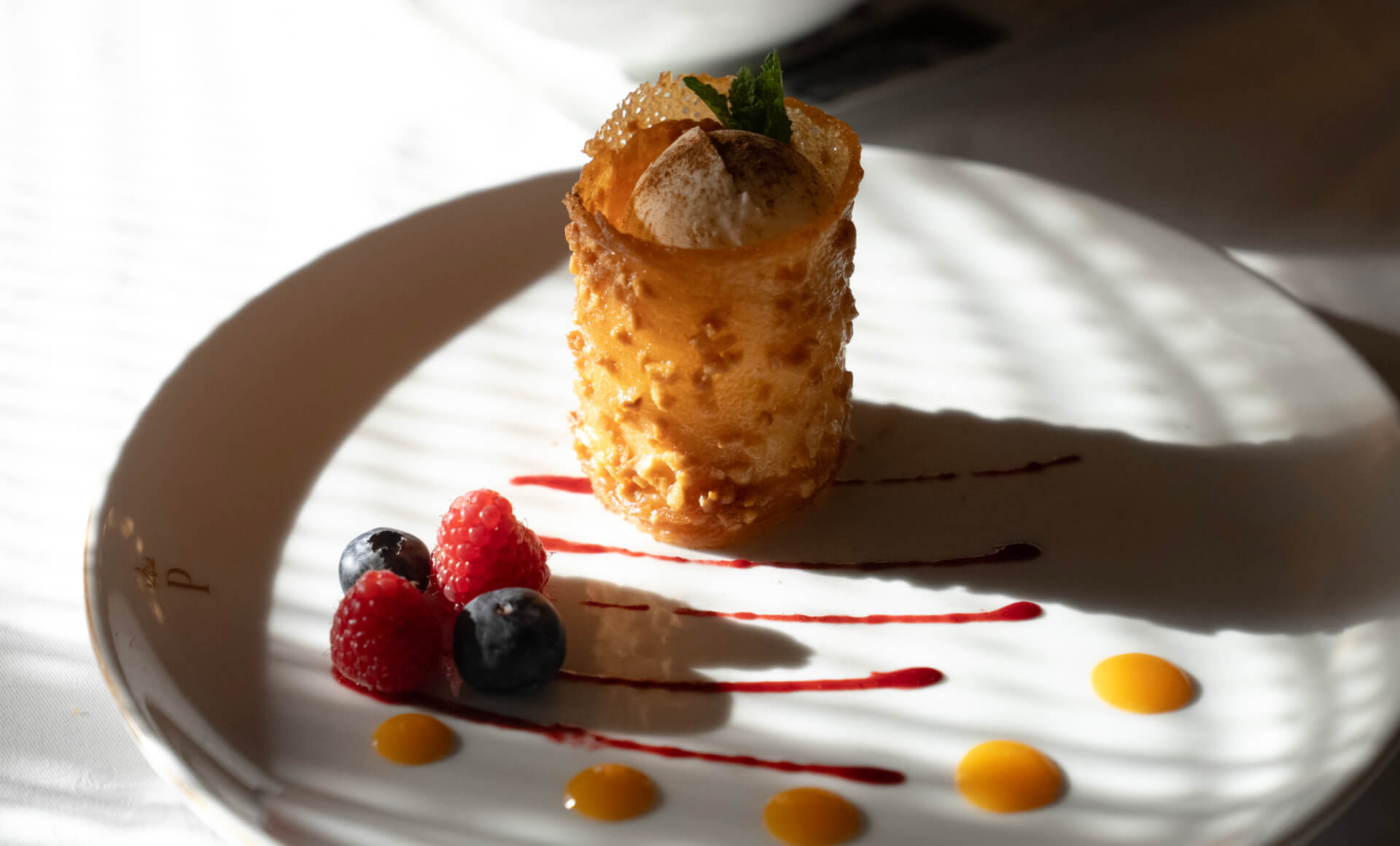
Authentic Castilla-La Mancha cuisine
The homemade Manchego cheese ice cream, in the photo, is served surrounded by a caramelized almond tile. The cuisine is regional, featuring dishes such as atascaburras (potato and cod), ratatouille, migas, ajo de matazón (liver pâté with pine nuts) or gazpachos manchegos, a game meat stew served with cake. The cafeteria has an extensive menu, many customers choose it to eat.
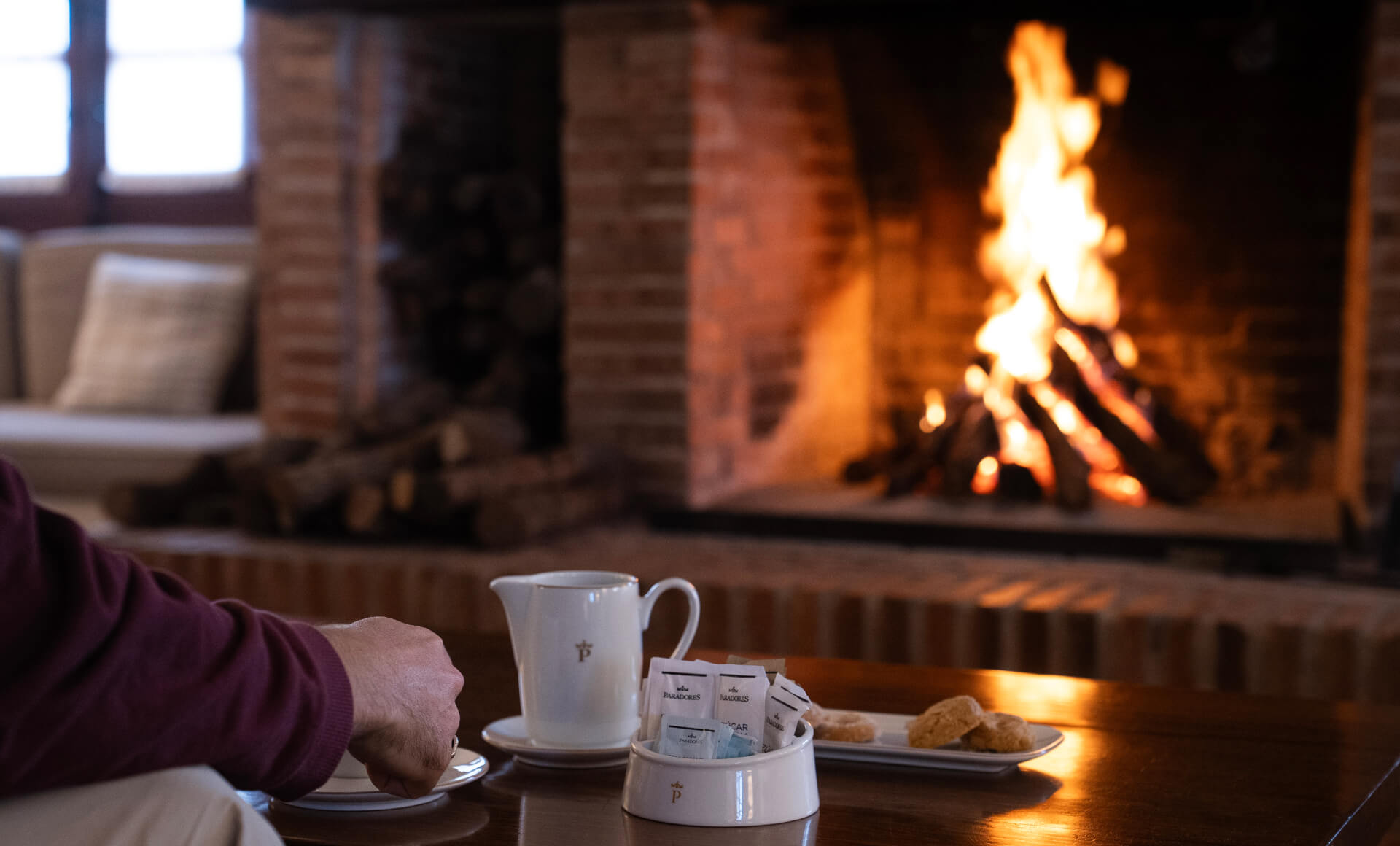
The fire catches
A living room with fireplace and television is one of the common areas preferred by clients. There are those who come to read, chat or work remotely. The director says that there are clients so loyal that they have brought their family to introduce them to the workers at the inn. They have more and more international visitors, especially groups of Asians who have organized routes through different inns.

Noble zone
The parador’s cafeteria extends to the terrace, which connects to a summer pool. The bar has a wooden wine rack. The light in the space is dim, favoring conversation. The giant TV shows the Champions League matches during the week at a low volume. The menu offers many of the dishes served in the restaurant: Manchego ratatouille, migas… In the selection of sandwiches, the beef tenderloin pepito stands out.
Anterior
Following
From the central patio (La Mancha) of the parador you can see the fighters of the Llanos air base in the sky. Some German NATO pilots have come for a month-long training. They stay at the hostel. They show up for breakfast already wearing the green overalls, with the patches attached with Velcro, with the flag on their arm; They have everyone’s breakfast, scrambled eggs and miguelitos from La Roda. The air base is very loved in the area, says Javier Álvarez, the director of the parador: it generates wealth, it generates identity, it was inaugurated in 1927, the connection with the hotel is great.
During the week there are plenty of business customers (the Campollano industrial estate is the largest in Castilla-La Mancha, 12 kilometers away), some loyal guests of the paradors are exposed to the surprise of the place, and fall exhausted. “There are those who repeat or extend their stay when they discover the area,” says Álvarez. They walk around Albacete, read in the fireplace room, ask the waiter to tune in to the Champions League on TV in the cafeteria, order (homemade) Manchego cheese ice cream, which is served surrounded by an almond-shaped and caramelized tile. “These clients visit whatever is proposed to them. We are a tourist office,” boasts the director. In the role of host, Álvarez uses the spoon to make a cut in the vitelline membrane of the yolk of the free-range egg; The little orange liquid overflows, the ratatouille is no longer going to be the same, the tomato (neither very sweet nor sour) and the pepper and the onion and the zucchini become oily, the little bit of egg white crunches, make sure to prick everything at the same time.
Activities for everyone in a natural environment
Cultural visits, sustainable tourism, revitalization of the place…
How to get the most out of the area where the Albacete parador is located
Tébar has been working as a tour guide for 28 years. Since then he has been determined to ensure that Albacete stops being a city of passage and becomes “a city in which to stop”. The journey from the parador to the center is covered in 10 minutes on the highway. It is parked (easy) and the car no longer moves. Below the Tourism Office there is an air shelter from the times of the Civil War. It is visited. The Lodares passage (1925) is explored and contemplated. The Museum of Cutlery lasts a leisurely half hour. The cathedral, well, has a neo-Gothic façade from the 20th century. “Wait until five or six and you will see how the city fills with people,” says Tébar. And yes, they take to the streets even if it’s cold, the terraces work, Albacete is famous one week a year for its fair and twelve months for its atmosphere of bars, restaurants, shops… They say they have invented the tardeo.
“The quality-price ratio of its gastronomy is very good,” says Álvarez. “The people are very welcoming, and believe me, it’s not a cliché, it really is. The visitor feels very good from the first moment,” insists the director of the inn, who has lived in eight autonomous communities. It is not a town, but it is a very good size, it allows you to meet a lot of people, he details.
PARADORES RECOMMENDS
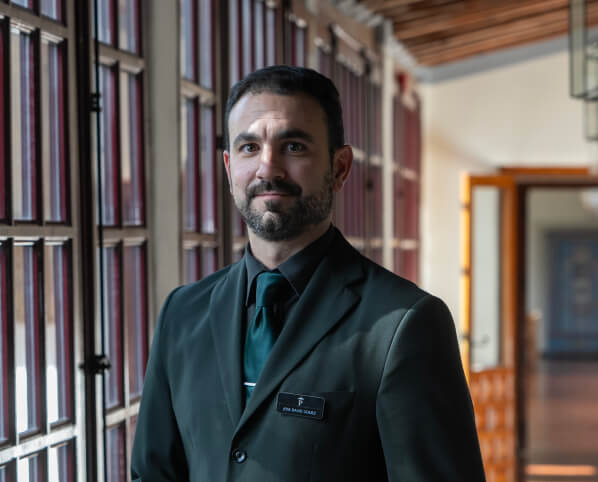
My town, Higueruela, is located at 1,039 meters above sea level, on the side of a hill, half an hour from Albacete. It is beginning to be known, the ruins of a farmhouse, a rural mosque from the 11th century, have been discovered. The site is visited. Wine is also made with Garnacha Tintorera.
Jose David Gomez
Second head of dining room 20 years in Paradores
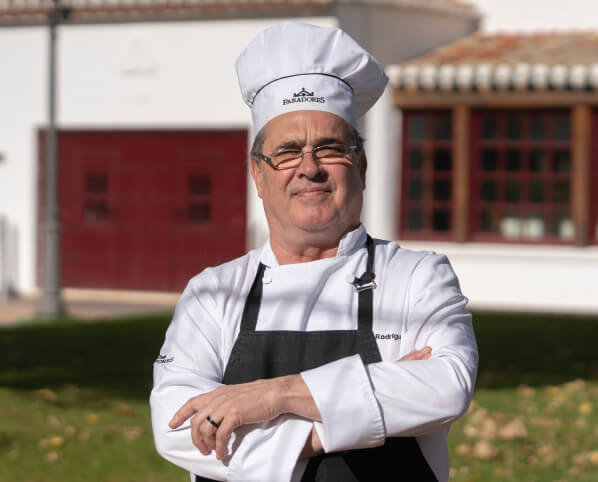
I ride my bike to all the towns within 25 kilometers. The path that goes to Chinchilla runs alongside the train track, the rabbits cross paths, you pass by a factory where there are a huge number of pallets with bags of onions… it smells like onions, of course.
Pedro Rodriguez
Chef 47 years in Paradores
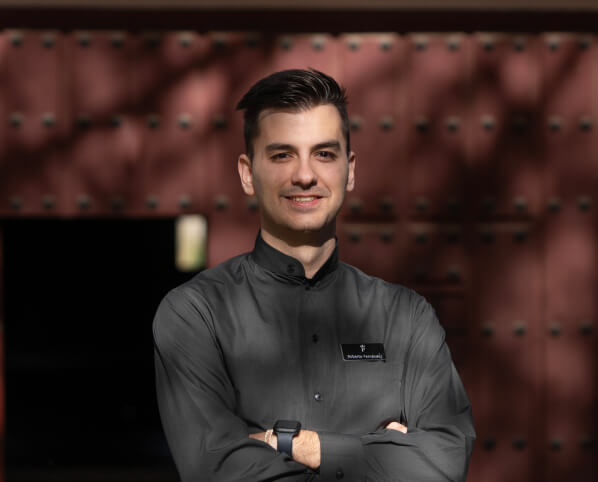
40 minutes away is Villanueva de la Jara, already in Cuenca, my grandmother’s town, where the Valdemembra river passes and which lives off mushrooms. It belongs to the Traces of Teresa network because Saint Teresa founded a convent there. You must visit the Basilica of Our Lady of the Assumption.
Roberto Fernandez
Reception Assistant 1 years in Paradores
The city, the largest in Castilla-La Mancha (174,137 inhabitants), barely preserves significant buildings from the 20th century back. It is said without any malice that the old town of Albacete is 15 kilometers away, in Chinchilla de Montearagón, says the guide; no one bothers, they go in the same pack, Even Albacete came to belong to Chinchilla, until just 650 years ago, when it began its journey as an independent town. The castle of this town of 4,565 inhabitants stands out, as do the whitewashed and pointed chimneys of the dozen cave-dwellings that form a group at one end of Chinchilla. Tébar regrets that they lost the bohemian air of the 80s, when poetry recitals and other cultural activities were organized in their surroundings with the arrival of good weather. Now they are summer residences, but with less sense of community.
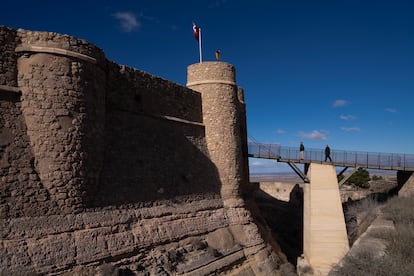
“The farm is a witness to the landscape of Albacete”
Next to the air base is Dehesa de los Llanos, a 10,000-hectare farm dedicated to agriculture and livestock. Two golden eagles take flight in a ditch – it seems unbelievable, such a large bird coming out of nowhere –, a rabbit jumps across the main dirt road, two red partridges run around on a plow, chasing each other. There are irrigated crops, dry land, scrublands, pastures, plains, many plains. “The farm is a witness to the landscape of Albacete,” summarizes Ángel Espacia, head of Administration, 50 years on the payroll of Dehesa de los Llanos. On a walk through the premises, Espacia remembers that in the 17th century a congregation of Franciscan monks was established there. It also hosted a fair in 1710, a free zone decreed by Philip V. It has a chapel and a tower that guided pilgrims. The workers at the inn had already warned it the day before, with everyone very attentive to the visits: “You’re going to love it, it’s a special place.”
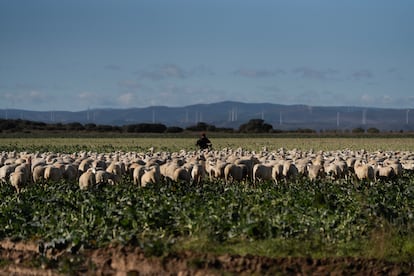
As Espacia returns to the office, César Malabia, the general director, gets into the car to begin a small safari (unarmed) around the farm, a Castilian-Manchego safari with the native red partridge as the great protected species: its hunting has been paralyzed for four years so that its population can recover. The landscape may be familiar, but it does not take away from its beauty. The nuts have been removed from the walnut trees. The garlic plant puts out its first shoots, a green mat in perfect condition, the classic soccer fan would say. The deer keep the oaks at bay, at head height. Yes, that is broccoli, confirms Malabia, an agricultural engineer. This is how you get to the cheese factory, very close by the shepherd has taken out the sheep, they deliver 1.5 liters of milk a day.
Paqui Cruz, the master cheesemaker, splits a Gran Reserva cheese in half, the winner of the 2012 World Cheese Awards, the best in the world that year. Only two Spanish cheeses have won it since the most recognized international award was created in 1988. All cheese should be stored in the refrigerator, do not leave it on the counter, it becomes shortened, the fat goes rancid, says Cruz. You have to take it out a while before, yes. Between 20 and 23 degrees it is eaten with crust and everything, it is natural. Slowly, it stings a little, it’s buttery, it lasts a long time in the mouth, you salivate, you should turn it around like a candy, from one cheek to the other, a little triangle goes a long way. At the exit, the car passes through a 19th century wall that encloses part of the property. People from the area were commissioned to earn a daily wage in a time of famine, recalls Malabia.
—It was an express visit, this takes at least three or four hours. You have to go back.
Castilla – La Mancha, in 8 inns
CREDITS:
Writing and script: Mariano Godson
Editorial coordination: Juan Antonio Carbajo
Photograph: Alfonso Duran
Design: Juan Sanchez
Development: Rodolfo Mata
Design coordination: Adolfo Domenech