
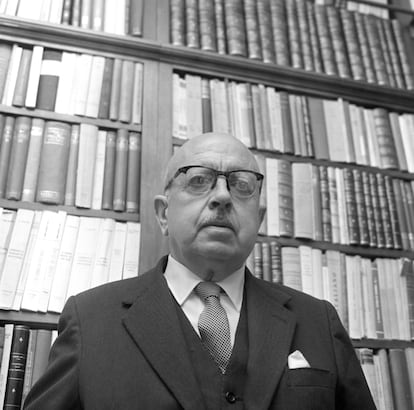
Back in the early eighties of the last century I conducted a series of interviews with certain people, politicians, writers, artists, who had already given everything in life and were half forgotten out of the circuit due to an age that was already old. Since they did not have to answer to anyone, they spoke with very loose tongues about facts that they had known first-hand. One of them was the journalist Luis Calvo, former director of Abc, who told me: “One afternoon I was taking the singer La Argentinita, a friend of García Lorca, for a walk in my convertible Rover, and she told me that this thing with men was already over for her because when she saw one, no matter how handsome and young he was, she always remembered the sweat on the bald head of her lover, the bullfighter Ignacio Sánchez Mejías, that time when he had a cold and his desire was gone.”
Pedro Sainz Rodríguez, a professor specializing in the literature of Spanish mystics and Franco’s minister during the war, said: “I don’t know if you know that in the years of the Republic I directed the CIAP, a publishing house that implemented for the first time the system of opening a credit account for writers. At that time, if you wanted to indirectly help a writer you were given a position, even if it was fictitious. For example, the journalist Manuel Bueno was named nurse of the inclusa and thus he worked extra money. In my publishing house the writer was paid only for writing with amounts paid on account. There I met Alberti and I published him. About the angels. Alberti was very demanding, he was always asking for advances. When I saw him enter the door I knew he was coming to order. I called him Villasandino, the needy poet from the Baena songbook who praised the powerful to receive their gifts. “Gentlemen, give Villasandino for the road.”
Downers ibarruri, Passionflower, He once told me while in that ruined garden in the mountains some friends were cooking him paella: “When I was young I used to dance the pasodoble. Spain cañí or whatever. In the square of my town there was a bandstand and a dance was held around it on Sunday afternoons. There I danced with all the boys. I had a first boyfriend named Miguel Echevarría, I remember him perfectly, a boy from Matamoros, a metallurgical fitter, very shy, who came across the mountains from his town on Sundays to take me for a walk. It didn’t last long because he didn’t speak at all. If I stayed silent, he didn’t speak. One day I told him: ‘Don’t come anymore.’ At that time I belonged to the Apostleship of Prayer and I wore a scapular with the Heart of Jesus here on my chest.”
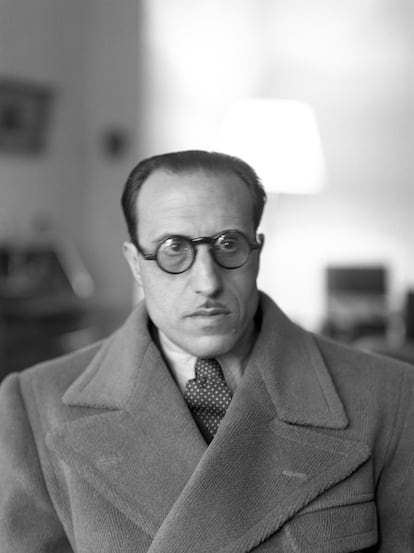
Ernesto Giménez Caballero, moving the blades on his arms a lot like one of the windmills of the Quixote, he told me. “On Christmas Eve of 1941 I was invited to Goebbels’ house, there in Berlin. Before dinner I had given Goebbels a cape of lights so that he could bullfight Churchill and at this Goebbels had to leave because I had called him Hitler. I was left alone with Magda, his wife, in a small room where a fireplace was burning. There I proposed the formula to reach an armistice, resuming at the same time the Hispano-Austrian dynasty. It was about marrying Hitler to a Spanish princess, who was none other than Pilar Primo de Rivera. With her eyes moistened with emotion, Magda took my hands and told me: ‘It’s not possible, because during the Great War when he was a sergeant, Hitler was shot in the testicles and is impotent.’
The great poet and director of the Royal Spanish Academy Dámaso Alonso spoke about the memories of his youth. “I did not make friends with any famous writer at that time. I was very cautious. The one I treated the most was Juan Ramón Jiménez. I had a lot of admiration for him, although he was a very strange man. At first he received you with sympathy, but when one stood out a little and began to gain fame he immediately separated him from his friendship. He was very scathing. For example, he said that when he went to sit down one day at Antonio Machado’s house he found that there was a fried egg on the chair.”
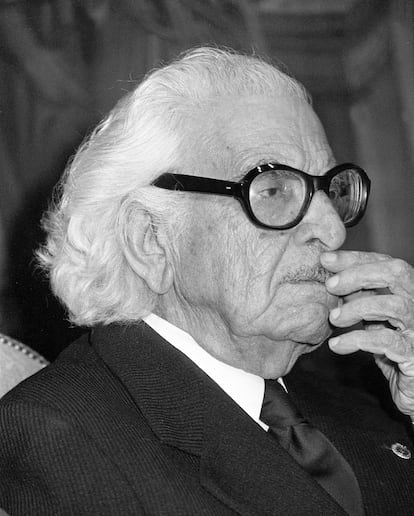
They were characters who said surprising things with a freedom and solvency that, from a distance, after so many years, sound like a very personal way of speaking. They did it with their own voice. Without imitating anyone. Each one with their personality. Not like today when everything you hear seems interchangeable. The historian Ramón Carande was 95 years old when I interviewed him. In front of some famous beans with chorizo at Casa Portal, which suited him well and destroyed my stomach, he told me: “I have not taken an aspirin in my entire life and look, I am old and have met a person who shook hands with Napoleon.”