
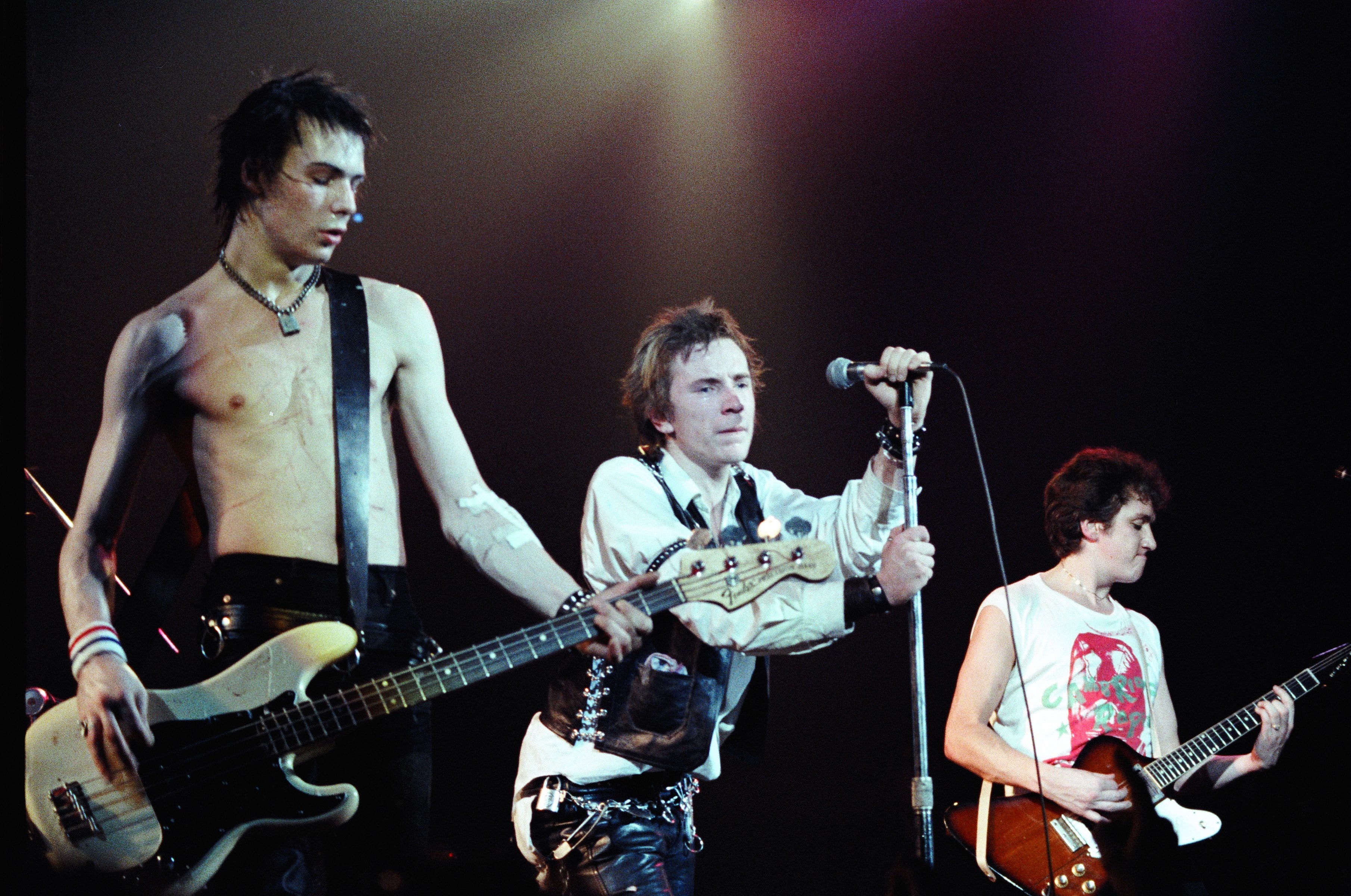
It is advisable to be alert: reports, written and audiovisual, are already being prepared on the half century of the punk rock. And in 1976 the album releases of the Sex Pistols, the Ramones, the Damned and the first version of Blank GenerationRichard Hell’s anthem.
It is true that there are also picky arguments to reject 1976 as the wonderful year CBGB, the punk club of the New York scene, had opened in 1974 and the following year Television, the Ramones, the Patti Smith Group and the Talking Heads set foot on its stage. The same with the Sex Pistols, who debuted in London on November 6, 1975, with borrowed equipment and such a volume that their performance was cut off after 20 minutes.
The “punk” thing posed certain historical problems. In attitude and sound they had connections with some American bands of the sixties, anthologized in 1972 in the compilation Nuggets by Lenny Kaye, future Patti Smith guitarist. Bands that were subsequently baptized as “garage groups”, in reference to the places where they were incubated. In their time, they were also classified as punks, an insulting description (originally, in the 16th century, the term referred to prostitutes) that ended up being claimed as a defiant source of pride.
All these issues, around terminology and periodization, have their importance for our country. In those seventies, without YouTube or Spotify, music traveled at a snail’s pace: news took months to be published in Spain, where there were few radio programs that broadcast imported records. Consequence: punk was known here before for graphic reports in magazines like Interview than for the music itself.
This explains why Ramoncín was considered the first national punk artist. But no, Ramón made urban rock, just like La Banda Trapera del Río who arrived the following year with an extra dose of rage. Without forgetting Kaka de Luxe, a punk I want-and-can’t with aesthetically and politically incompatible personalities. Let it be noted that here it is not advisable to penalize ideological inconsistency: musical movements emerge in a wild plan and then an ideology is attributed to them, which ends up forming an orthodoxy.
This is evidenced by the aforementioned Sex Pistols. A couple of brutes with one foot in crime teamed up with an angry kid who called himself Johnny Rotten; a take advantage as Malcolm McLaren suggested they transform their youthful energy—they were 20 years old—into torpedoes against Queen Elizabeth II or the social structure of the United Kingdom. It was a project significantly born around a London boutique. Yes, a pose that acquired specific weight with the emergence of The Clash, initially just as fake but with the ability to enrich the plot with slogans and a greater sound palette.
The media distillation meant the dissemination of an oppositional attitude, which each punk group or soloist in any latitude interpreted at a whim. From a staged pantomime on the King’s Road, genuine rebellions emerged, which made sense in specific situations. Hence the truth of Basque Radical Rock, the purist hardcore American or even an extra-musical phenomenon like the Russian Pussy Riot. So yes, celebrating 50 years of punk is certainly justified. And draw lessons.