
The United States Federation of Musicians has come to the defense of one of its most emblematic members, Bruce Springsteen, after President Donald Trump attacked the artist and encouraged his followers to boycott his concerts. The conflict occurs in a context of growing political and cultural tension in the United States, where public figures from the world of entertainment have taken increasingly visible positions regarding current political events.
In a joint statement, union leaders Dan Point and Marc Sazer expressed their rejection of the attacks directed against Springsteen. “We cannot remain silent while one of our most famous members is singled out and personally attacked by the president of the United States,” they stated. Both leaders emphasize that the organization has a firm commitment to the defense of its members, especially when it comes to their right to freedom of expression.
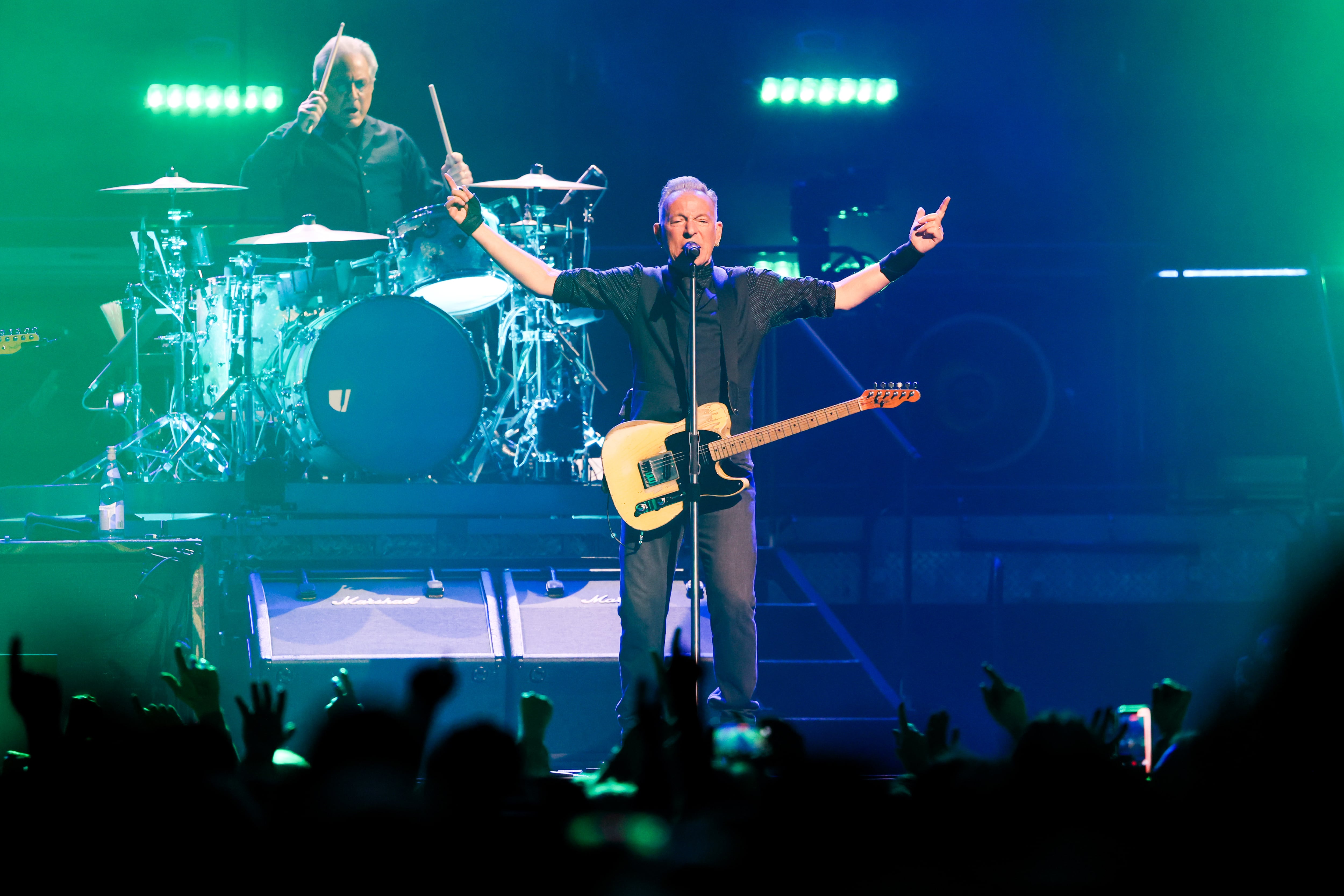
The controversy broke out coinciding with the start of the musician’s new tour, titled Land of Hope and Dreamswhich started in Minneapolis, a city recently marked by social tensions related to immigration policy. During his first performance, Springsteen took advantage of the stage to launch harsh criticisms against the current administration. In his speech, he defended values such as democracy, the Constitution and what he described as the “sacred promise” of the United States, while calling the government corrupt, incompetent and divisive.
These statements provoked an immediate reaction from Trump, who, through his social network, asked his followers of the MAGA movement to avoid attending the artist’s concerts. The president used a derogatory tone, accusing the singer of suffering from the so-called “Anti-Trump Delirium Syndrome” (TDS), a term used by some sectors to discredit critics of the former president. In addition, he described him as a “total loser” and questioned his relevance, insisting that his opinions respond to personal animosity rather than political analysis.
The Federation of Musicians’ response not only defended Springsteen as an artist, but also as a cultural figure: in their statement, Point and Sazer highlighted that the singer has been for decades “the voice of the working class” and a symbol of American resilience. And they remembered that his work, from albums like Nebraska until Born to Runhas addressed social issues, inequality and abuse of power, consolidating it as a reference inside and outside the United States.
Likewise, the organization emphasized that musicians, like any citizen, have the right to express their political opinions without fear of reprisals or smear campaigns. “We are in full solidarity with Bruce and all members who use their platform to express their conscience,” they noted.
Within the framework of this tour, which will include about 20 presentations in different cities, including New York, Springsteen also called for unity, and invited the public to choose “hope over fear, democracy over authoritarianism and peace over war,” in a message that reinforces the political and social tone of his recent interventions.