The Moriarti collective celebrates 25 years producing films in the Basque language with international projection
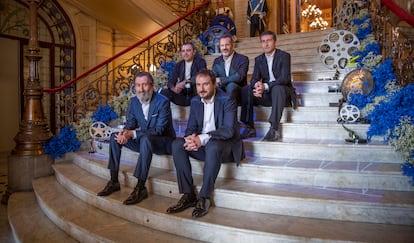
“Yes, we are friends and, although it sounds tacky, almost family,” agree Asier Acha, Aitor Arregi, Xabier Berzosa, Jon Garaño and Jose Mari Goenaga. Their bond embodies the deep sense of the relationshipthat word in Basque that means relationship and melt take (receive) and give (give). Without this constant back and forth, no relationship is sustained, much less one as creative, choral and demanding as the one that unites the five members of the Moriarti, the Basque production company that has catapulted Basque cinema to the international scene.
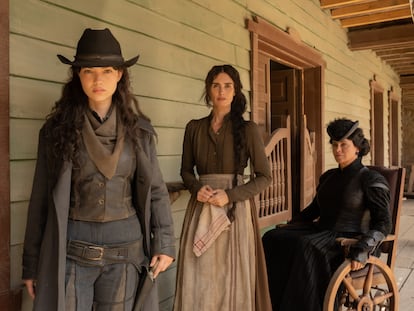
This “group of friends”—as they define themselves, seeking the middle ground between the intimate and the professional—is already celebrating 25 years of togetherness. They met in 1999, organized themselves as a creative group in 2000 and, a year later, gave legal form to the company. Since then, they have been behind some of the most recognized titles filmed in Basque. Now, they just released Maspalomashis new film.
“Our hallmark is the collaborative spirit. Ideas start from one person, but soon become a collective project. All of our most important films have been co-directed by two or three people,” emphasizes Jon Garaño, who signed The flowers (2014) together with Jose Mari Goenaga; big (2017) with Aitor Arregi; and The infinite trench (2019) and the series Cristobal Balenciaga (2024) with both. “That is, perhaps, what makes us more special,” he adds. Goenaga concludes with a laugh: “Everyone goes deeper into their own philias, phobias or fixations.”
big trailer
n “}},”Video_Agency”:False,”alt_image”:”Handia. Tráiler”},”https://emagenes.elpais.com/resizer/v2/httpsf%2FVdmedia.elpais.com%2Felpaopistop%top%2F2 8245211111Still.Png?auth=093112cc7Fab45F4197171711711F4111FCC41B Tráiler”,”ogwidth”:16,”ogheight”:9,”floating”:false});
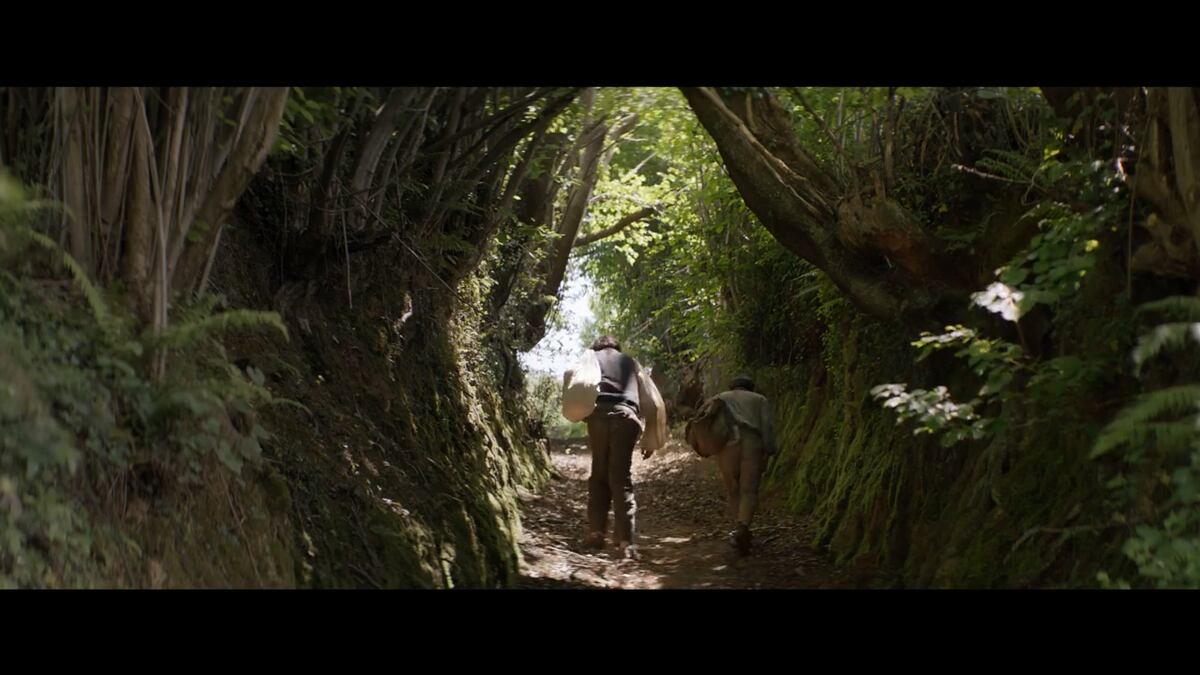
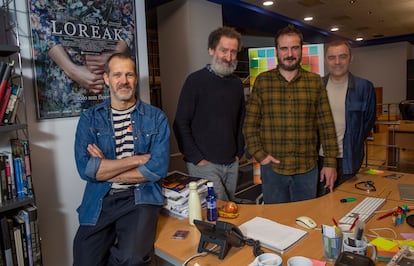
In this quarter of a century, his label has evolved. “At first, we wanted to support each other to carry out specific projects. Later, the roles have become more personalized and professional. We wanted to be a film producer from Donostia,” recalls Xabier Berzosa, from his offices in the capital of Gipuzkoa.
The evolution has been visible both technically – with increasingly “more ambitious” productions – and thematically, addressing “more risky” issues: from confrontations of fiction with reality or reflections on one’s relationships with the environment. “Before, it would have cost much more to finance certain projects,” Berzosa acknowledges.
The turning point in the Moriartis’ journey came with The flowers. The first film in Basque nominated for the Goya for best film and selected to represent Spain at the Oscars “broke expectations” for its creators. “It showed that cinema in Basque was not limited, that it could reach festivals and platforms.” From this milestone, the Basque film industry received a boost, although these fruits are shared, the Moriartis recall in conversation with EL PAÍS: “Filmmakers like Telmo Esnal or Asier Altuna have been producing and directing in Basque for years. The merit is widely shared.”
References in cinema in Basque
The emergence of contemporary Basque cinema also owes a lot to the short film program The shootspromoted in 1998 by the Basque Government. As a result of this initiative to promote small pieces abroad, a generation was forged in which Moriarti themselves stood out, but also other important names such as Borja Cobeaga, Diego San José, Luiso Berdejo or Nacho Vigalondo. In recent years, the role of Basque public television (ETB) has been added when it comes to financing and promoting audiovisual works.
“The role of the Moriarti as a reference is fundamental,” highlights José Luis Rebordinos. The current director of the San Sebastián International Film Festival (SSIFF) explains the keys to the “success” of the Gipuzkoan quintet since the Cannes competition. “The first is that they are good directors,” highlights the head of Zinemaldia, who has been in office for 14 years and will leave next year. “You may like them more or less, but they are well made since they choose the themes very well. They have a good quality standard,” he adds.
The second great success, says Rebordinos, is his way of shooting. “Together with Irusoin (the production company with which they collaborate closely and which is behind hits like Hello Etxebeste! (2005)) form a solid and very well-connected team.”
This is confirmed by actor Eneko Sagardoy, who played the giant of biga role for which he won the Goya for best new actor. “I remember the constant debates between the directors Aitor and Jon. At the time of filming, one of them came to me and told me: ‘The other one asked you for A, but now forget it and do B’. Far from being a confrontation, they had the ability to convey to you that all of this was part of what they both wanted,” says this actor in whom their advice still “resonates.”
The Morartis themselves identify this way of working: “In filming, normally one of us takes the lead with the actors, but if there is another vision, another can propose a new take with a different approach. In fact, it is not unusual for someone in editing to defend the opposite of what they defended in filming. It is a natural part of the process.” In this way, they ensure that their works “have their own voice”, beyond the sum of their names. “He shows basically incredible humility,” adds Sagardoy.
That humility, precisely, is the third of the pillars that Rebordinos highlights: “It is not easy to find humility in other directors. Many young Spanish directors can be very good, but they have a lot of arrogance. And these, with several international competitions behind them, continue to be humble. The whole thing makes their work important and very well received.”
Detailed style
What most defines them as directors and producers is their ability to observe. “They are more than detail-oriented, surgical,” details Sagardoy. “They always look for the transcendent and the profound. That’s why they are very good at giving opportunities to all fictional characters and avoiding superficial judgments. When I finished filming, I went home very comfortable.”
The fourth key touches on your style. “His style is committed to classic and narrative cinema, with solid scripts and traditional structures: beginning, middle and end. It is emotional, warm cinema, which seeks to touch the viewer more than impress critics and win awards,” summarizes Rebordinos.
“big It changed my life. Today, I live off that movie and people remind me of it almost a decade later. I couldn’t feel more proud,” says the actor from Durango. “I think they are a great reference for many generations of Basque filmmakers and other parts of Spain,” says Sagardoy. In the case of Euskadi, their value increases for Rebordinos: “For a small film industry like ours, it is important to have references and for new generations to know that they can succeed locally.”
The name of the Moriartis already appears in the dossiers of a new generation that is being developed in the contemporary culture center of San Sebastián Tabakalera, which houses the offices of Zinemaldia, the Basque Film Archive and the Etxepare Institute. This project residency, together with the film school, will ensure that Basque cinema continues to evolve, increase the presence of women and look much more outward. “This microcosm language It will be something to talk about in the coming years,” Rebordinos predicts.
Your subscription is being used on another device
Do you want to add another user to your subscription?
If you continue reading on this device, it will not be able to be read on the other.
Why are you seeing this?
Arrow
Your subscription is being used on another device and you can only access EL PAÍS from one device at a time.
If you want to share your account, change your subscription to Premium mode, so you can add another user. Each one will log in with their own email account, which will allow you to personalize your experience in EL PAÍS.
Do you have a business subscription? Go here to sign up for more accounts.
If you do not know who is using your account, we recommend changing your password here.
If you decide to continue sharing your account, this message will appear on your device and the device of the other person who is using your account indefinitely, affecting your reading experience. You can consult the terms and conditions of the digital subscription here.
More information