
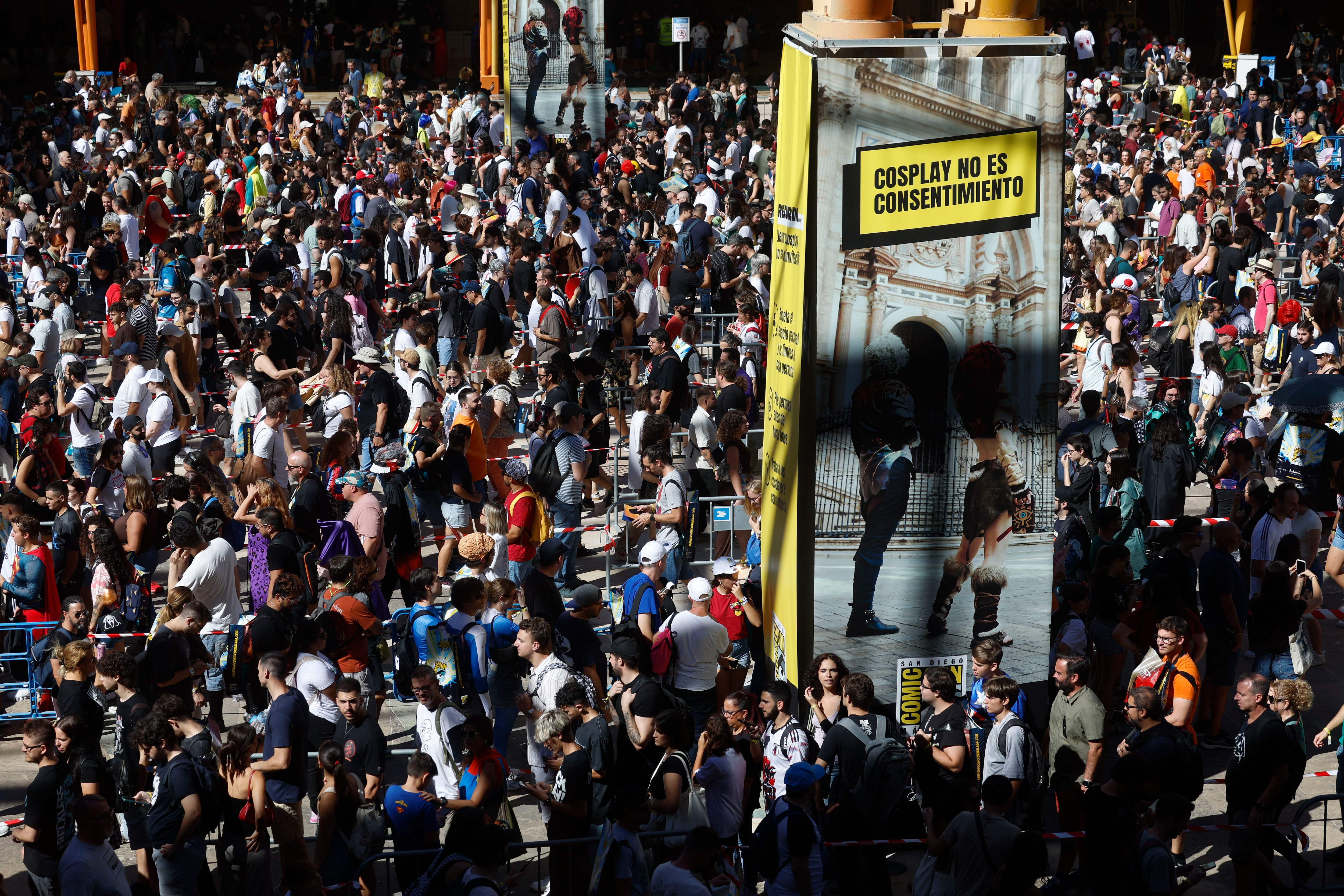
San Diego Comic-Con Málaga held its first edition last September. The world’s main popular culture event had never left the United States, with all the expectation that that entailed. The balance, released today Wednesday in a statement, speaks of “success of the event and economic engine”, with an impact of 44.3 million and 95,784 attendees over four days. The text says nothing, however, about the multiple complaints that these visitors left, so much so that even the mayor of the city, Francisco de la Torre, was forced to declare: “It is obvious that the issue of the lines, which have been long and excessive, has to be resolved.” The organizing company, Dentsu Spain, was then “aware” that “answers must be given.” And today the first arrive, with the announcement of a change at the head of the event: Fernando Piquer assumes the general direction, replaces the previous manager, Javier Barberá, and promises “a new stage.”
“The 2026 edition will be a leap forward. We are going to strengthen the organization, elevate the public experience and consolidate San Diego Comic-Con Málaga as the event for pop culture in Spain and a great cultural engine for the city of Málaga,” says Piquer in the statement. Linked to the animation and video game sector for years, the new manager was previously in charge of Movistar KOI’s Global Strategy and was founder and CEO of the Movistar Riders esports team. Now, take on the challenge for the second edition of maintaining what worked and fixing everything that didn’t.
The statement released by the organizers reports that “78.5% of the audience came from the rest of Spain and 18% from Malaga, with a mostly adult profile (88%).” It also highlights the participation of “more than 110 exhibitors and leading brands such as Disney, Nintendo, Lego and Bandai Namco”, with “450 activities and the presence of more than 30 international guests such as Arnold Schwarzenegger, Antonio Banderas, Jim Lee, Norman Reedus, Nobuo Uematsu, Elle Fanning, Jared Leto or Aaron Paul, among others.”
Many of them, however, became known after tickets went on sale on May 15. Hence, the first complaints from users focused on the fact that they were asked to spend 50 euros per day without there being a single guest or activity announced. Even so, tickets for three of the four days were sold out in just 24 hours. Everything sold out, everything full, something that, once the event opened, resulted in queues and other organizational difficulties that dozens of attendees regretted. Social networks were filled with complaints, especially focused on the long lines, and the consumer associations Facua and OCU assured at the close of the event that they had accumulated more than 550 queries to file complaints.
Malaga City Council and the Junta de Andalucía—which contributed more than four million euros of public money to the event—immediately announced a meeting with the organizers to “correct errors.” The same organizations, on the other hand, estimated last September the influx at more than 120,000 people, while now the organizers conclude that there were 95,784. In any case, debates and controversies also broke out about whether the capacity of the Fair Palace, limited to about 30,000 visitors per day, had been exceeded.