
It all started with horse armor in The Elder Scrolls IV: Oblivion. It cost just 200 points (or two euros) in the Xbox 360 console online store in 2006. That was all it took to receive a cosmetic item that did not benefit the player, but modified their appearance. “That armor of Oblivion It was not normal and it was a scandal. Now we see it as very innocent, but the players complained. ‘What is this about having to pay again when I have already bought the game?’ sector generates every year.
To understand the abrupt change in the sector, we must go back to the nineties. Back then, when extra downloadable content online did not exist, what could be purchased were the so-called expansions: additional content with hours of extra gameplay, new maps and adventures; This is the period that many players evoke when they talk about a better “before,” as Professor Navarro recalls: “The player’s mentality was that, once you bought the game, you had bought 100% of the work.” In the pre-internet era of fast connectivity, expecting gamers to download various gigabytes In their homes it was an impossibility, so the works had to be self-sufficient.
At the turn of the millennium, the use of the Internet for online purchases was normalized and, by the early 2000s, consoles already included connectivity as a key aspect. “There begin to be good connections and suddenly a way opens up to sell products within the game,” says Navarro. That’s when the world knows the DLC (from English Downloadable Content) or downloadable content, such as the horse armor of Oblivion.
It is DLC It would mark a before and after that “would take years to materialize,” says Meristarion journalist Alejandro Castillo. Suddenly, studios discovered that they could receive a steady stream of funding if they continued to release content in small doses, so-called “microtransactions.” “It was ugly for the consumer, but more companies saw it as a way to add income beyond the initial payment for the game.” The other side of these sales is in the developers who create the games, always on the verge of closure or major layoffs if a production is not profitable, since not all titles have hundreds of millions of euros behind them from a studio like Rockstar, creators of the saga. GTA o Red Dead Redemption.
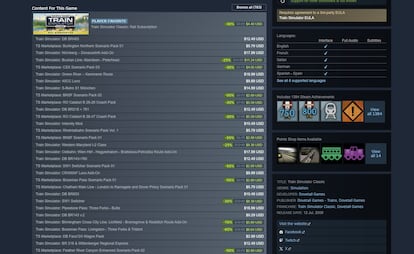
In 2024, video games generated more than 170 billion euros between PCs, consoles and mobile phones. Only on computers, microtransactions and DLC They represented, that same year, 72% of the almost 33,000 million in income. “The problem is that not everything can be given away; in the case of service games (those that receive constant updates, such as Fortnite), this human investment must be accompanied by income through other means, whether following the purchase of the product or with another type of monetization,” argues Castillo. “And in the case of expansions, dedicating a team to it slows down the development of the next video game, which in the end is the one that will sustain you in the coming years.”
We must also consider these extra purchasables as a window of opportunity to continue exploring universes with many followers. As transmedia researcher Marta Fernández Ruiz describes, “you expand the story, that idea of expanding the commercial life of the product while the user can dive deeper and immerse themselves in this entire fictional world of which they are a fan.” Fernández points out that the possibility of selectively purchasing only those pieces of DLC that the player wants “offers a more personalized experience, because the user can choose their own route.”
The dark side
Like any business that moves money, there will inevitably be users who misrepresent the systems to generate profits outside the confines of in-game economies. The use of coins in-gamecombined with anonymity when playing online, allows for a host of criminal activities in the wake of these monetization systems, from purchases with stolen credit cards to money laundering. The amounts and games fluctuate, but it has happened many times: since Fortnitewhere hundreds of thousands of euros were laundered with the purchase of V-bucks (the virtual money of that title). Or in Counter-Strike: Global Offensivewhere the mother platform, Steam, disrupted an illegal resale market of almost two million euros. In that market, they bought skins (cosmetics) with illicit money and then sell them in external markets. It has also happened in areas surrounding video games, as was the case with the game streaming platform Twitch, where more than 8.6 million euros were laundered.
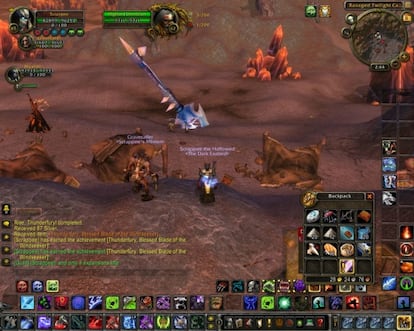
Víctor Navarro remembers the case of “kids who dedicated themselves to playing World of Warcraft (WoW) non-stop and then they sold the character. They got a lot of money”—last year a similar scandal involved billionaire Elon Musk, who paid for a high-level character in the game Path of Exile and he lied about it. Another controversy in WoW It was the case of the “gold farmers“, about 300 prisoners in Chinese prisons who were forced to play WoW for up to 12 hours a day to generate profits by obtaining the game’s internal currency. In 2011, 80% of gold “farmers” farmingrepeat a task or mission ad nauseam to gain experience or virtual money—were in China.
Whether it’s to expand the world and offer new tools, or to keep a project open and funded, at the end of the day it’s the players who decide whether to spend on a DLC or not. When Bethesda, the studio behind TES IV: Oblivionpublished the remaster of the game last year, made sure to re-include the controversial set of horse armor that started it all: almost like a museum piece, thousands of players have equipped it to their mounts, as if to revive the milestone that turned the entire industry on its head.