
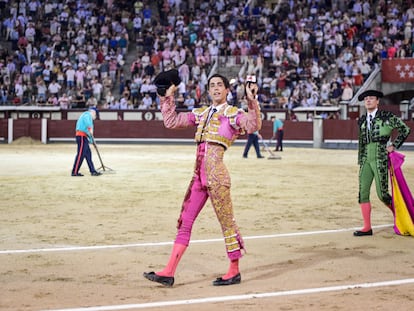
Bullfighting is alive, fortunately. Irrefutable proof is the incessant activity that mobilizes every winter, increasingly, around the bullfighting festival.
There are hundreds, perhaps thousands, of clubs, associations and foundations that throughout Spain hold events to talk about bulls and their past and present history, give prizes to bullfighters and ranchers, organize tributes and, ultimately, keep the flame of the fans lit during the long months in which the bullfight sleeps in the countryside and begins to wake up in the offices of the bullfighting companies.
It is curious, for example, how the Welcome Room in the Plaza de Las Ventas keeps its agenda busy almost all year round, and a flood of fans, bullfighters, breeders, journalists, photographers, historians, poets and intellectuals of all walks of life pass through there to talk and exchange ideas and opinions about bulls.
And all of this is very good because it is an unequivocal sign that there is a desire for bulls, and that impatience is calmed with information, with close contact with professionals and with recognition of some figures who have stood out throughout the season.
The offices decide the lives of many bullfighters; Exclusion from a fair can determine the future of an aspiring figure
It happens, however, that this whole set of activities makes up a universe with a life of its own that runs completely outside the normal course of the bullfighting festival in winter.
Because bullfighting does not stop, even if there are no celebrations in the squares. The business offices work piece-rate, agenda in hand, to weave, slowly but surely, the posters for the coming year.
And they, the businessmen, in harmony not always friendly with the representatives, decide the fate of each of the bullfighters. Everyone prepares, sweats, runs, dreams, but some of them – the least – face the new year with their ‘life’ resolved, either because they have earned it in the arena or because they are incredibly lucky to be endorsed by a representative with command; and the rest, the vast majority, cry and despair because the phone doesn’t ring, and relive, even if they don’t want to, that bitter cry of the Ecijan bullfighter Pepe Luis Vargas, on the occasion of his very serious fight in La Maestranza back in 1987: “So much fight for nothing…”
The offices decide the lives of many bullfighters. “There is no room for everyone” is usually the business reason that justifies a bullfighter being excluded from the Seville or Madrid cartels. But there is usually room, often too many, for all the well-recommended ones.
And the really serious thing is that an exclusion of this type can determine the future of an aspiring figure.
While this personal drama nests in many brave hearts, the other world of the bull, the one formed by the fans, hangs out, has fun, greets, and drinks and eats outside of this situation, as if none of it affected him, as if the forgetfulness, injustices and arbitrariness that are committed in the offices were songs from another world.
Has there been a conference or gathering held this winter in which the posters of Seville or Madrid have been seriously analyzed? Has the presence of some of the excluded bullfighters been vindicated? Have any of those who do not appear in the two great fairs been remembered or has the presence of the livestock irons from which the figures flee? Has any businessman felt questioned, supervised or bothered by the fans?
No. For inexplicable reasons, fans prefer to visit livestock farms, hold meetings that do not imply commitments and stay out of the businessmen’s decisions. In other words, the fans are also responsible for the situation of modern bullfighting due to apathy and indifference.
The fans prefer to visit farms, hold meetings that do not imply commitments and stay out of the businessmen’s decisions.
A few days ago, the bullfighter El Mene, who led the novillero ranks last season, lamented that he lacks contracts for this new season and does not know the direction of his nascent career.
But he is not the only one: an established bullfighter like Ginés Marín will not be at the April Fair or in San Isidro; Nothing is known about other young and promising bullfighters like Jorge Martínez or Calerito.
And these are nothing more than examples of a long list of bullfighters forgotten by companies and, what is worse, by fans.
Soon there will be talk in the bars of the urgent need to renew the ranks, to encourage new names that mark the future, of the expected retirement of veterans, of how the bullfighting festival is settled in the offices, trading cards – names of bullfighters – are exchanged between those in command and flagrant injustices are committed against bullfighters with qualities to climb positions in the profession; but few fans will realize the manifest indolence of those who support this show with their money.
Years ago, the American journalist Edward R. Murrow warned: “A society of sheep breeds a government of wolves.”