
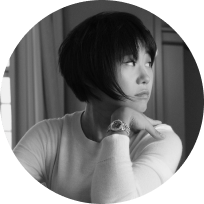

Yuja Wang
Exploding piano star
Petite but explosive, Yuja Wang (Beijing, 38 years old) has never left anyone indifferent. Either because of the models she wears, generally short, accompanied by stiletto heels to which she applies her own technique to master the pedal; Well, because no one can explain how so much strength comes from that tiny body when it comes to interpreting Prokofiev, Brahms or Tchaikovsky. Wang, fierce and independent, has known how to navigate the hostile world of classical music with a very free personality since she left her native Beijing, where she grew up in a family of artists, and ended up training in the United States before becoming a global piano star. His forte are the Russians – Scriabin, Stravinsky, Rachmáninov, Shostákovich, Prokófiev, whom he chose to make his debut with the Berlin Philharmonic – but he also stands out with Ravel, Brahms and Chopin or Ligeti, whom he has chosen for his concerts in the Canary Islands with the Mahler Chamber Orchestra.
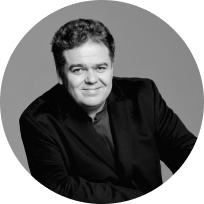
Arcadi Volodos
Elusive (and unique) artist
The Russian pianist (Saint Petersburg, 53 years old) has lived in Spain since he moved to study at the Reina Sofía School (Madrid) and left everyone amazed by his forceful introspective talent carefully molded by his teacher Dimitri Bashkírov. Discreet and conscientious, Volodos does not spend much time on stage, but enough so that no one would miss including him on the list of the best living performers of the instrument in the world. His brief but forceful discography shows a virtuosity at the service of depth and not artifice when tackling Brahms, Liszt, Schubert and Mompou, but also the repertoire of his compatriots. Wise and tempered, Volodos represents a case of an artist who avoids the spotlight, but is dedicated to music without needing to appear in public much so that no one forgets his mastery.
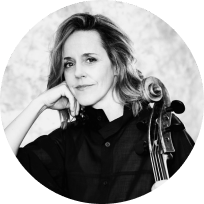

Sol Gabetta
Restless and surprising cello
The Argentine cellist (Villa María, Córdoba, 44 years old) is one of the most versatile, restless and surprising performers of recent decades. He joins his career as a soloist with the need to make chamber music. She alternates major appearances with the best orchestras in the world after Simon Rattle consecrated her with the Berlin Philharmonic in 2014 and previously trained in Basel or the Reina Sofía School in Madrid. He also now teaches at the Academy of Music in the Swiss city where he learned. He records for Sony Music and currently uses a 1730 Matteo Goffriller cello in his public appearances. To make his debut in the Canary Islands, he has chosen to do so with the Bamberg Symphony Orchestra, directed by the Czech Jakub Hrusa, with whom he will perform the Elgar concerto in Tenerife and Gran Canaria.
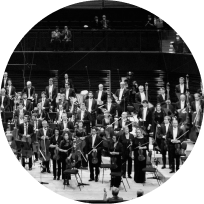

Bavarian Radio Orchestra
One of the best in the world, now with a new baton
on the list Bachtrackone of the most prestigious in the world in the last decade, the Bavarian Radio Symphony ranks third among the best. The history of this prestige and power today has a lot to do with its main director, Simon Rattle, but also with an amazing succession of its leaders on the podium since it was founded in 1949, in the middle of the post-world war, with Eugen Jochum as leader. He was succeeded by Rafael Kubelik, Colin Davis, Lorin Maazel and Mariss Jansons, an exceptional group of teachers, capable of consolidating an orchestra of stratospheric level, crafted with great attention to the repertoire of contemporary music and based on a large number of tours that have brought it closer to audiences around the world with their corresponding appreciation. A luxury that the Canary Islands public will enjoy in Tenerife and Las Palmas with Mozart, Schubert and Bruckner in their repertoire.

SpongeBob Lake
From rock drummer to iconic director
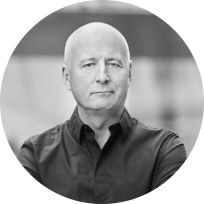
Between the wooden sticks of the rock and roll and classical music, Paavo Järvi (Tallinn, Estonia, 62 years old) finally chose the baton instead of the drumsticks that he played in the group In Spe, one of the best known in his country in the eighties. So he went to the United States and ended up as a student of Leonard Bernstein, among other teachers. Starting in 2001, he was elected head of the Cincinnati Symphony and then of Hesse Radio or the Deutsche Kammerphilarmonie of Bremen, as well as of Paris, where he succeeded Christoph Eschenbach, or of the Nippon Hōsō Kyōkai in Japan. He goes to the Canary Islands to conduct the Bavarian Radio Symphony, where the public will be able to appreciate his taste for detail, his conception of musical performance as a laboratory art in which each note can be deciphered and polished with intense clarity.
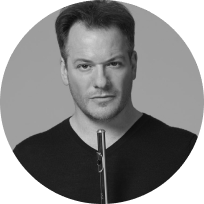

Emmanuel Pahud
Flute Knight
The principal flutist of the Berlin Philharmonic also has an outstanding solo career around the world. Born in Geneva 55 years ago, he grew up in Italy in a non-musical family of French and Swiss origin. Very soon, at the age of six, he began his training and was guided by teachers such as François Binet, Carlos Bruneel, Michel Debost and Aurèle Nicolet before joining the Berliners in 1992, when he was the head of the Claudio Abbado orchestra and after having surprised with first prizes in the international competitions in Köbe (1989), a year before in Duino and then in his hometown in 1992, where he achieved eight of the 12 special awards from the Swiss competition. With more than 40 recorded albums and a career also in the chamber music field, Pahud’s international prestige earned him the Léonie Sonning Prize in 2024 or the distinction of knight of the order of Arts and Letters in France. He performs in the Canary Islands with the SWR Orchestra and the conductor François Xavier Roth with the Prelude to the faun’s napby Debussy, and the Flute concerto number 1 by Mozart.
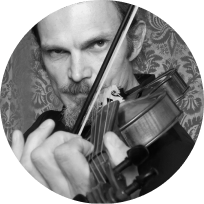
Stefan Plewniak
Unorthodox and electrifying violin
>
The Polish director and violinist (Krakow, 44 years old) is a vital and electrifying heterodox on stage. His motto is passion and with that he has conquered a good part of the world. He stands out as the visible head of prestigious and stimulating projects in various fields: from the Orchestra of the Royal Opera of Versailles to the Warsaw Chamber Opera in his country or Il Giardino d’Amore, with which he has carried out successful tours accompanied by the countertenor Jakub Josef Orlisnki, current star of the baroque world, throughout Europe. But Plewniak’s interest extends to many fields. He stands out in opera, but also expanded his audience by collaborating with the singer Mika in 2020 for the France 5 channel, whom he also mixed with Orlinski and other figures from the world of singing such as Gautier Capuçon. In the Canary Islands he performs in Lanzarote, Fuerteventura, Las Palmas, Tenerife and La Palma with Il Giardino with a varied program of great German, Italian and French baroque pieces in which they will demonstrate their freshness and personal and fully modern approach to the 18th century repertoire.


Snarky Puppy
Jazz cultural fusion from New York
It is difficult to pigeonhole or define a group like the American one created in 2004 in Texas by bassist Michael League and currently based in New York. That’s why what Nate Chinen, of The New York Times He stated in a discussion about the group: “We should accept them for what they are, instead of judging them for what they are not.” It is a band of at least 25 musicians who rotate and try to enjoy performing songs with North American roots, based mainly on jazz and with the spirit and dynamics of jam sessions and a varied origin of performers of various races in its ranks, coming from Japan, Argentina, Canada, the United Kingdom or Puerto Rico. A radically different and stimulating proposal to witness live within the Canary Islands festival, where they will perform in Las Palmas and Tenerife under the direction of Jules Buckley in a project they have titled dream.
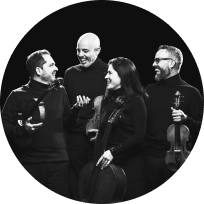
Quiroga Quartet
The best Spanish chamber music
Without a doubt and after commendable, bold and careful work in the last two decades, the quartet made up of Cibrán Sierra, Helena Poggio, Aitor Hevia and Josep Puchades is the most prestigious chamber ensemble in Spain inside and outside its borders. They joined their destinies after passing through the Reina Sofía Higher School of Music in Madrid, where the Casals Quartet was also formed, and both contributed to the promotion of chamber music in Spain in this 21st century. Both are generational references in this field: Quiroga, with a career that has taken them to the best stages in the world and to be praised by The New York Times as a group that stands out for its exquisite and fresh interpretations, or to achieve awards such as the National Music Award or the Critical Eye. In the Canary Islands you will be able to see this when they perform in Las Palmas and Tenerife with a repertoire in which they will tackle pieces by Joao Almeida Mota, Rodolfo Halffter and Juan Crisóstomo de Arriaga.