
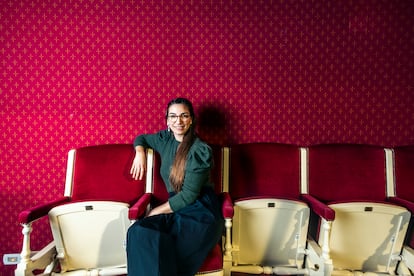
“You have to look with the eyes of a child and ask for the Moon. You have to ask for the Moon and believe that we can hold it with our hands.” The verses of Federico García Lorca inspire and guide the overwhelming production created from the sign language and culture of this community that, directed by the deaf actress Ángela Ibáñez, premiered this Friday at the María Guerrero theater in Madrid. Scream, wedding and bloodinspired by blood wedding and other fragments of Lorca’s works, is much more than a cry from this group to find a place in the theater.
It is a vindication of the deaf culture that rebels against a reality that threatens its possibilities of development, its access to culture and its happiness. With dramaturgy by Iker Azkoitia and associate direction by Julián Fuentes Reta, two actresses, Emma Vallejo and Mari López, are the protagonists of this production that combines sign language, visual elements, live music and oral language and is accessible to hearing people.
Ángela Ibáñez, an actress born 38 years ago in Madrid and who lives in Paris with her partner and little daughter, is touching the Moon these days, just as Lorca wanted. For her, this work with which she makes her debut as a director is an act of vindication, memory and freedom. “It means the recognition of sign language as another language within society. From memory because it is a tribute to Lorca. We deaf people feel very identified with him because, as a homosexual, he suffered discrimination, but he always felt a lot of pride in his identity. I am crossed as a person and as an interpreter by Lorca. His way of writing is very visual. My first work as an actress in the theater was the role of Adela in Bernarda Alba’s house. Freedom is given to us by the fact that we can do and demonstrate with our language and our culture what we dream and desire,” the actress says in sign language, in a meeting with this newspaper, accompanied by two translators.
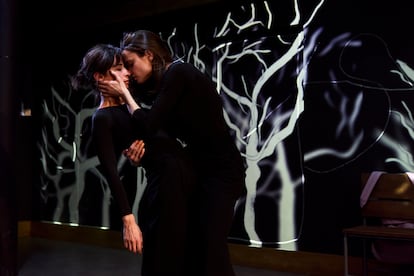
In the production, whose dramaturgy has been conceived and imagined with the fewest possible speeches and placing emphasis on visual elements to thus overthrow conventions of hearing people, deaf people also participate in departments such as costumes (Marta Muñoz) and video (Berta Frigola).
Scream, wedding and blood It begins in a school classroom, where two deaf girls have been left alone while their classmates attend a theater performance that is not accessible to them. “If we can’t go to the theater, the theater will come to us.” It is then that the two teenagers begin a magical and beautiful game, a dreamlike journey with texts by Lorca where the classroom is transformed and the poetry comes to life.
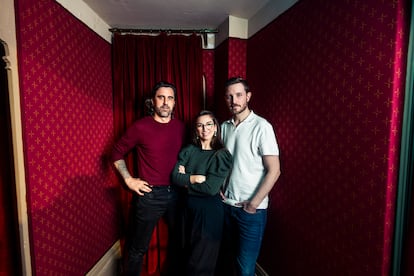
The importance of this montage is that it is not a translation from oral language to sign language, but from the beginning it has been created and conceived from its way of communicating, with its own art and poetic expressions. An example is the special configuration of the hands that is part of the grammar of the culture of people who do not hear, explains with great expressiveness and passion the director, who hopes that this function will break down barriers and definitively open the door to the creativity of the deaf and feel references.
“I don’t like to say that I am going to be a reference, but I do believe that it can mark a before and after. Why don’t we have the deaf institutional support? I trust that from the highest levels they assume that we need a stable and creative place to be able to develop sign language and give us a presence in cultural spheres,” adds Ibáñez, who does not hide his gratitude to the National Dramatic Center, directed by Alfredo Sanzol. “We need allies,” cries the director.
Scream, wedding and bloodthe first work of the National Dramatic Center directed by a deaf person, will be performed at the María Guerrero theater in Madrid until March 1.