
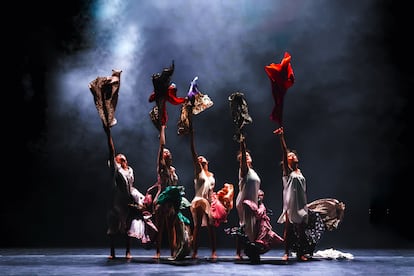
In dance, as in other arts, the phenomenon of the viral also occurs. Surely less frequently than in music or cinema; or maybe the same, but less visible. The fact is that from time to time, a choreography or an artist achieves that “must see” label, prescribed by international billboards and by visits and likes on social networks. Throughout 2024, but especially in 2025, the choreography Maldonne, scheduled this weekend at the Matadero Dance Center in Madrid, and its author, the young Frenchwoman Leïla Ka, appear as two of those indispensable. But the result remains a collage irregular visual entertainment, which goes from more to less, without much depth or discovery. A clear example that is surely also testimonial of our time, of what works in the visual impact and the brevity of social networks, but deflates when the context requires the depth of the scenic.
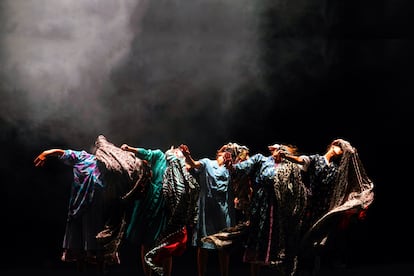
There are powerful moments in Maldonne (misunderstanding). Like the one that corresponds to the beginning of the work. Five dancers in a line, facing the audience, with overhead lighting from five spotlights, repeat a very simple gesture with arms, trunk and head, supported only by their breathing (hectic, revealing anguish and desperation). Then what works is small, repetitive and trusting in the sum of both. Later, when the raising of the right arm and the subsequent fall of the bodies to the ground are added to these choreographic phrases (with the corresponding sound of the five dancers collapsing), the proposal reaches its zenith. It is precisely this scene that accumulates likes on social networks and also forms the backbone of the 15-minute dance video that Leïla Ka has created from Maldonne. But then, the concentration breaks up into various scenes with unresolved transitions, some of them with easy gags.
It also uses evidence of those scenic resources designed to please, and which please, if it weren’t for the fact that their seams are too visible. In Maldonnethe formula involves using recognized and overwhelming music, which rather than justifying the scene, predisposes you to its dazzle. In this sense you hear the fabulous theme Dance me to the end of loveby Leonard Cohen, or the Winter of The four seasons by Vivaldi, music that closes the show on a high with that dark suddenness that announces the end and draws the most fervent applause. A theatrical interpretation of the well-known French song from the seventies I’m sickremember that wonderful scene in the film The law of desire, by Pedro Almódovar, with the Don’t leave me as a choreographic and existential basis.
The dance references, at the level of movement and even aesthetics, are also very recognizable. There is that gesture, individual and group, of the work May B (1981) by Maguy Marin, a choreographer with whom Leïla Ka has worked. The aesthetics of Pina Bausch and even specific steps of the Phase (1982) by Belgian choreographer Anne Teresa de Keersmaeker (that turn with the right arm extended). Perhaps as a tribute, nothing of this is said in the information about Maldonne. But the possible tribute to these three choreographers could marry with that feminist discourse that is announced in the program to tell what is the backbone of the show. “Five women and forty dresses” is the most used phrase in the promotional texts that accompany the montage. And although the denunciation and exposure of the subjugation of women, which is still suffered, is there and acquires true revelation and strength when it is embodied in rage, it also fails to reach deeper layers and the anecdotal overwhelms most of it.
Leïla Ka, who has also choreographed for Beyoncé and was in charge of the movement for the 50th César Awards ceremony for French cinema last year, has received the choreographic revelation award from the French Critics’ Union and has been nominated for the Bloom Prize 2025, a new award given by the Sadler’s Wells theater in London to emerging choreographers with less than ten years of experience. In Maldonne The creator points towards an interesting direction, but one that requires concentration and depth. Maybe I can acquire it with more experience and scenic thinking.