
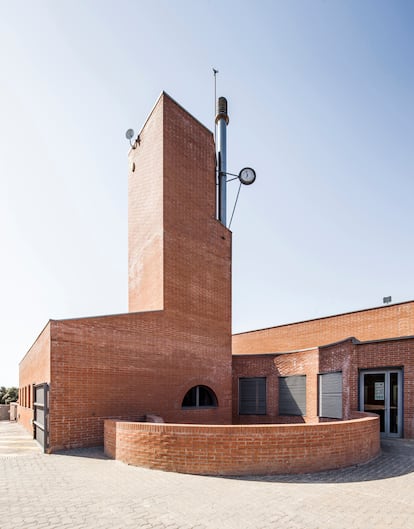
One of the biggest challenges any professional can face is revisiting what has been done. It is not easy to step back and re-observe, analyze—and even judge—work from more than 50 years ago. The architect Jaume Bach (Sabadell, 82 years old) does it in a book that bears his name. He is accompanied by his son Eugeni, also an architect, who, with his photographs, is able to bring out the humanity of the buildings he portrays without having to place people in them. He is also assisted—in a volume impeccably edited by Puente editors—a handful of well-known architects who have either visited, analyzed, or lived in the works. This is how Rafael Moneo defines the Barcelona context; Juhani Pallasmaa, the kindness of the character of the architecture, and Bet Capdeferro the understanding of history. Those who have lived in the works also write. This is the case of the architect Anna Puigjaner, who studied at the L’Alzina School and who says that it was there, in those intermediate spaces that are neither inside nor outside, where she began to think as an architect.
The intermediate space is a constant in Bach’s work. One of his first houses, the Arenas in Vilanova i la Geltrú, demonstrates this. And it demonstrates, in turn, how well Bach assimilated Paul Rudolph’s work for the Walker family guest pavilion.
Why it is a challenge to look back, there is no need to answer, it is because of what one can find. Bach finds an ingenious rationalism, an architecture of “small significant advances” as he himself estimates, not devoid of humor. Nor responsibility.
With Gabi Mora – for several decades and more recently associated with his son Eugeni and his daughter-in-law Anna -, Jaume Bach has built an architecture in which ideas have as much space – the great arch of the Jujol school that connects two buildings, opens the way to the interior and breaks the rationalism of the building – as well as occurrences: the displaced clock – that clock – in the tower of the Espiells School of Viticulture and Oenology. Of both things: ideas and details, his children are heirs.
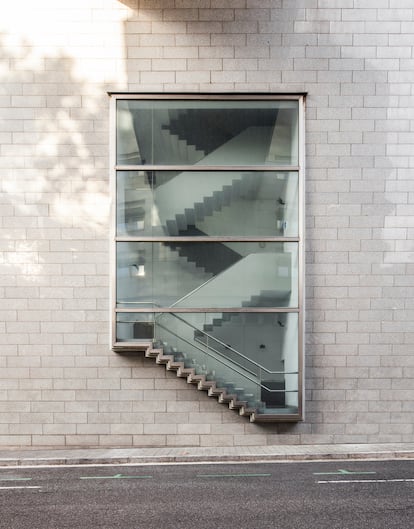
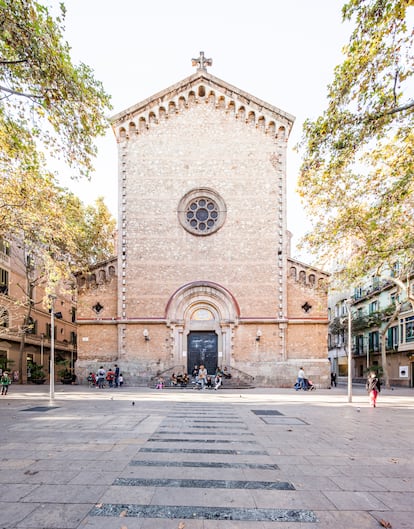
Thus, audacity, order, ingenuity and emotion are what awaken Bach’s career today, summarized in 40 of his works. I must confess my personal connection to a work so established in the city that it feels anonymous, like the Plaza de la Virreina —with a stone carpet that leads to the church of Sant Joan— or the Plaza del Sol —on a parking lot— and the Plaza de la Trilla —a small lung next to Calle Mayor de Gracia. Gracia is the Barcelona neighborhood where I live. But I had to read this book to find out that this last friendly little square – which is felt more than seen – had been designed by Jaume Bach.
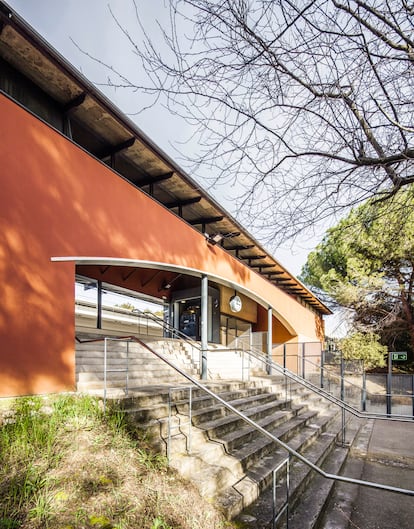
I have more biography associated with his work. As a journalism student at Bellaterra, my class inaugurated the railway station. It looks postmodern. He was kind. A cantilever of metal beams and perforated sheet metal welcomes the students when they arrive and rises to say goodbye to them when they finally leave. This cantilever seems to cross the only concrete wall and metal beams that the station builds to become a visor over the postmodern arch.
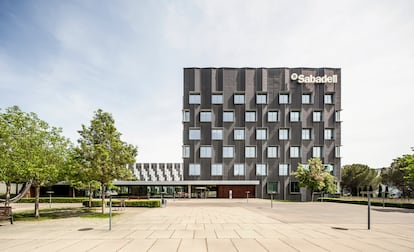
Humor becomes wit in many of the works. The double façade, with cantilevered frames, of the Banco de Sabadell allows the office workers to feel a thick separation from the outside and the owner of the property to take advantage of every centimeter of floor. In other offices, those of Telefónica, the large window that illuminates the stairs ends, is dropped, in a staggered manner.
Step by step this careful and careful trajectory is made. It’s nice that buildings and squares coexist anonymously in the city. Also, that ingenious details continue to appear so without the passage of time taking away their joy.