
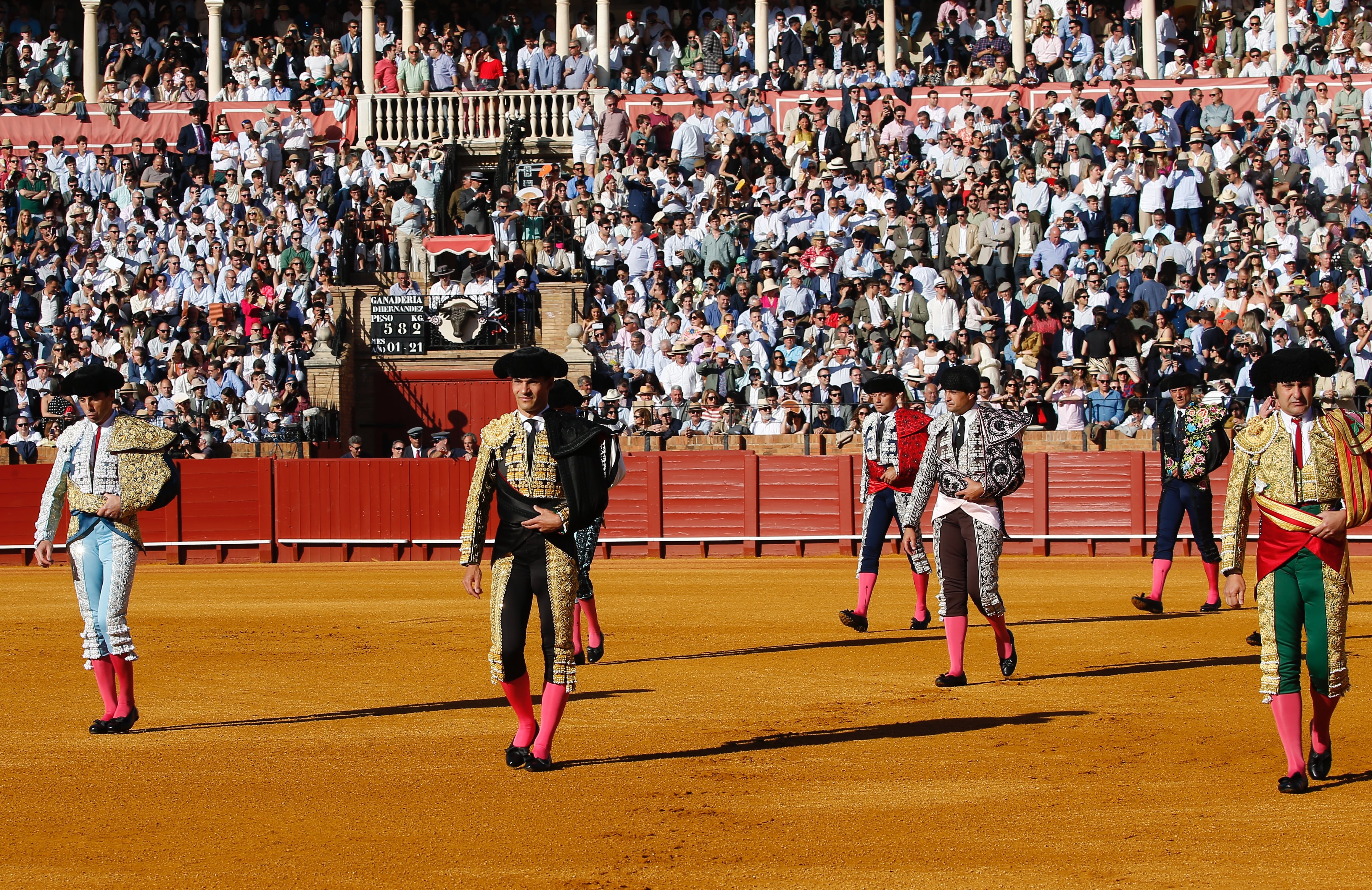
That the students know in depth the origin and history of bullfighting and its role in the Spanish constitutional order, the behavior of the fighting bull, the fate of bullfighting, the role of the bullfighters and the administrative aspects of the show.
These are the fundamental objectives of the first edition of the Basis of Bullfighting course, organized by the University of Seville following the proposal of a group of teachers from different subjects.
Its director, Guillermo Machuca, from the Department of Stomatology, assures that the idea arose in a discussion about cinema and after the Minister of Culture, Ernest Urtasun, suppressed the National Bullfighting Award.
The rectorship, then occupied by Miguel Ángel Castro, welcomed the idea with enthusiasm, and that lively talk between friends has led to a course that Machuca himself describes as “absolutely innovative in the Spanish university.”
The pre-registration period closes on January 29 for the 20 planned places, and the classes, mostly onlinebegin on March 25 and are scheduled to end on October 31.
There are two requirements for the admission of applicants: completed compulsory education (primary and secondary) and proximity to the world of bullfighting.
“The course modality will be blended, with a practical development –visits to livestock farms–, which has forced us to limit the number of students to 20 and request sponsorship from the Real Maestranza of Seville, which will contribute 25,000 euros,” adds Machuca. This aid allows each student to only have to pay 60 percent of the 852 euros that each place costs.
There are two requirements for the admission of applicants: completed compulsory education (primary and secondary) and proximity to the world of bullfighting, which must be accredited by the student.
“We want to prevent people from infiltrating the course who intend to destroy it, as has happened on other occasions,” says Machuca. “We ask that applicants certify their relationship with the world of bullfighting: members of teams of presidents of bullrings or bullfighting clubs, subscribers, connection with farms, etc.; it is about knowing who they are and where they come from so that the course runs normally.”
The director announces that the number of applicants has already exceeded the number of those admitted, “which will force us to carefully analyze the bullfighting curricula to avoid injustices.”
The founding team hopes that the inauguration of the course, scheduled for March 25, will be a solemn event, presided over by the new rector of the University of Seville, Carmen Vargas. The cast of professors will be present, made up of university representatives from different disciplines, including art history, modern history, prehistory and archaeology, journalism, medieval history, Spanish language and American history, two bullfighters, Manuel Escribano and retired Eduardo Dávila Miura, a rancher, Francisco Javier Moya from El Parralejo, a president of the Seville bullring, José Luque Teruel, and a member of the Real Maestranza.
All of them will address four thematic modules: origin and history of bullfighting, the fighting bull, the professionals and the fortunes of bullfighting, and introduction to the administrative aspects of bullfighting.
“The final objective is for students to acquire in-depth knowledge about the most outstanding aspects related to bullfighting,” adds the director; “that they have judgment when evaluating the behavior of the bull, the fate of the fight and the role played by each of the participants in it.”
Guillermo Machuca hopes that it will be possible to call for a second edition of the course in which administrative and business issues of entertainment and the management of presidential teams could be developed.
“Knowledge is essential for the future of the bullfighting festival,” he concludes.