
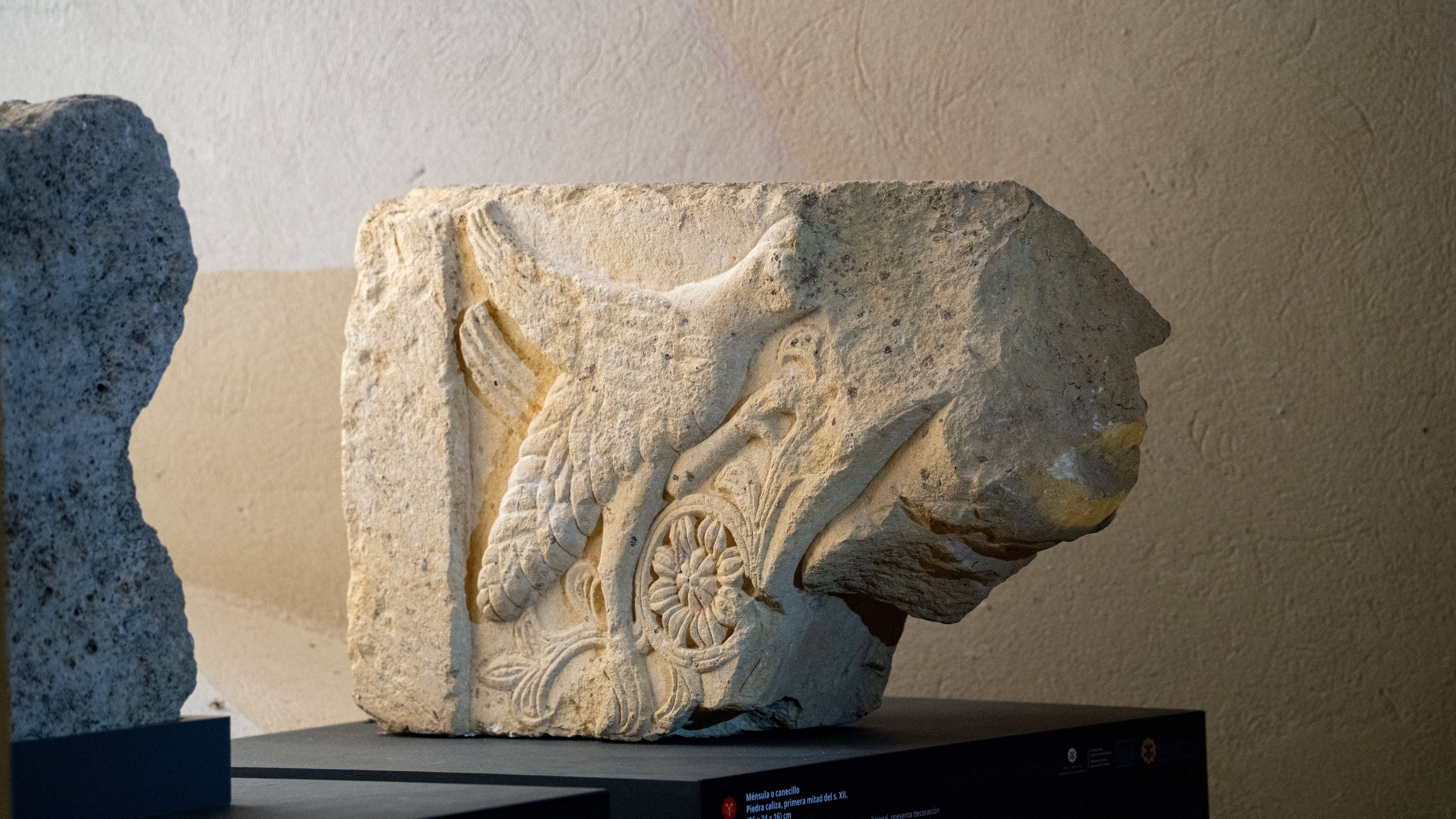
“In the 12th century, this building was an incredible place on the Camino de Santiago: here knights were armed, oaths were sworn, weddings were agreed upon…” Professor José Luis Senra lists, between objectivity and fascination, some of the milestones that marked the history of the monastery of San Zoilo (Carrión de los Condes, Palencia), epicenter of power in Cluny on the Iberian Peninsula in the Middle Ages. The decline of the order that revolutionized European cultural life and the reforms that were carried out in the 16th century erased the trace of that splendor. “Now what is San Zoilo? Now it is nothing,” laments the professor of Art History at the Complutense University of Madrid. That silence—“a continuous nap,” as Senra defines it—began to be broken in the nineties with the first archaeological studies and findings. Now, the location and restoration of several capitals from the disappeared cloister of the Romanesque building – which are currently on display in the monastery, until November – allow us to take another step in the knowledge of one of the most dazzling (and forgotten) sites of medieval Spain.
Continue reading