
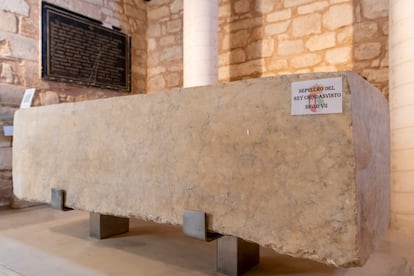
It was extremely unlikely that a Visigoth king would die peacefully in his bed. These nobles of Germanic origin had the unhealthy habit of exterminating each other. So we don’t know where the vast majority of them are buried. You don’t kill a king and then give him a state funeral and a big tomb. In fact, of the thirty Gothic monarchs who reigned in Hispania, only three are known to have been buried, and there are more than reasonable doubts that the supposed bones preserved from them belong to them. (This text is an extract from EL PAÍS’ weekly archeology bulletin, ‘Cuatro piedra’. To receive the newsletter, you can sign up here).
The mortal remains of Chindasvinto and his wife Reciberga are displayed in the parish church of the Valladolid municipality of San Román de Hornija. The neighbors have set up a kind of mini-museum with all the objects they have related to the monarch: bones, tomb, chests or columns from the church and from the town’s missing Gothic convent, which were destroyed in the 8th century during the Muslim invasion. The current church is later and was built using the material left over from the old church and the razed monastery.
On the other hand, in the Mozarabic chapel of the Toledo cathedral the urns with the remains of the kings Recesvinto, son of Chindasvinto, and Wamba are kept. In the 13th century, they were moved to the Toledo church of Santa Leocadia at the request of Alfonso the wise one, who considered himself the successor of the Gothic lineage. Therefore, I wanted to have the maximum possible number of relatives buried in the city of the Tagus, But in 1808, due to the complete ineptitude of our rulers, Spain suffered one of the most terrifying invasions that a country can imagine, the Napoleonic one. Hundreds, if not thousands, of convents, churches, palaces or castles were looted or destroyed for pleasure, greed, revenge or hatred. And that, exactly, was what happened with the tombs of Recesvinto and Wamba in Santa Leocadia, which were looted, burned, burst and desecrated.
In 1814, the first patina of freedom, equality and fraternity that Napoleon spread throughout Spain was over—shortly later a second arrived with The one hundred thousand children of Saint Louis—, the survivors tried to regroup the bones of Wamba and Recesvinto. They collected his skeletal remains from the ground, locked them in chests and mourned the humiliation. In 1845, Isabel II ordered that they be buried again, but now in the cathedral. A spectacular funeral procession toured the city.
The problem is to verify whether the remains of the three monarchs really correspond to them or, on the contrary, the destruction was such that bones from other tombs that were also defiled were placed in the urns. In the monastery of San Pedro de Cardeña (Burgos), for example, the desecration of El Cid’s tomb caused enormous damage to the funerary complex and the bones were sold as souvenir throughout Europe. We don’t even talk about the sword and the rest of the military and religious material from the burial.
That is to say, since the hypothetical bones of Chindasvinto, Recesvinto’s father, are kept in the municipality of San Román de Hornija, a simple DNA test on the remains of both would demonstrate if they are really them. This would clear up doubts about who is buried in the primate cathedral of Spain and in the humble San Román. It shouldn’t be very expensive…
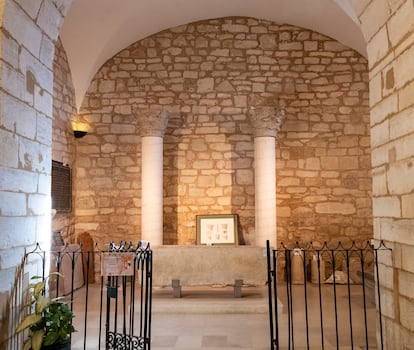
PS: The parish church of San Román, built by Chindasvinto, is worth a visit to see the remains of this king and his beloved wife, who died at the age of 22. You have to make a reservation by calling 722 592 660 and ask for Clara Mari. The local people – mayor, sheriff and daughter of Clara Mari… – are very friendly, and Tordesillas (Valladolid) and Toro (Zamora) are just a stone’s throw away. The gastronomy of the area is spectacular; the wine, divine and the Spanish they speak, perfect. I leave it there as a weekend proposal. You can also stay in on Saturday watching a Netflix movie and stuff a bag of sunflower chips between your chest and back. There are people pá lake.
in the bulletin ‘Four stones’Vicente G. Olaya collects stories like these every Monday, in addition to reviewing the latest news from centuries ago. If you also want to be part of the ‘cuatropedreros’ community, sign up here.