
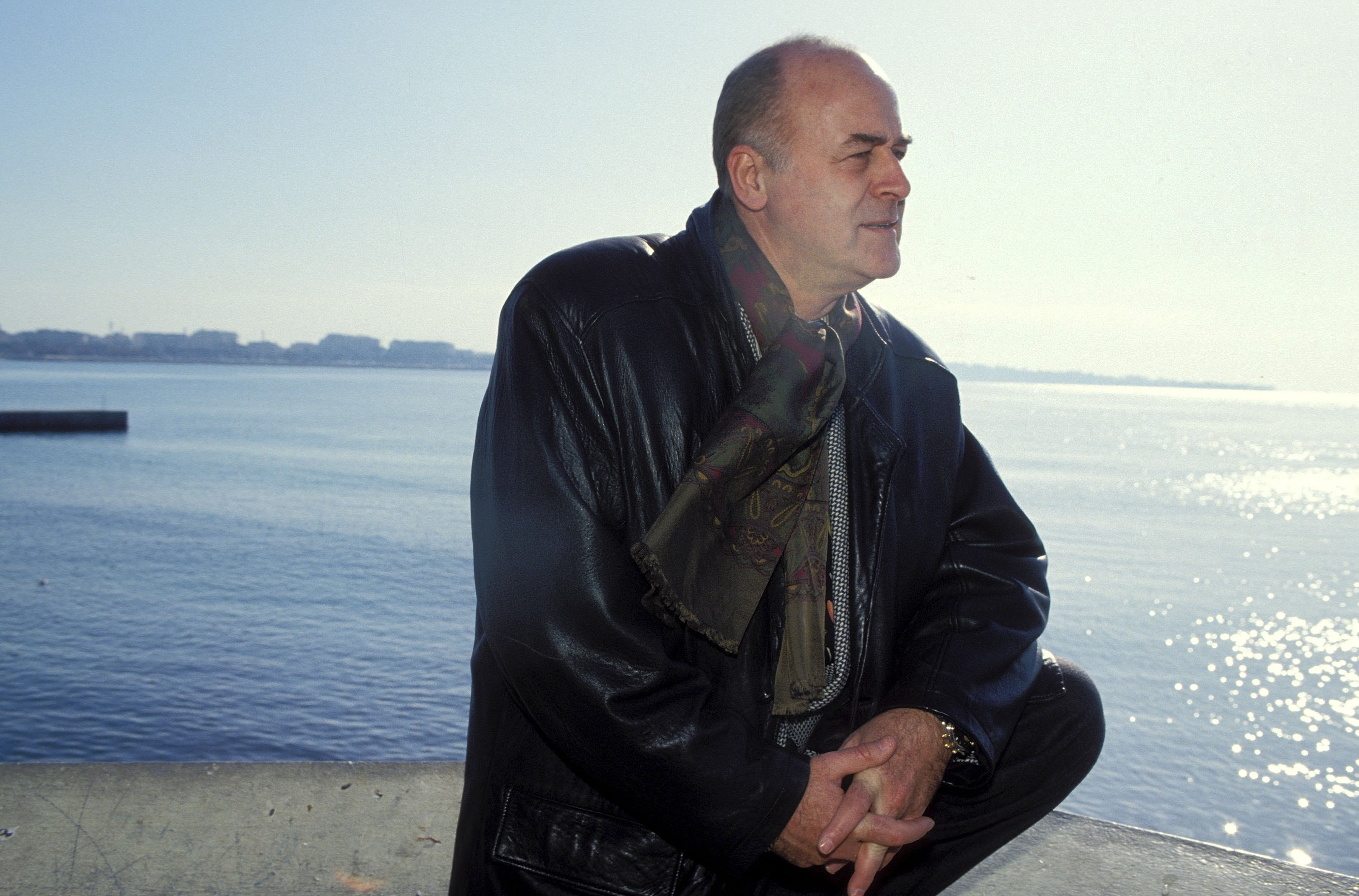
His mother said that he sang from his first cries, as Michèle Friche recalls in her monograph (Buchet Chastel, 1988). José van Dam’s voice was always natural and musical, regardless of the repertoire he addressed. Not in vain, this versatile Belgian bass-baritone compiled a vast operatic catalogue, from Representation of Soul and Bodyfrom Emilio de’ Cavalieri—in his 1968 debut at the Salzburg Festival—to Olivier Messiaen, whose Saint Francis of Assisi It premiered in 1983. Over more than six decades he collaborated with the great directors of his time, including Herbert von Karajan, of whom he was one of his reference performers.
José van Dam died on Tuesday, February 17 at the age of 85, “peacefully and surrounded by his loved ones,” as announced by the Queen Elisabeth Musical Chapel, where he had been resident teacher emeritus since 2004. Born as Joseph Libert Alfred Van Damme on August 25, 1940 in the Brussels municipality of Ixelles, he was the son of a cabinetmaker with no connection to the world of music.
At the age of ten, his father made a cabinet for the radio and record player, and the boy began to sing what he heard. Through singing he overcame his fear of the dark and, as a child alto, he won several local competitions. He joined a parish choir, already as a soloist, and at the age of 17 he began his training at the Royal Conservatory of Brussels, which he completed in just one year with awards and diplomas.
His professional debut came in 1960 as Don Basilio in The barber of Sevilleby Rossini, at the Royal Opera of Wallonia-Liège. The following year he joined the Paris Opera company, where he learned alongside singers of the stature of Maria Callas, Régine Crespin, Jon Vickers and Nicolai Ghiaurov. Although he sang his first Escamillo in Carmenby Bizet, was relegated to minor roles due to the system of protection for French singers.
He resigned to join the Geneva Opera, where he participated in the world premiere of The guilty motherby Milhaud. From there he moved to the Deutsche Oper in Berlin in 1967, invited by Lorin Maazel. There he consolidated his Mozartian roles such as Leporello and Figaro, became the Escamillo of the moment and participated in the premiere of Ulisesde Dallapiccola.
The freedom he enjoyed at the Berlin opera allowed him to take on engagements at other theaters, such as La Monnaie in Brussels, Covent Garden in London, La Scala in Milan and the Metropolitan Opera in New York. It also opened the doors to festivals such as Aix-en-Provence and Salzburg, in addition to starting out as a soloist in the symphonic-choral repertoire with the ninth symphonyby Beethoven, or the Requiemsaid Verdi.
In the 1970s he became the reference bass-baritone for Herbert von Karajan, whom he never turned down an engagement. Until the death of the Austrian conductor, he participated under his baton in 157 concerts and opera performances, as well as 28 recordings. His 1978 record as Golaud stands out in Pelléas and Mélisande, by Debussy (EMI/Warner), and from 1977 as Jochanaan in Salome, by Strauss (Decca), as well as the 1980 one as Amfortas in Parsifal, de Wagner (Deutsche Grammophon)
With Karajan he also recorded the leading role in The Flying Dutchman or Escamillo in Carmenin addition to the Mozartian roles of Figaro in The Marriage of Figaro and Sarastro in The magic flutealong with interventions in Fidelio, Aida y Don Carlo. Without forgetting his participation in 1977 in the best ninth symphony of Beethoven recorded by Karajan, as well as in recordings of the Requiem by Mozart, A German requiemby Brahms, or the God bless youby Bruckner.
He also participated in recordings with Georg Solti, such as Carmen, The woman without a shadow y The Mastersingers of Nurembergor with Claudio Abbado, with whom he recorded again Pelléas and Mélisande and collaborated in its reference Simon Boccanegra verdian. With Pierre Boulez he recorded Ravel’s songs and won his first Grammy in 1985.
On November 28, 1983, at the Palais Garnier in Paris, Van Dam premiered the lead role in Saint Francis of Assisiby Olivier Messiaen, directed by Seiji Ozawa. It was one of the main events of his career: the French composer’s only opera, a monumental work lasting almost five hours, with extraordinary vocal and scenic demands. Messiaen rehearsed with Van Dam the gestures and attitudes inspired by Giotto’s frescoes in Assisi and critics highlighted the stage presence and spirituality of his interpretation, which he continued to sing in several productions in Salzburg and Paris until 1998.
Van Dam maintained a close relationship with Spain and performed in recitals and operatic productions from 1991 to 2011. At the Teatro Real in Madrid he debuted as Don Pasqualeby Donizetti, in 2004, and sang From the house of the deadby Janáček, in the production of Klaus Michael Grüber. And at the Liceu in Barcelona he offered his last performance as an opera singer in July 2011: the brief role of Barbazul in Ariadne and Bluebeardby Paul Dukas, with stage direction by Claus Guth, which was recorded on DVD by Opus Arte.
Apart from his many operatic recordings, he made curious late projects, such as his album of tangos by Carlos Gardel or by songs French. In the cinema he played Leporello in the famous film Don Giovanniby Joseph Losey (1979), and starred The Music Masterby Gérard Corbiau (1988), which was nominated for the Oscar for best foreign language film. Among his most important recognitions, apart from numerous musical awards, in 1998 he obtained the title of baron awarded by King Albert II of Belgium.
In its statement, the Queen Elisabeth Musical Chapel summed up its importance with a phrase that can hardly be improved: “Belgium loses its greatest ambassador of lyrical art; the world loses a legend who, with his genius, marked the history of opera in the 20th and 21st centuries.” Van Dam was not only an extraordinary singer, but also an artist who combined the intellectual depth of lied and the melodies with the dramatic intensity of the opera, and which transitioned naturally from Mozart to Duparc, and from Wozzeck from Berg to Don Quixote of Massenet. His humility has been encrypted in his personal motto: “We are here to serve music.” Few have served her with such nobility.