
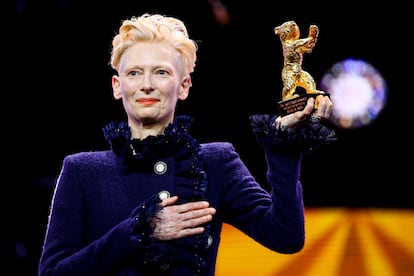
More than 80 participants in this edition of the Berlinale and filmmakers who have visited the German festival on previous occasions have signed an open letter in the magazine Variety and aimed at the festival condemning what, they describe, has been its “silence” when it comes to the conflict in Gaza and the “censorship” of the artists who have spoken. “We are dismayed.”
Actors such as Tilda Swinton (Honorary Golden Bear in 2025), Javier Bardem, Ben Russell, Brian Cox, Adèle Haenel, Ariane Labed, Carice Van Houten, Charlie Shackleton, Tatiana Maslany, Peter Mullan and Tobias Menzies or directors such as Mike Leigh, Nina Menkes, Camilo Restrepo, Lukas Dhont, Sepideh Farsi, Shirin Neshat, Nan Goldin, Fernando Meirelles, Hany Abu Assad, Miguel Gomes, Tyler Taormina and Adam McKay are among the signatories of the letter, which reads: “We hope that the institutions of our industry reject complicity in the terrible violence that continues to be waged against Palestinians.”
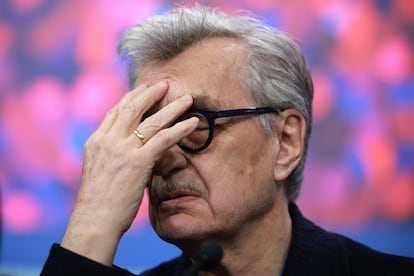
The main one pointed out is Wim Wenders, and his controversial statement last Thursday at the press conference to present the jury of the 76th edition of the Berlinale, when a German blogger asked if Germany’s support for Israel and its financial support for the Berlinale, an event financed mainly with public money, compromised the festival’s freedom of expression. That is, is the festival being muzzled? Wenders replied: “We have to stay out of politics. We are the counterweight to politics, the opposite of politicians; we have to do the work of the people, not the politicians.” This clashed with the Berlinale’s constant support for the Ukrainian and Iranian peoples, and underlined the silence in the face of the invasion of Gaza by the Israeli army, a genocide whose condemnation already heated up spirits, last year, among the world filmmakers present in Berlin and the organizers of the competition.
In the open letter, the signatories affirm their complete disagreement with Wenders’ opinions on film and politics. “You cannot separate one thing from the other,” they say, adding that “the situation is changing in the world of international cinema,” citing the refusal of more than 5,000 film professionals to collaborate with “complicit Israeli film companies and institutions.”
Added to the controversy that erupted online with these and other statements was the cancellation of the visit of the Indian writer Arundhati Roy, who was going to present the restoration of In Which Annie Give It Those Ones (1989), and that in a statement justified the cancellation of his trip: “Hearing them say that art should not be political is astonishing (…). It is a way of silencing a conversation about a crime against humanity while it unfolds before us in real time, when artists, writers and filmmakers should be doing everything possible to stop it.”
The Berlinale responded to this with a statement on Saturday night “in defense of our filmmakers, and especially our jury and its president,” after what it described as a “media storm that has devastated the festival” during its first two days; and another text by the festival director, Tricia Tuttle, a long “reflection” titled About speaking, cinema and politics, in which he insisted: “Artists should not be expected to comment on all broader debates.”
Some victims yes and others no
The letter from the 80 signatories notes that the Berlinale has made “clear statements” in the past about “atrocities” committed against people in Iran and Ukraine. “As the Palestinian Film Institute has stated, the festival has been ‘monitoring the filmmakers, as well as maintaining a commitment to collaborating with the Federal Police in their investigations.’ Last year, filmmakers who spoke out in favor of Palestinian life and freedom from the Berlinale stage reported being severely reprimanded by the festival’s main programmers.”
Therefore, the open letter continues, “we urge the Berlinale to fulfill its moral duty and clearly state its opposition to Israel’s genocide, its crimes against humanity and its war crimes against the Palestinians, and to completely end its involvement in shielding Israel from criticism and calls for accountability.”