
You have to go up to the Castillo neighborhood, a classic area for aperitifs and sun, to reach the Cuenca zip line. It is 15 minutes from the parador, a walk to shake off the sticky January cold. On the starting platform, fixed harness and helmet on your head, it is easy to believe you are in Cape Canaveral. Then you have to take a small leap into the void and open your arms to feel the wind, recommend Cristian and Begoña, their thoughtful and kind managers. And boy do you feel it: the tingle of weightlessness makes you laugh to yourself, jajajá, but the descent is placid, far from the vertigo of a roller coaster. Adrenaline for all audiences.
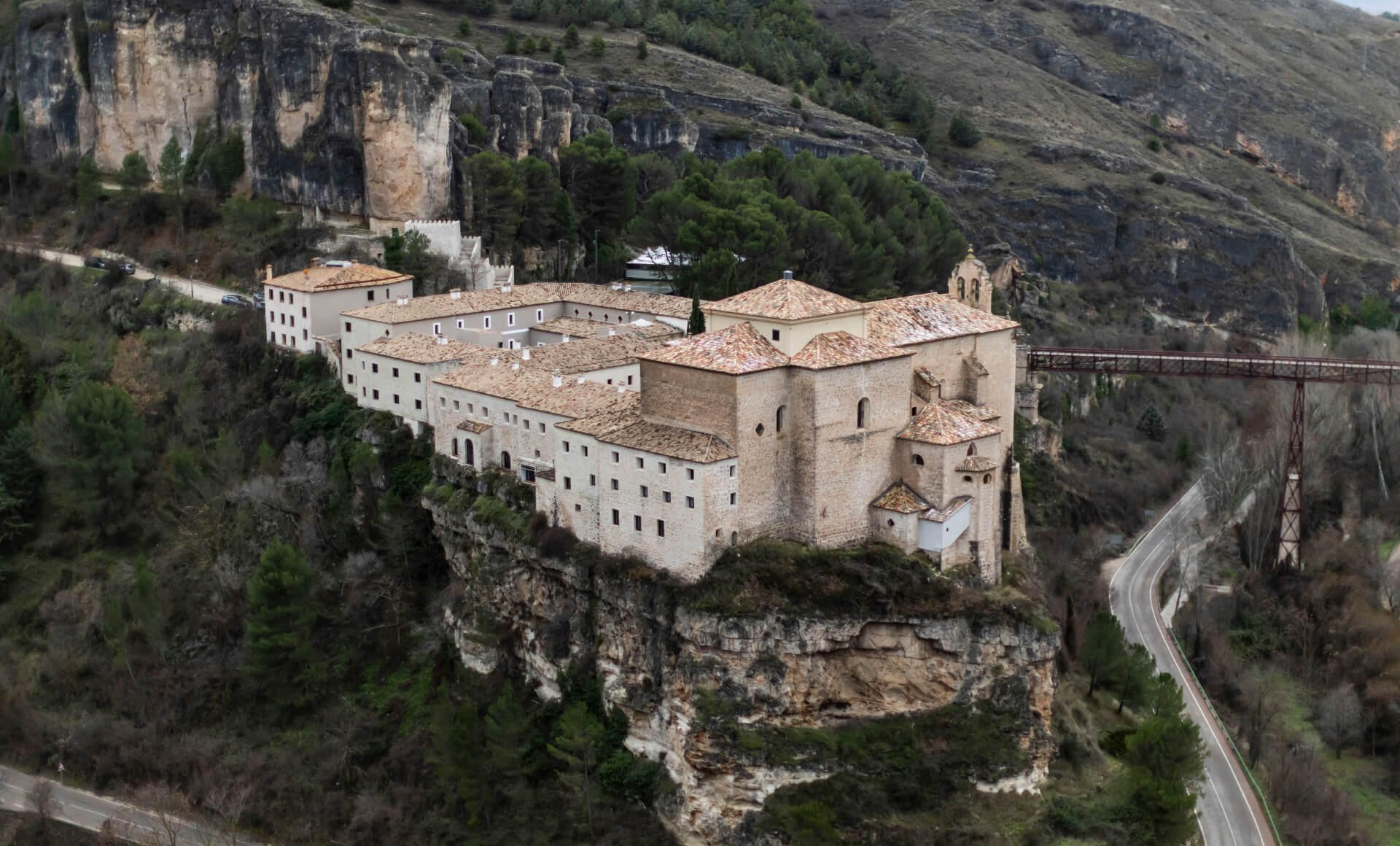
Such a modern invention—it has been in operation for about three years—serves to encompass at a glance the ancient heritage that weaves the city together. In Cuenca, a city-landscape, the cultural and heritage offering unfolds inwards, in its buildings, and outwards, between the gorges of the Júcar and Huécar that shape it: the Museum of Spanish Abstract Art; countless paths for hiking and cycling (lit at night); the medieval peaks of the cathedral and convents; the Hanging Houses, of course; the parador, a 16th century convent that stands on the crest of the Huécar gorge and reopened after seven months of renovation; the fields where the sheep (and goats) graze that make the region famous… Everything that can be seen from the air, indoors and outdoors, can be walked through with all the calm in the world. It is perhaps the greatest gift of a city that seems perched on stone stilts above the water.
Inside the hostel
Rooms on the edge of the sickle
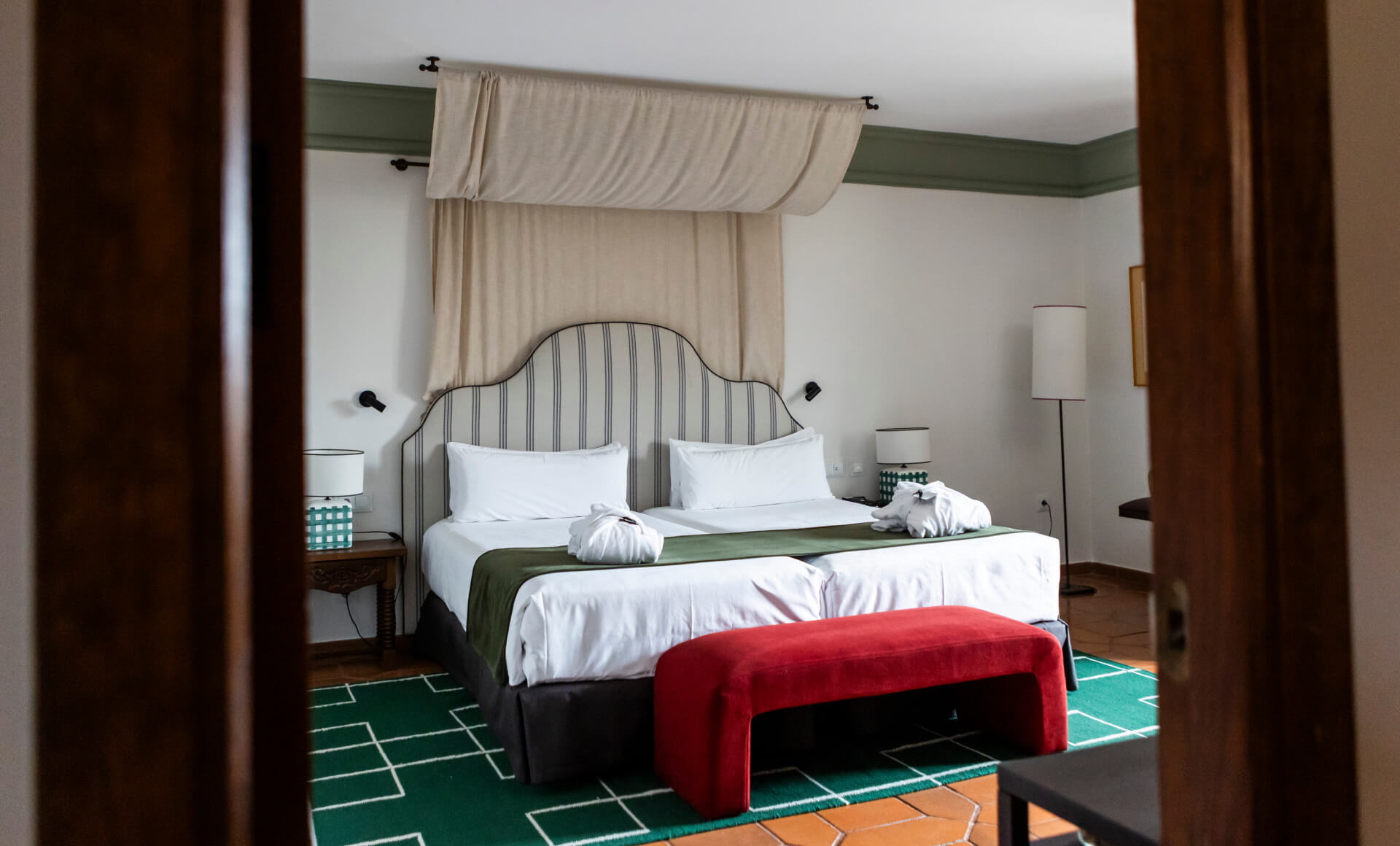
The inn has 63 rooms, some facing Huécar and others facing the most humid and shady side of the hill. From its windows you can see the hanging houses and the bridge that connects it to the old part. The visitor profile, details the director, is 65% national. Among foreign tourists, the English, French and Germans lead, with a growing Asian presence. And a lot of loyalty to the establishment and the city, he adds.
A seasonal and very local menu
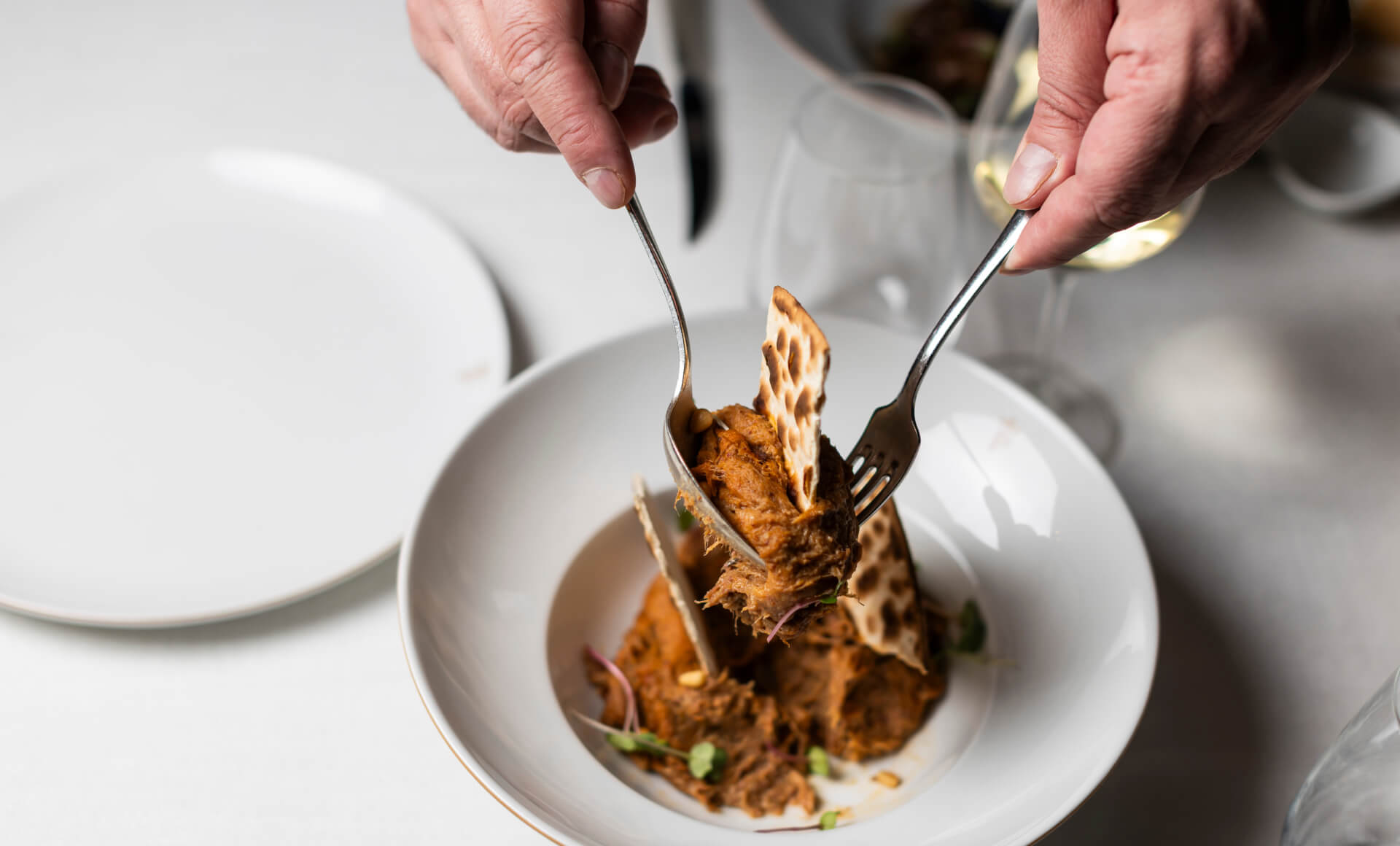
On the menu, a tribute to the Cuenca tradition, the morteruelo (in the image) shines, a delicate pâté based on pork liver and different game meats, or the zarajos, fine offal from suckling lamb. In winter, wild boar meatballs and deer loin stand out as main dishes. Locality prevails in the product, as can be seen in the extensive variety of cheeses and wines. And yes or yes you have to try the local cheese ice cream.
Eat with the tranquility of a monk
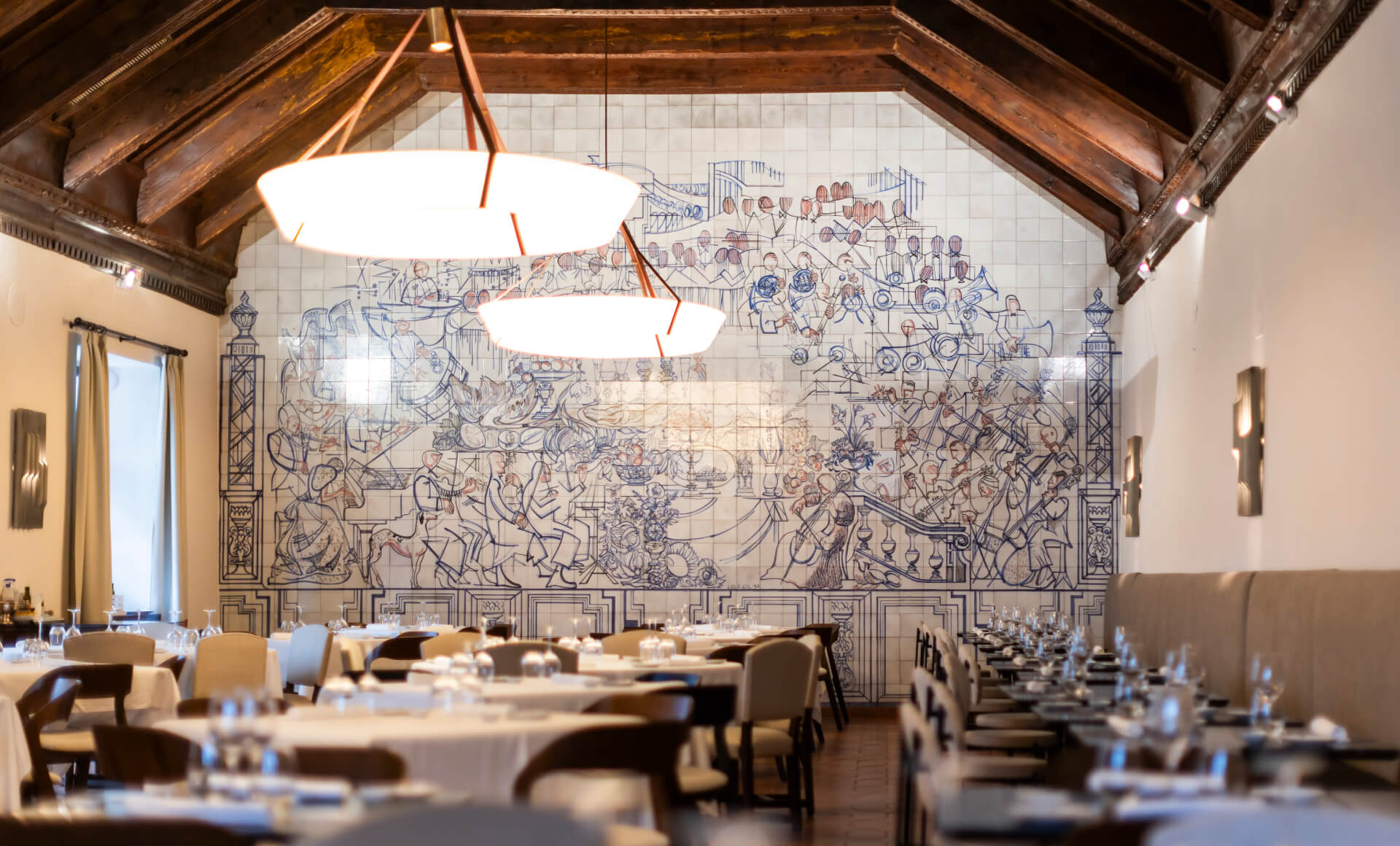
The gastronomy of the parador is enjoyed in the monastic refectory, with capacity for 160 diners and an airy table arrangement that encourages intimacy. Many weddings and communions are celebrated here. On its walls, more art: here, a mural with musical motifs by the artist Lola Gil. The cafeteria, with views of the riverside nature and accessed from the cloister, completes the restaurant offering of the inn.
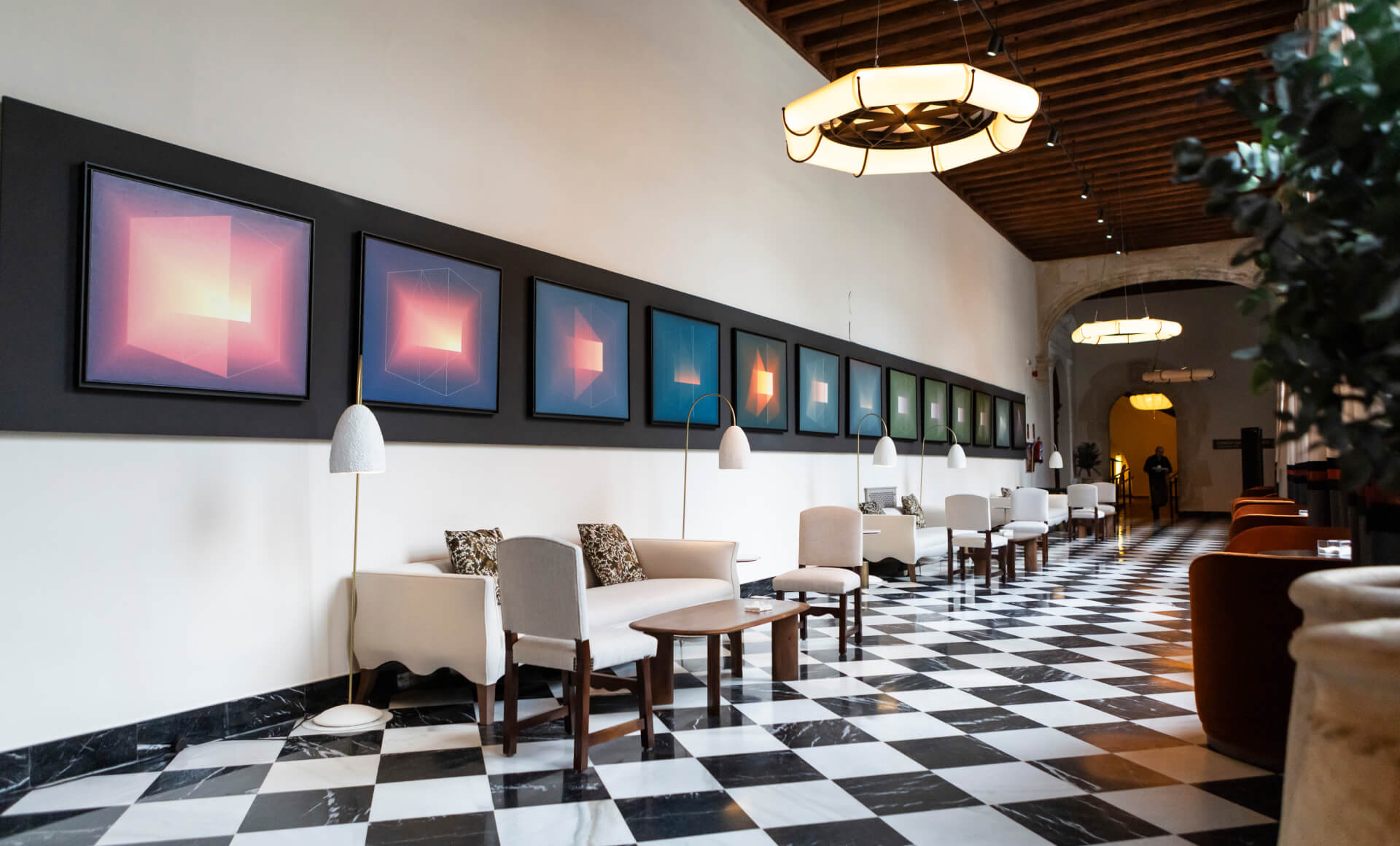
The cloister-museum that always fascinates
The glass cloister invites you to sit in the armchairs that surround it to play a good game of chess. If you walk around the perimeter, it is easy to become enthralled with the pictorial collection that hangs on its walls: it is the Serie Malevich by the artist Julián Casado, 42 variations of the same geometric figure depending on the incidence of light. In good weather, going out to its bright patio to have a coffee is your thing.
Anterior
Following
Half a minute later, after 450 meters of flight, the zip line lands on the opposite sickle. The person released is given a photo in which it is normal to appear disheveled and with a crazy happy face. The parador, in Plateresque style and opened in 1993, is just around the corner and is very popular. What new features has the recent reform brought? The rehabilitation of the adjacent cistern, new lighting in the atrium and the addition of works by Fernando Zóbel and Gustavo Torner to the interior decoration, among other things. Juan Serrapio, a Pontevedra native without an accent after 12 years in Cuenca (53,000 inhabitants), explains it: “We are on the golden mile of Cuenca. This is the second most important building after the cathedral and that is why we always want to improve it. We have all the nature and heritage in front of us.” A scene of scandalous beauty that the neighbors themselves resort to (weddings, baptisms, birthdays… are celebrated here), but also visitors who, if they don’t stay the night, take the opportunity to admire its cloister – with the collection of 42 paintings by Julián Casado as the main attraction -, have a coffee and take some photos. “Most of the staff is from here and that helps,” Serrapio remarks.
Activities for everyone in a natural environment
Cultural visits, sustainable tourism, revitalization of the place…
How to get the most out of the area where the Cuenca parador is located
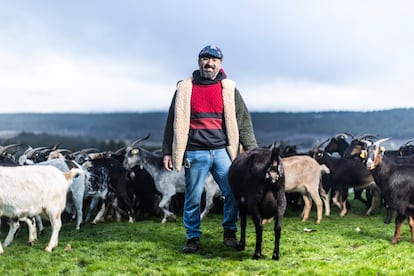
The parador is a reliable starting point. From here you can go in search of vultures and brown bears to El Hosquillo, 50 kilometers away, a protected nature reserve. Check out the Noheda mosaic (half an hour by car) how the nouveau riche of the late Roman period decorated their villas. Go from museum to museum, up to 10, for just under 20 euros in tickets. Grab your boots and walk one of the dozens of hiking routes, for all levels, that start from the convent. Or eat, just eat. Already in the restaurant of the parador, there are crunchy zarajos (suitable for those squeamish about textures); morteruelo (a pâté of partridge, hare and other meats) and ajoarriero or garlic mortar (crumbled cod with egg and potato). And a cheese that is all the rage: a kind of brie of goat milk that never has the same texture. Reveals why Rodolfo Rodríguez, the author of the creation: “Goat milk changes depending on when you milk it. I have summer and winter cheeses. And clients who ask me for a specific texture.” To close the menu, local cheese ice cream—“it’s very sweet,” Serrapio warns—and a brief resolí, the aniseed and coffee-sweet local liquor.
To get to the old town you have to cross the stapleas they call the iron bridge here (reminiscent of the style of the Eiffel Tower) that replaced the original stone one at the end of the 19th century. Juan García, a guide with 20 years of experience and more than 300 countries behind him, offers the right context: Cuenca was splendid, one of the richest cities between the 15th and 16th centuries, with the reign of the sheep (more than a million then; today, half) and the wool trade as a great economic asset. Also a rare and consistent birthplace of poets and painters. “The city has many secrets,” he points out. “That is why there is no need to do check with the Hanging Houses and leave. We offer it in its entirety.”
From house to house
If Cuenca has something, it is houses galore. The most famous ones are hanging, not hanging. The crooked ones, on the outskirts of the Plaza Mayor, which when seen from the front are like colored keys on a piano. “It’s because of the sabino wood,” the guide is clear; the house of José Luis Perales, a god for the Latin American tourist; the remains of Federico Muelas, poet of the generation of ’36, famous chronicler of the city and man of carajillo in the sun. “Tourism here is like going back to the 90s. We have an enormous medieval heritage, undistorted and very accessible. And the best thing, why fool ourselves, is that sometimes there is no one there,” says García.
Blanca, José and Mari Carmen recommend
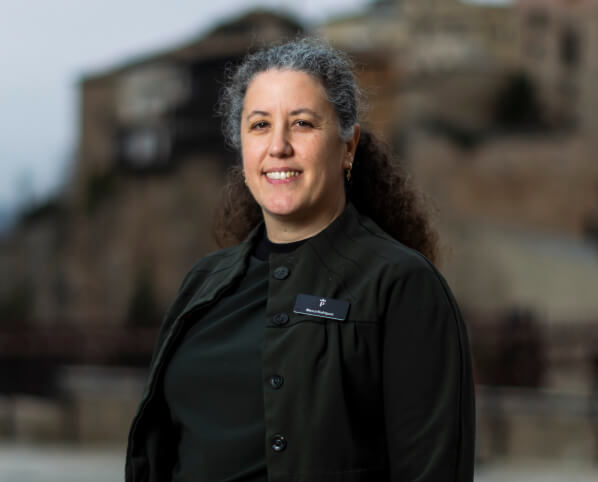
“In the town of Uña, about 30 kilometers from Cuenca, there is a circular route around a lagoon that is very cool. In the Tragacete area, in the mountains, there is another path that everyone can do. And you can see vultures, deer, the rut in autumn… Oh, and the alleys of Las Majadas, similar to the Enchanted City, but with free access and surrounded by nature.”
Blanca Rodríguez
Receptionist 5 years in Paradores
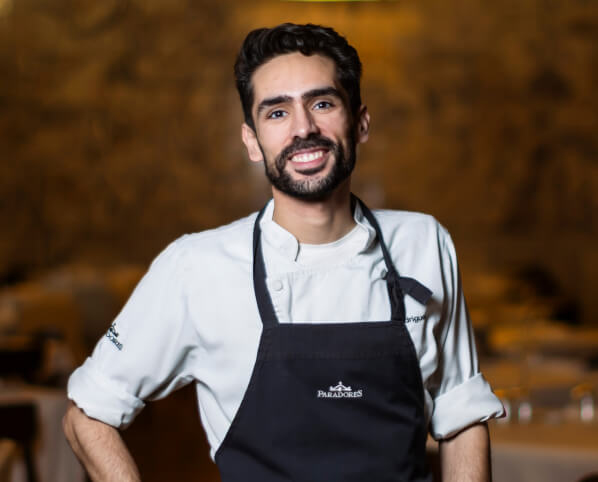
“In addition to the ruins of Noheda, something you don’t expect to be in Cuenca, I recommend riding a balloon and seeing the city from the sky. You go from one place to another according to the wind and you pass right over the old town. It’s spectacular. And simple: you reserve, they pick you up and take you to the flight location.”
Jose Rodriguez
Chef 6 months in Paradores
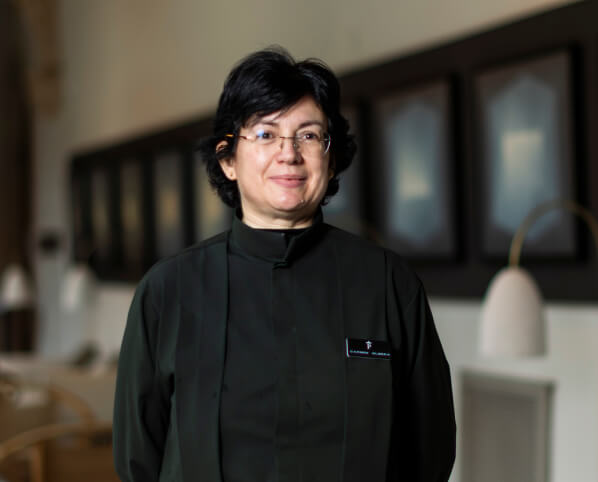
“Cuenca is a city of museums. There is the Art Natura, a paleontological museum with dinosaurs that is perfect for children. Also the Science museum and, of course, the Abstract Art museum… And then having a drink or walking through the old town is a great plan. There are many quiet little bars, with atmosphere and good music. And the old town, illuminated at night, is very beautiful and walkable.”
Mari Carmen Olmeda
Dining room and bar waitress 8 years in Paradores
The house of houses, the most visited monument by the 200,000 tourists a year that Cuenca receives – a UNESCO World Heritage Site since 1996 for its adaptation to the rocky environment – continues to be the cathedral. The façade, neo-Gothic and from the 1920s, is reminiscent of a film studio set. Inside it is cool and magnificent, but its such grandeur does not petrify the visitor. It is the commitment of Miguel Ángel Albares, director of the enclave: that everyone is comfortable here. “We have jewels still unknown,” he says. One is the Jamete arch, a Renaissance frontispiece from the 16th century, threatened by humidity and stone damage, which has been protected since 2021. “They say that Esteban Jamete, the artist, had to be allowed to drink so that he would be inspired. Look at the result: the filigrees, the angelic heads, the carvings ecchehomic…”, he marvels.
The museum-population ratio of Cuenca is one of the highest in Europe, at least in its old part. The amazing thing is that you can visit five of them for about 10 euros. Among them, there is the Science one (with a seismic simulator and a spaceship, ideal for children) or the Paleontological one, where you can see dinosaur bones. The Abstract Art project stands out, which distinguishes Cuenca and is worth a visit in itself. “They say that between Fernando Zóbel and Gustavo Torner (the artists and friends who promoted it) everything happened in 15 minutes. They connected,” says Celina Quintas, its coordinator.
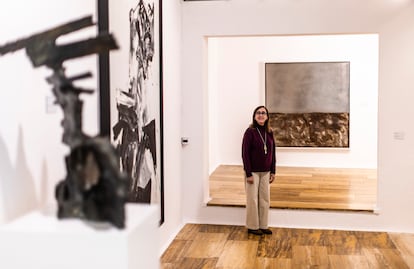
The visit is planned as an ascent. “The interior rooms prepare you for the burst of light from the exterior rooms,” Quintas details. It is one of the many details that Zóbel, the Filipino painter and collector who designed the building, noticed: the interaction with the seasons, the symbolic proximity to the mountains, the geometry of space… Now, in winter, the atmosphere has an existential point: “You tend to brood more,” laughs Quintas. And he points out some framed windows that overlook the sickle: “That small intervention turns them into works per se“. They coexist with pieces by Chillida, Tàpies, Iturralde… Names that should be given context, advises the coordinator. “It is an art that can be enjoyed directly, of course, but that gains resonance with history. It is outrageous that this happened in 1966,” he continues.
The symbiosis of the museum with the city is proven. Whoever visits it comes away fascinated with Cuenca. And vice versa. “We feed each other,” says the director of the parador Juan Serrapio. The best thing, Quintas returns, is that the visit is intimate, in the least corny sense of the term: “It is a very close experience. We are small and big at the same time.” The same thing happens throughout the city. Inside and outside, you can be without being just another fish in the school.