
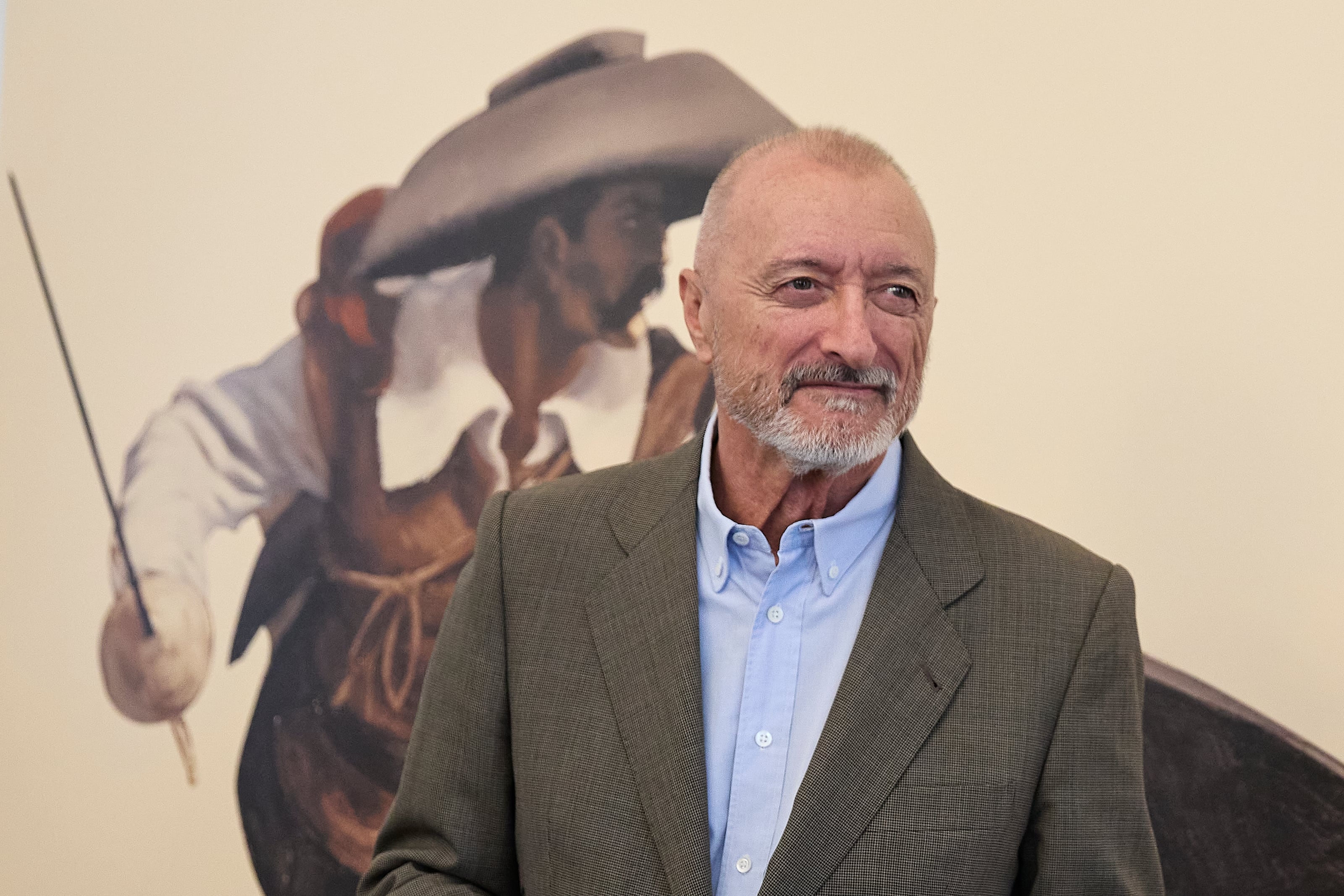
The Royal Spanish Academy (RAE) will proceed with “rigor” to the analysis of the criticism made this Monday by the writer and academic Arturo Pérez-Reverte, who has accused the institution of bowing to external pressure – to the political and media use of language – and of having submitted to “lax and ambiguous regulations.” This is what sources from the RAE point out to Europa Press, who explain that they have made a first assessment of Pérez-Reverte’s writing. “This is a personal and, of course, respectable opinion on some partial aspects of the Academy’s operation,” the same sources point out.
Thus, they reveal that the analysis of the criticisms it contains will be carried out “rigorously” with the directors and specialists of the departments concerned. “The Plenary Session of the RAE will verify whether it has the support of any other academic, the scope and reality of the data on which it is based and, where appropriate, it will propose the appropriate measures to urgently correct, to the extent possible, the operational defects that the academic Pérez-Reverte has made public,” they indicate. “It will begin to debate them immediately and it is expected that the academic will be able to present and defend his proposals in the plenary session of the institution,” they say.
The aforementioned criticisms took place this Monday in an article published in the newspaper The World, in which the writer has denounced that the voice of academic writers who by nature are creators, workers and language specialists, “barely counts today in the RAE.” “Many of them, living or recently deceased, have pointed out errors, impoverishments and trivializations of the language, only to see how the now dominant sector in the Academy – the Taliban of all things – ignores them or treats them as respectable, but irrelevant opinions,” he indicated.
Likewise, he has recognized “important achievements” to the director of the RAE, Santiago Muñoz Machado, such as “economic salvation”, although he has denounced that the “historical link and mutual respect” between literary creation and linguistic technique has been broken. The author, who has been a member of the RAE since 2003, thus attacks Muñoz Machado while highlighting that the previous directors of the institution (including Darío Villanueva, the penultimate one) maintained an “exquisite and useful balance between linguists and creators,” although “today the opposite is true.” “The fait accompli usually prevails,” he says.
“Now, unfortunately, the core of linguists to whom the current leadership entrusts the decisions, handles carelessly written journalistic headlines or massive uses on social networks as normative justification, naturally and with hardly any control, even though these contradict long-established syntactic, semantic or stylistic principles,” he says.