
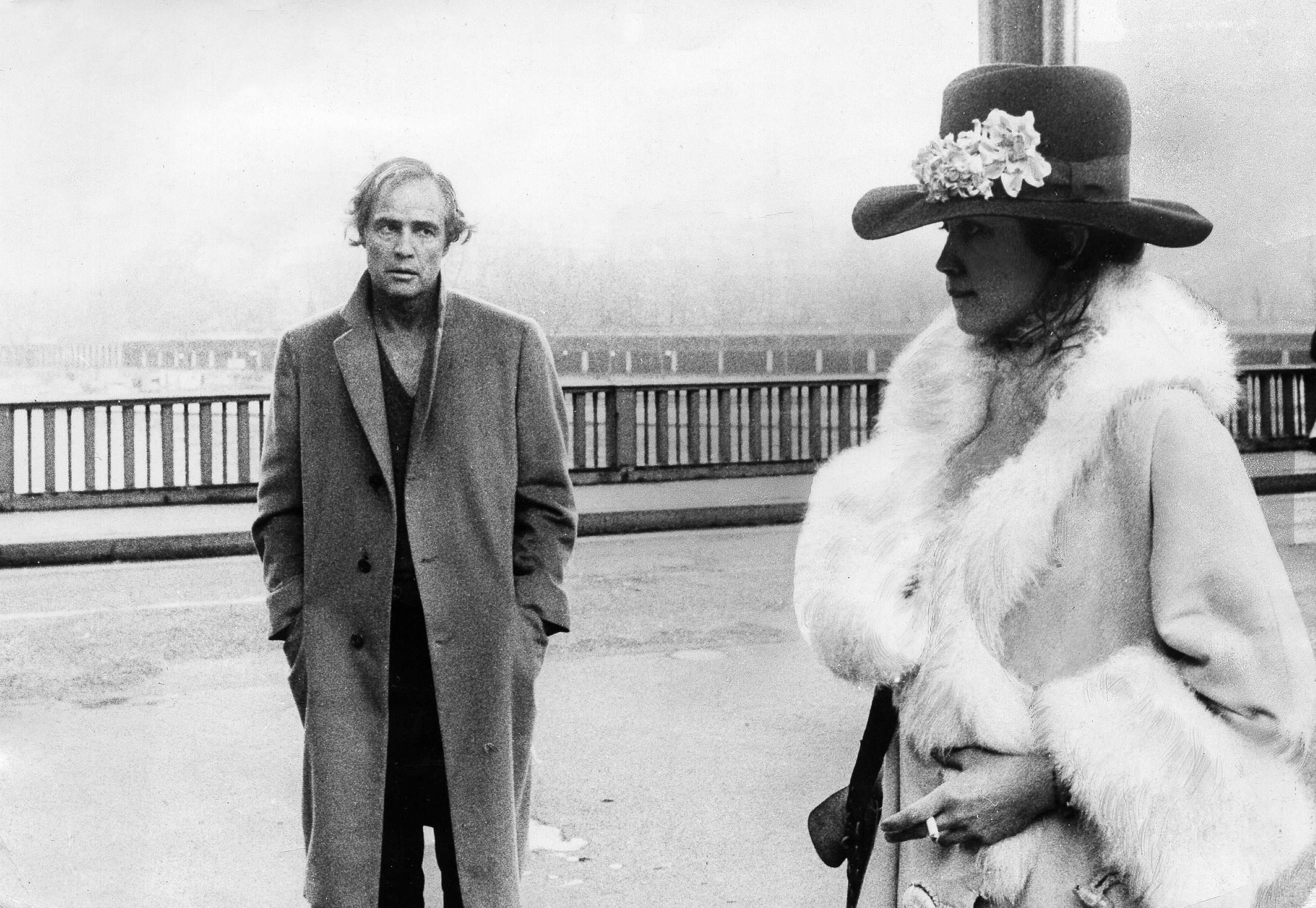
The director of the French cinematheque, Frédéric Bonnaud, has created a heated controversy these days for some statements in which he questions the sexual assault suffered by actress Maria Schneider during the filming of The last tango in Paris (1972), a film directed by the Italian Bernardo Bertolucci and in which the performer shared a cast with Marlon Brando. The film includes an anal rape scene, not included in the original script and not consented to by the actress, who was 19 years old at the time. Brando, 48.
“Maria Schneider was mistreated, used. But no, she did not suffer sexual abuse. She is the one who says it, that she was not sexually assaulted. It is false,” Bonnaud said before an amphitheater full of film students. It was last October 22, during a meeting at the Sorbonne University. His words provoked indignation, some tried to refute him, and others left the room. Finally, the students reported the incident to the center’s management, considering that Bonnaud’s words constitute “an apology for rape,” according to the French media. Mediapart.
The director of the cinematheque expressed his opinion when a student asked him about the cancellation just a year ago of the screening of Last Tango in Paris in the cinematheque. It was planned as part of a retrospective on Marlon Brando, but it was canceled after protests from several feminist associations, which denounced that this film is a symbol of violence against women in the world of cinema.
“The last time I heard Maria Schneider talk about this story, she said that she didn’t look bad in the film in front of Marlon. She calls him Marlon… It’s quite clear,” said Bonnaud, who described it as “delirious” that it could be thought that “a filmmaker like Bertolucci, a communist, politically involved, could organize a rape on a set.” Questioned by the students, he invited them to question themselves about “how things are changing in favor of censorship.”
According to the story that some of them have given to Mediapart, the director of the cinematheque crowned his comments by pointing out that, furthermore, then “the law (on sexual violence) did not exist and she did not report it.” Dozens of students left the amphitheater. Not content with this, he also paid tribute to the director Jean Claude Brisseau, now deceased and who was convicted in 2005 of sexual assault on two actresses.
The anal rape scene, in which Marlon Brando uses butter as lubricant, already generated a lot of controversy after the film’s release in 1972. The actress always said that it was not in the script and it caught her by surprise. He had not given his consent. Bertolucci himself admitted much later that they had not warned her: “I wanted her reaction as a girl, not as an actress. I wanted her to interpret her humiliation and her rage.”
In 2024 it will premiere at the Cannes Festival Mariaa film by French filmmaker Jessica Palud, which narrates the trauma that that sequence created for the actress. It was his first role. In an interview in 2007 she said: “They told me before filming the scene and I was very angry. I felt a little violated, both by Marlon and Bertolucci.”
In an email sent to the Sorbonne management, the film school students therefore denounce the “false statements, which go against the word of the victim” and “very violent” for the women who were present in the amphitheater at the time of the encounter.
“They advocate rape and deny the existence of marital rape,” they denounce. They point out that his words “are in total disagreement with the University’s commitments in the fight against sexual and sexist violence.” They also criticize the screening of films by directors such as Roman Polanski, convicted of raping a minor, or Woody Allen, accused of incest by his adopted daughter.
Bonnaud was appointed director of the French cinematheque in January 2016. It is not the first time that his opinions have caused discomfort. In 2017, some feminist organizations criticized her “sexist and misogynistic” statements, when she referred to feminists as “half crazy,” who “try to impose a totalitarian clash.”
The matter has caused the Minister of Culture, Rachida Dati, to react, who has “firmly condemned” the public statements of the director of the cinematheque, which “are his opinion, which does not implicate the institution but which damage the image of the cinematheque”. In a statement, he asks the president and the board of directors of the cinematheque to quickly examine the measures to be taken after the incident.
This controversy amplifies the Me Too movement in French cinema in recent years. Last March, the French Assembly published a devastating report in which it denounced “endemic and systematic” sexual violence in some in the cinema, in filming and castings. The Assembly created a commission of inquiry to analyze this scourge after the wave of complaints from actresses, including several women who accuse one of the emblems of French cinema, actor Gerard Depardieu, of sexual harassment.