
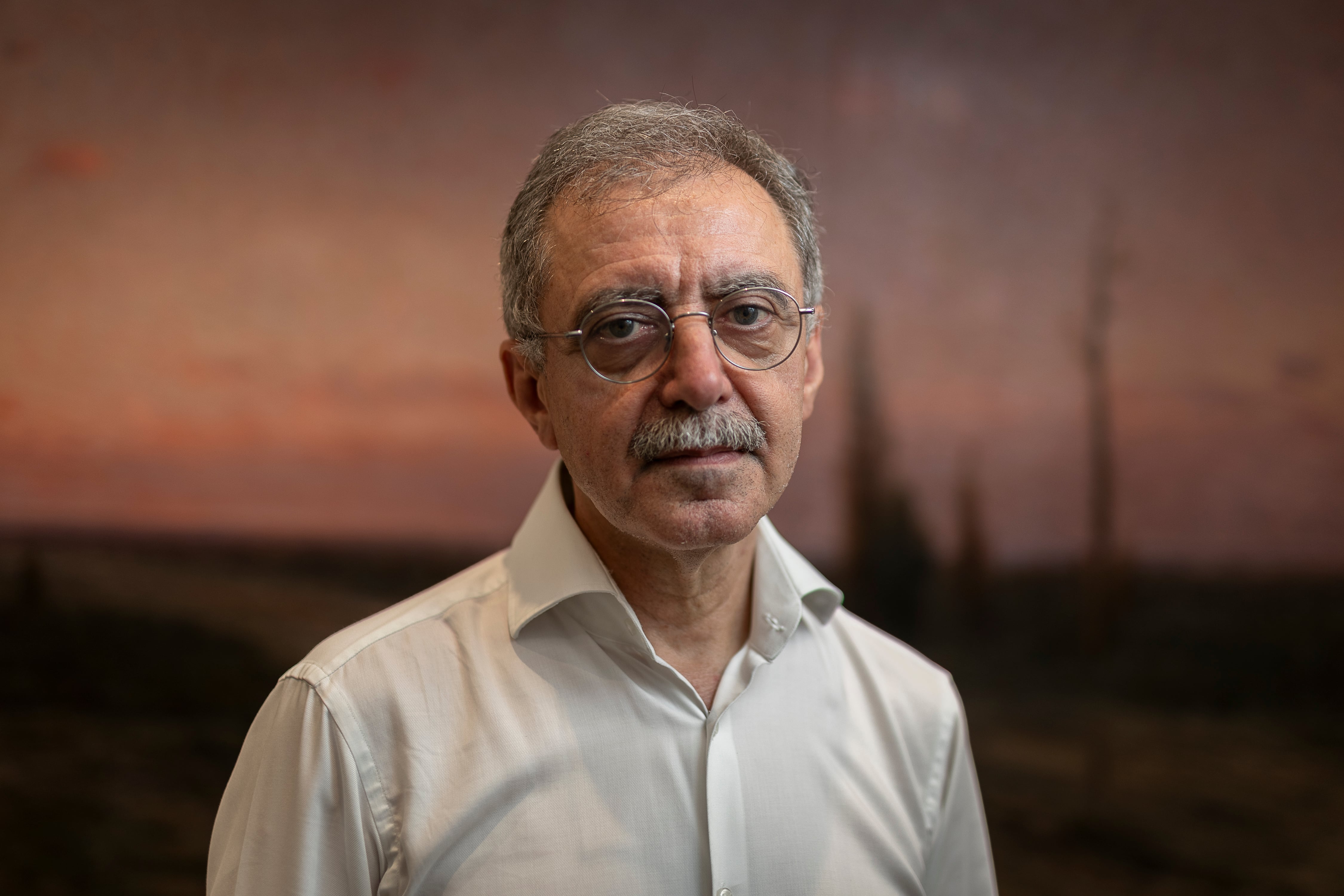
It has been more than two years since the appointment of Manuel Borja-Villel (Burriana, 68 years old) as the person who had to revolutionize Catalan museums caused a lot of commotion and polarization, with great hopes and great reluctance within the sector. After closing the exhibition last October Fabular landscapes, The curator ends his contract as museum advisor to the Generalitat of Catalonia, after many controversies. As he advanced to The Vanguard and has confirmed to EL PAÍS, he will end his contract next December, two months earlier than planned, and will return to Madrid once the conclusions of the Museu Habitat project are presented.
After directing the Fundació Tàpies, the Macba and the Reina Sofía Museum, where he became a protagonist in cultural battles against part of the Madrid right, Borja-Villel returned to Barcelona in 2023 as a global reference in the museum field at the proposal of the Generalitat of Catalonia, then chaired by Pere Aragonés, and Jordi Martí as Councilor for Culture in the Barcelona City Council. The assignment was to lead the “temporary program for the development and fit into the art museum system of the project to expand and promote the National Museum of Art of Catalonia” (MNAC), as well as the rearticulation of the Catalan museum system. The arrival created confusion and reluctance among professionals, critics and directors of institutions, because it was not clear how far his powers extended and, finally, the commissioner dissociated himself from the MNAC project.
His intervention in the Catalan museums ended up taking shape in the Museu Habitat project, an extensive program of activities and publications that culminated with the exhibition Fabular landscapes, which he curated together with Lluís Alexandre Casanovas and Beatriz Martínez Hijazo.
The main idea of both the project and the exhibition is that the “encyclopedic museum” has to give rise to the “inhabited museum”, a critique of the narrative that museums have historically used to benefit the elite and silence the rest. The museological proposal followed an ecological, feminist and decolonizing line that broke with the usual linearity in a museum to rethink its function.
In statements for notebook Last June Borja-Villel stated: “In Catalonia there is a very good network of museums that in Madrid they want to copy. But generally this leads to opposition to change that means that very good ideas that are launched are not put into practice.” The exhibition that took place at the Palau Victòria Eugènia in Montjuïc and at the Palau Moja between June and October of this year had an ambivalent reaction, including controversy on social networks, from complaints of excessive heat in the exhibition, dangerous for the proper conservation of the works to the recognition of moving the conversation to a decolonizing framework.. Borja-Villel has spoken of a “cultural battle” in a criticism based more on his person than on the proposal. Both the commissioner and the Minister of Culture Sònia Hernández insist that the time to assess will be when the conclusions that are still being drawn up are presented, while Jordi Martí affirms that “it would be a mistake not to take advantage of the lines of reflection opened by the Borja-Villel project now that Catalonia faces the challenge of rethinking the great expansion of the MNAC.”